9 citations
,
July 2020 in “JAMA dermatology” This study explored dermatoscopic and histopathologic findings of central centrifugal cicatricial alopecia beyond the vertex scalp, suggesting that dermatoscopy might serve as a less invasive diagnostic tool for subclinical disease.
 2 citations
,
August 2023 in “Development”
2 citations
,
August 2023 in “Development” In this study, researchers explored how hair follicle orientation is affected in the rosette fancy mouse and found that a mutation in the PCP gene Fzd6 caused reversed hair orientations in the posterior region, leading to the formation of unique whorls.
 30 citations
,
May 2005 in “Pediatric dermatology”
30 citations
,
May 2005 in “Pediatric dermatology” This report reviews familial cases of aplasia cutis of the scalp, noting large irregular defects at the vertex or anterior along the sagittal suture in six families.
15 citations
,
December 2009 in “PubMed” This case study highlights a pediatric instance of eruptive vellus hair cysts partially responding to calcipotriene cream, aiming to remind clinicians about this often overlooked condition.
September 2017 in “The journal of investigative dermatology. Symposium proceedings/The Journal of investigative dermatology symposium proceedings” This case report suggests that in African-American patients, the histology of Central Centrifugal Cicatricial Alopecia may resemble lichen planopilaris, indicating a potential diagnostic challenge.
48 citations
,
July 1993 in “Archives of Dermatological Research” Merkel cells are abundant in facial vellus hair follicles, especially during the anagen phase.
5 citations
,
February 1981 in “Experientia” In this study, a new hairless gene in the Donryu rat strain was identified, showing skin similarities to human skin tumors with multiple follicular cysts.
56 citations
,
October 2010 in “Pediatric Clinics of North America” This article discusses various types of epidermal nevi and associated syndromes but presents no new research findings.
 22 citations
,
December 2003 in “Veterinary clinical pathology”
22 citations
,
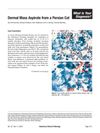
December 2003 in “Veterinary clinical pathology” This case study reported a diagnosis of dermatophytic pseudomycetoma in a Persian cat with dermal nodules, highlighting potential heritable predisposition and suggesting systemic antifungal therapy for fair prognosis.
April 2026 in “Veterinary Medicine and Science” In this case report, authors described a pet golden hamster with a confirmed adrenocortical adenocarcinoma, where laboratory testing and diagnostic imaging enabled antemortem diagnosis, despite the species' rarity for these procedures.
 6 citations
,
January 2013
6 citations
,
January 2013 This chapter reviews hyperadrenocorticism in ferrets, covering its causes, symptoms, diagnosis, and treatment options, but reports no new research findings.
 19 citations
,
October 2013 in “Headache: The Journal of Head and Face Pain”
19 citations
,
October 2013 in “Headache: The Journal of Head and Face Pain” This review discusses conventional and alternative treatments for trigeminal autonomic cephalalgias, including cluster headache, paroxysmal hemicrania, and SUNCT, and recommends specific medications without reporting new clinical findings.
19 citations
,
November 2014 in “Journal of Comparative Physiology A” This study found that Cupiennius salei spiders have specialized mechanosensitive hairs on their legs that adaptively respond to joint movements during walking, suggesting a proprioceptive function.
5 citations
,
August 2000 in “Archives of Pathology & Laboratory Medicine” This case report describes an 89-year-old woman with a recurrent benign proliferating trichilemmal tumor on her back, highlighting its misdiagnosis as a sebaceous cyst and successful excision with free margins.
88 citations
,
July 1958 in “Nature” This study reported the first known occurrence of citrulline in an animal protein, specifically in the fibrous protein of hair follicle inner root sheaths.
1 citations
,
August 2022 in “Pigment Cell & Melanoma Research” This study presents two new mouse models using the CreER T2-loxP system to target and study melanocytic cells, with implications for melanoma research.
28 citations
,
July 1980 in “British Journal of Dermatology” This study describes a case of generalized trichorrhexis nodosa and finds that defects in alpha-keratin chain formation and low cystine levels in hair may contribute to the condition.
 July 2022 in “International journal of surgery science”
 This case report details a rare large epidermal cyst over the sacrumcoccygeal region in an elderly patient, which was successfully removed surgically.
September 2021 in “The journal of investigative dermatology/Journal of investigative dermatology” This study identified a germline variant in PLCD1 as a major risk allele for familial trichilemmal cysts, requiring a subsequent somatic mutation in the same allele for cyst formation.
 October 2024 in “Journal of the Endocrine Society”
 This case report highlighted a rare instance of Cushing's syndrome caused by ectopic ACTH from cervical cancer, demonstrating diagnostic challenges, treatment complexity, and high risks of morbidity and mortality, with less than 10 cases documented overall.
21 citations
,
September 1968 in “Cancer” This study identified that keratotic basal cell carcinomas with citrulline-positive keratin and hair papilla-like structures are highly differentiated, which helps distinguish them from squamous carcinomas.
 September 2025 in “Cureus”
 In this case report, the researchers documented a rare instance of plica neuropathica, characterized by matted and twisted hair, occurring alongside diffuse alopecia, marking the first such documented association and emphasizing its diagnostic challenges in identifying causes of alopecia.
 6 citations
,
February 2016 in “American Journal of Dermatopathology”
6 citations
,
February 2016 in “American Journal of Dermatopathology” This case study reports on an 11-year-old boy with woolly hair nevus, featuring twisted hair shafts and an abnormal hair cuticle, alongside epidermal nevi on his face and back.
December 2019 in “The American Journal of Gastroenterology” In this study, three cases of Cronkhite-Canada syndrome revealed small bowel mucosal lesions, but these findings did not correlate with clinical symptoms or steroid treatment outcomes.
1 citations
,
July 2024 in “Australasian Journal of Ultrasound in Medicine” In this study, researchers reported that cutaneous ultrasound may be a valuable tool in diagnosing and assessing inflammatory activity in tinea capitis, potentially guiding treatment decisions, especially in severe cases not apparent through clinical symptoms alone.
June 2026 in “Kerbala Journal of Veterinary Medical Sciences” This study found that gray mongooses have more numerous and well-developed sebaceous glands compared to domestic cats, suggesting they may benefit from enhanced lipid-derived skin protection.
2 citations
,
July 2025 in “Journal of the European Academy of Dermatology and Venereology” This study explores the potential link between the sparse eyebrows and lashes of the "Girl with a Pearl Earring" and conditions such as alopecia areata, while also considering other medical hypotheses like syphilis, but maintains that the painting's charm and idealized beauty remain intact.
 118 citations
,
August 2010 in “Developmental Cell”
118 citations
,
August 2010 in “Developmental Cell” This study found that the protein MIM is crucial for maintaining cilia and Sonic hedgehog signaling in mesenchymal cells by counteracting Src-mediated phosphorylation of Cortactin, impacting hair follicle formation.

This chapter reviews various types of alopecia and associated skin diseases in dogs and cats but presents no new clinical findings.
This study found that 2-hydroxy-1,4-naphthoquinone was the most effective inhibitor of steroid 5α-reductase, showing stronger inhibition than avicequinone C in HaCaT cell assays.