 1 citations
,
December 2022 in “Research journal of topical and cosmetic sciences”
1 citations
,
December 2022 in “Research journal of topical and cosmetic sciences” This study evaluated a polyherbal shampoo containing natural ingredients and found it demonstrated good froth stability, cleansing ability, and conditioning activity, but called for further validation of its overall quality.
 September 2025 in “Journal of Ayurveda and Integrated Medical Sciences”
 This study described trichilemmal cysts, firm lumps that form from blocked hair follicles, typically found on the scalp but also less commonly on other body parts, affecting less than 10% of the population and possibly inherited as an autosomal dominant trait.
 June 2026 in “International Journal of Drug Delivery Technology”
 This case study suggests that palash basti, a form of Ayurvedic treatment, may effectively manage polyendocrine metabolic ovarian syndrome by improving menstrual regularity and hormonal balance, though further studies are needed.
 August 2023 in “International Journal For Multidisciplinary Research”
 This case study reported that using the ayurvedic treatment protocol of Nitya Virechana, Kulatthadi Kashaya, and Shatapushpa Churna was associated with improved menstrual regularity, reduced obesity, and decreased symptoms of hirsutism and acne in a 19-year-old woman with PCOD.
 March 2026 in “Zenodo (CERN European Organization for Nuclear Research)”
 This study aimed to create and assess a trio pack of polyherbal hair care products, noting potential advantages such as reduced side effects and chemical use, though results are not reported in the abstract.
November 2025 in “Cosmetics” This study evaluated a levan-based polysaccharide, POLEVAN®, in shampoo formulations and reported that it significantly increased hair glossiness by 24%, allowed a reduction of surfactant content by up to 50% without affecting foam, and maintained scalp moisturization similar to hyaluronic acid in a clinical setting.
 March 2026 in “Zenodo (CERN European Organization for Nuclear Research)”
 This study developed a natural herbal shampoo using curry leaves as the main ingredient, combined with other natural substances, aiming to enhance hair growth, strength, and natural darkening while reducing hair loss without the risks associated with chemical shampoos.
March 2023 in “Research journal of pharmacy and technology” This study found that a poly herbal hair oil formulation significantly promoted hair growth in a pre-clinical mouse model.
 May 2025 in “Journal of Drug Delivery and Therapeutics”
 This review discusses the integration of modern and Unani medicine in the management of Benign Prostatic Hyperplasia, highlighting the potential of Unani herbal formulations as promising alternatives with minimal side effects but reports no new clinical results.
The study reported that a poly herbal gel containing Lagenaria siceraria, Trichosanthis cucumarina, and Tridax procumbens promoted hair growth in human volunteers, with noticeable effects observed after 90 days.
 October 2024 in “Current Trends in Biotechnology and Pharmacy”
 In this study, researchers developed a halal shampoo containing Centella asiatica and Phyllanthus emblica extracts, finding that a formula with specific concentrations exhibited high antioxidant activity and ideal physicochemical properties for hair cleansing and potential hair growth promotion.
 July 2026 in “Zenodo (CERN European Organization for Nuclear Research)”
 This research formulated a herbal hair oil using ingredients like pumpkin seed, bhringraj, and amla to reduce DHT levels and stimulate hair growth, with findings suggesting that the product is stable, suitable for the scalp, and free from toxic chemicals.
December 2025 in “Zenodo (CERN European Organization for Nuclear Research)” This case study reports that a 30-year-old woman with persistent hair fall experienced marked improvement following leech therapy (Jalaukavacharana) performed according to classical Ayurvedic protocols.
This source highlights Amla's potential as a natural remedy due to its high vitamin C, fiber, iron, and antioxidant content, marking its benefits in slowing aging, enhancing hair and skin health, managing diabetes, and exhibiting anticancer, antioxidant, and immunomodulatory effects.
 5 citations
,
January 2016 in “Skin appendage disorders”
5 citations
,
January 2016 in “Skin appendage disorders” This case report describes a rare occurrence of lichen planopilaris on the face in a 45-year-old man, contributing to the limited existing cases in the literature.
March 2026 in “Journal of Ayurveda and Integrative Medicine” This study found that the Sonowal Kachari tribe in Assam, India, utilizes 39 plant species for medicinal purposes, with leaves being the most commonly used part, highlighting the tribe's substantial traditional knowledge of herbal medicine.
May 2026 in “International Journal of Homoeopathic Sciences” In this case report, a patient experienced reduced acute hair fall, stabilized chronic alopecia, and improved hair texture and density after individualized homeopathic treatment, highlighting its effectiveness in managing androgenetic alopecia with acute exacerbations at Dr. Batra’s® clinic.
 22 citations
,
April 2020 in “Scientific reports”
22 citations
,
April 2020 in “Scientific reports” This study explored gene expression in Changthangi goats and found that higher expression of keratin-related genes and specific signaling pathways may play a role in the development of Pashmina fiber.
 February 2026 in “International Journal of Homoeopathic Sciences”
 In this case report, a 27-year-old male with chronic scalp psoriasis experienced marked clinical improvement and sustained remission for 16 months after 17 months of individualized classical homeopathic treatment, also noting enhanced quality of life and emotional well-being.
 May 2026 in “Zenodo (CERN European Organization for Nuclear Research)”
 In this study, researchers developed a polyherbal antidandruff shampoo using medicinal plant extracts and found it exhibited significant antioxidant and antimicrobial properties, including activity against bacteria and fungi linked to scalp infections, suggesting it as a natural alternative to synthetic shampoos.
1 citations
,
June 2022 in “INDIAN JOURNAL OF APPLIED RESEARCH” This review compiles existing knowledge on ashwagandha's potential to stimulate hair growth but reports no new experimental findings, emphasizing its medicinal properties and usage in Ayurvedic medicine.

This study analyzed the phytochemical content of two Portulaca species and found that extracts from Portulaca oleracea L. and Portulaca grandiflora H. demonstrated suitable characteristics for hair tonic formulations, meeting Indonesian National Standards for cosmetic products.
 June 2026 in “Zenodo (CERN European Organization for Nuclear Research)”
 This review focuses on formulating and evaluating a herbal anti-hair fall gel using natural ingredients like flaxseed and curry leaves, highlighting its potential to promote hair growth, reduce hair fall, and improve scalp health while offering a safer, environmentally friendly alternative to synthetic formulations.
 1 citations
,
January 2018 in “Acta dermato-venereologica”
1 citations
,
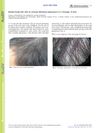
January 2018 in “Acta dermato-venereologica” A teenager's hair with alternating white and dark bands, known as Pili annulati, is a genetic condition that is usually harmless and often considered attractive.
 June 2026 in “Zenodo (CERN European Organization for Nuclear Research)”
 This review discusses the formulation and evaluation of a herbal anti-hair fall gel using natural ingredients like flaxseed, chia seeds, and aloe vera, highlighting its potential to promote hair growth, reduce hair fall, and improve scalp health compared to synthetic alternatives.
January 2026 in “Zenodo (CERN European Organization for Nuclear Research)” In this study, researchers observed complete hair regrowth and improved quality-of-life in a 7-year-old boy with alopecia areata after a 15-week protocol involving Yoga Prana Vidya healing, suggesting its potential as an alternative treatment.
 February 2020 in “The Pharmaceutical Society of Japan”
 Amla extract may help hair grow.
January 2025 in “International Journal of Trichology” This report describes a rare case of loose anagen hair syndrome in a young Indian child, highlighting its clinical and trichoscopic features.
January 2026 in “Zenodo (CERN European Organization for Nuclear Research)” This study reports a 7-year-old boy experienced complete hair regrowth from alopecia areata after a 15-week Yoga Prana Vidya healing protocol involving pranic healing and rhythmic breathing, suggesting potential efficacy and safety but warranting controlled trials for validation.
This study identified key welfare issues in Indian cow shelters, including limited space, inadequate flooring, and restricted movement, and suggested strategies for improvement involving shelter managers and government feedback.