 February 2026 in “International Journal of Homoeopathic Sciences”
 This paper reviews plica polonica, a rare hair disorder linked historically to poor hygiene and now to severe self-neglect or medical conditions, and outlines various treatment and preventive strategies but reports no new findings.
4 citations
,
February 2001 in “PubMed” This case study reports a 6-year-old girl developing acquired progressive kinking hair syndrome, likely induced by sodium valproate, marking it as the first documented instance linked to this medication.
Recognizing bamboo hair helps diagnose Netherton’s syndrome.
28 citations
,
March 2014 in “Biological reviews/Biological reviews of the Cambridge Philosophical Society” This study introduces the multiple papillary centres model, offering a new explanation for hair twisting by combining known hair morphology features with differential growth rates caused by dermal papillae.
 October 2024 in “AL-MIKRAJ Jurnal Studi Islam dan Humaniora (E-ISSN 2745-4584)”
 This study found that a hair tonic made with 30% ethanol extract from papaya fruit peel effectively promoted hair growth in guinea pigs, with results close to those of a positive control, and contains beneficial compounds like alkaloids and flavonoids.
9 citations
,
August 2021 in “Journal of clinical medicine” This review discusses pili torti, a rare hair shaft disorder, and reports no new clinical results; it emphasizes the need to investigate underlying conditions in affected individuals.
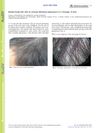 1 citations
,
January 2018 in “Acta dermato-venereologica”
1 citations
,
January 2018 in “Acta dermato-venereologica” A teenager's hair with alternating white and dark bands, known as Pili annulati, is a genetic condition that is usually harmless and often considered attractive.
1 citations
,
June 2016 in “Experimental Dermatology” This article discusses advancements in proteomic and metabolomic analysis techniques for studying hair damage but provides no new clinical results; the authors express interest in applying metabolomics to develop strategies for reducing hair damage from chemical treatments.
Hair can't be as strong as Rapunzel's because it's impractical to scale up due to defects.
 July 2015 in “Journal of the Dermatology Nurses’ Association”
 This review covers the clinical presentation and challenges in treating frontal fibrosing alopecia in postmenopausal women and concludes that more research is needed to understand its etiology and develop effective treatments.
March 2025 in “Journal of Investigative Dermatology” This study found that a traction alopecia prevention program for middle school students increased awareness and understanding of TA, but converting this awareness into changes in hairstyling habits proved challenging, highlighting the need for culturally sensitive strategies to influence behavior in at-risk communities.
 January 2021 in “Nasza Dermatologia Online”
 This case report describes a 50-year-old Kashmiri woman with plica polonica, detailing trichoscopic findings of entangled hair with crisscrossing shafts and concretions.
January 2010 in “프로그램북(구 초록집)” 13 citations
,
July 1973 in “Archives of dermatology” This letter to the editor raises concerns about the possibility of cornrowing leading to dermatologic problems such as traction alopecia, paralleling issues seen with other cosmetic fads.
 108 citations
,
March 2011 in “Archives of Dermatology”
108 citations
,
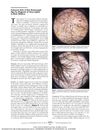
March 2011 in “Archives of Dermatology” Corkscrew hair may be a new sign for quickly diagnosing scalp fungus in black children.
SMP creates illusion of full hair, addressing various issues and bringing happiness to those with thinning hair.
 December 2019 in “Ukrainian Journal of Veterinary and Agricultural Sciences”
 This study found that examining the microscopic and ultramicroscopic structures of donkey and horse hair can help differentiate between the species based on distinct differences in hair cuticle and brain substance patterns.
28 citations
,
January 1985 in “Journal of the American Academy of Dermatology” This report presents a case of pili torti in a young girl with citrullinemia, a novel association not previously documented.
35 citations
,
September 2003 in “Archives of dermatology” This study proposed that the tiger tail phenomenon in trichothiodystrophy hair is caused by regular undulations of hair fibers, altering the optical properties seen under polarized light.
 18 citations
,
March 2016 in “Cosmetics”
18 citations
,
March 2016 in “Cosmetics” This review discusses telogen effluvium, including its triggers, clinical presentations, and management options, and does not report new research findings, emphasizing the need for identification and exclusion of underlying causes.
October 2024 in “Skin Research and Technology” This report describes several cases of pili annulati in children, highlighting its genetic predisposition and distinctive "zebra stripe" hair pattern, but notes no effective treatment is available.
 6 citations
,
January 2000 in “Dermatology”
6 citations
,
January 2000 in “Dermatology” A girl's severely tangled hair couldn't be fixed and had to be cut due to a rare condition called plica neuropathica.
 June 2024 in “British Journal of Dermatology”
 In this study, researchers described cases of traction alopecia in young Sikh boys due to hair tying practices, emphasizing the importance of early intervention and education to prevent progression and support hair regrowth, using strategies like changing hair tying methods and topical treatments when appropriate.
 January 2023 in “Skin appendage disorders”
 This article describes two cases of plica neuropathica, a rare hair condition involving severe matting, and discusses possible contributing factors and diagnosis methods while reporting no new scientific results.
26 citations
,
February 1991 in “PubMed” This case report highlights trichotillomania's distinguishing "tonsure pattern" and nail-biting, emphasizing the need to differentiate it from other hair loss types due to differing treatments.
 12 citations
,
November 1987 in “Pediatric dermatology”
12 citations
,
November 1987 in “Pediatric dermatology” This report identified longitudinal grooves in the hair shafts of four children, diagnosing them with uncombable-hair syndrome.
 5 citations
,
March 2009 in “Pediatric Dermatology”
5 citations
,
March 2009 in “Pediatric Dermatology” The study found that pili bifurcati causes hair to intermittently split into two branches, each with its own outer layer.
 1 citations
,
January 2020 in “Indian Dermatology Online Journal”
1 citations
,
January 2020 in “Indian Dermatology Online Journal” This article reviews the Directory of Open Access Journals, an extensive global index of quality open access journals, and reports no new results.
June 2026 in “Skin Appendage Disorders” This study suggests that pili annulati is likely more common than traditionally thought, highlighting the importance of recognizing its characteristic clinical and trichoscopic features for accurate diagnosis.