13 citations
,
June 2005 in “PubMed” In this study, 33% of mice treated with polyphenol extract from green tea showed significant hair regrowth, while no control group mice exhibited hair growth.

This source reports that in adults with non-scarring alopecia, polyphenolic interventions significantly improved hair density and total area hair count compared to controls, although considerable variability was present in results, highlighting the need for further research.

This systematic review and meta-analysis found that polyphenolic interventions significantly improved hair density and total area hair count in adults with non-scarring alopecia, but substantial heterogeneity was observed.
This study evaluated the efficacy of polyphenolic compounds for hair growth in adults with non-scarring alopecia and found that these interventions significantly improved hair density and total area hair count compared to controls, although results were not significantly different from minoxidil.
 October 2025 in “Interdiciplinary Journal and Hummanity (INJURITY)”
 This study characterized bioactive compounds in extracts from six Kalimantan herbal plants, confirming traditional medicinal uses with findings such as triterpenoids and several potent compounds with antimicrobial and cardiovascular benefits, laying groundwork for potential therapeutic applications and conservation efforts.
188 citations
,
December 2020 in “Foods” This review explores the potential health benefits of food bioactive compounds, specifically polyphenols, as preventive agents against non-communicable diseases like cancer and cardiovascular disorders, while also addressing challenges like bioavailability and industrial applications.
January 2026 in “Eng—Advances in Engineering” This study developed a biodegradable nonwoven textile using a starch-based biopolymer and fruit extracts, resulting in materials that are stronger, more hydrophilic, and capable of releasing beneficial compounds over 72 hours, positioning them for potential use in medical, healthcare, and cosmetic applications.
 March 2024 in “Journal of Pharmaceutical and Sciences”
 This study investigated the phytochemical composition and antibacterial and antioxidant activities of Zaleya pentandra extracts, finding high total polyphenol and flavonoid content and significant antibacterial effects, particularly in acetone extract, which may be suitable for developing antibacterial agents.
 July 2026 in “Antioxidants”
 This review identifies agri-food by-products as promising sources of antioxidant compounds for cosmeceutical applications, examining their potential for skin, oral, and hair care, while noting the need for further research on safety and clinical efficacy.
4 citations
,
June 2022 in “Frontiers in Cell and Developmental Biology” Plant extracts might help control stem cell growth for medical use.
 1 citations
,
May 2019 in “Bioactive compounds in health and disease”
1 citations
,
May 2019 in “Bioactive compounds in health and disease” This review discusses the potential of vitamins, minerals, and functional foods to promote hair growth and address hair loss, but reports no new clinical results.
5 citations
,
December 2023 in “Materials” This review paper highlights the development and application of organic and biogenic nanocarriers for delivering bioactives, focusing on eco-friendly and sustainable nanotechnology strategies while addressing challenges like toxicity and paving the way for future innovations in green solution approaches.
 8 citations
,
February 2022 in “Molecules”
8 citations
,
February 2022 in “Molecules” This study found that Asparagus racemosus root extract significantly reduced facial sebum production and pore size in male volunteers, suggesting potential application as an anti-sebum ingredient in cosmetics.
4 citations
,
April 2005 in “UNESP Institutional Repository (São Paulo State University)” This study found that Guazuma ulmifolia, known for its use in hair loss treatment, contains polyphenolic compounds in its bark, particularly flavonoids, tannins, saponins, and mucilages.
1 citations
,
January 2020 in “Journal of Biosciences and Medicines” This study found that a 5% gel with hydroalcoholic extract from black pop bean integument may have a photoprotective effect in mice exposed to UV-C radiation.
 March 2014 in “CRC Press eBooks”
 Some nutrients and antioxidants may improve skin and hair health, but more research is needed to confirm these benefits.

This study found that supercritical fluid extraction of germinated perilla seed significantly promoted hair follicle cell proliferation and gene expression related to hair growth, suggesting its potential as a natural treatment for hair loss.
This review discusses the role of the Wnt/β-catenin pathway in hair follicle development and how natural products that activate this signaling could be used to treat hair loss, but it reports no new experimental results.
This literature review suggests that herbal extracts show promise as antiandrogenic agents for androgen-related conditions, potentially offering a natural alternative with fewer side effects than synthetic medications.
June 2025 in “JURNAL BIOLOGI TROPIS” This review found that secondary metabolites from herbal plants, including flavonoids and alkaloids, show potential in promoting hair growth through mechanisms like anagen phase prolongation and enzyme inhibition, but more clinical trials are needed to confirm their efficacy.
This review found that exposure to pollutants like PM, NOx, and PAHs is linked to various skin and hair disorders, indicating a need for cosmetics with natural adsorbents to reduce pollutant effects, achieving 30-55% removal efficiency.
 10 citations
,
June 2019 in “International Journal of Cosmetic Science”
10 citations
,
June 2019 in “International Journal of Cosmetic Science” This review discusses the potential benefits of phytochemicals for hair care and emphasizes the need for more robust preclinical and clinical studies, without reporting new clinical results.
 October 2017 in “The Japanese Biochemical Society/The Molecular Biology Society of Japan”
 Some natural compounds might help hair grow.
June 2022 in “Pham Ngoc Thach Journal of Medicine and Pharmacy” This study identified key natural compounds such as polyphenols and flavonoids in tongue fern and established optimal extraction conditions using methanol.
 February 2025 in “Global Academic Journal of Pharmacy and Drug Research”
 This study reported that compounds from the root of Beta vulgaris, specifically 4-picoline and Betalain, showed potential as effective anti-hair loss treatments by demonstrating significant inhibitory activity against the enzyme 5α-reductase in a computational molecular docking study.
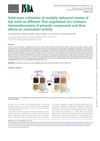 June 2024 in “Okayama University Scientific Achievement Repository (Okayama University)”
 In this study, methanol extracts from Thai-colored rice fermented with Aspergillus molds exhibited an increase in polyphenolic content and antioxidant activity, outperforming Thai white and Japanese white rice, notably transforming key polyphenols like quercetin and ferulic acid.
19 citations
,
March 2023 in “Resources” This review discusses the potential of solid-state fermentation for extracting polyphenolic compounds from agro-industrial wastes, but it reports no new experimental results.
 45 citations
,
January 2020 in “International Journal of Molecular Sciences”
45 citations
,
January 2020 in “International Journal of Molecular Sciences” This review discusses the potential of plant polyphenols to overcome multidrug resistance in various solid cancers and reports no new experimental results; further research is suggested.
 26 citations
,
November 2002 in “Planta medica”
26 citations
,
November 2002 in “Planta medica” In this study, the methanol extract of Cercidiphyllum japonicum heartwood was found to stimulate the proliferation of mouse hair epithelial cells, with several isolated compounds showing significant proliferative activities.
May 2026 in “Advanced Materials Interfaces” This study reported that a new coating made with delaminated Ti₃C₂ MXene nano-sheets and a tea-derived compound effectively protects hair keratin from damage by providing UV screening, thermal dissipation, and antioxidation, while also enhancing mechanical strength and restoring wettability.