March 2026 in “Sexual Development” This study found that a young male Maine Coon cat with a tortoiseshell coat, which typically indicates unusual sex chromosomes, was fertile, carrying both XX and XY cell lines. The researchers recommend genetic testing for tri-colored male cats before breeding decisions.
December 2022 in “The Turkish Journal of Pediatrics” This study reported that hair microscopy can help diagnose rare pediatric neurological diseases, as specific hair characteristics were linked to conditions like giant axonal neuropathy, Griscelli syndrome, and Menkes disease.
 August 2022 in “Journal of Comprehensive Pediatrics”
 This case report describes a 15-year-old girl with trichorhinophalangeal syndrome type 1 and a rare non-ossifying fibroma in her femur, suggesting a potential link between the genetic condition and bone lesions.
 December 2024 in “Genome Biology and Evolution”
 This study found that the Florida worm lizard has lost certain genes associated with claw development, which are present in other lizard species with claws, suggesting a link between the evolution of their limbless body and the loss of claw-related genes.
 September 2023 in “International journal of science and healthcare research”
 In this report, a preterm neonate was found to have total irreversible hair loss due to congenital atrichia, confirmed by a mutation in the human hairless gene on chromosome 8p22, illustrating this rare autosomal recessive disorder.

This thesis found that desmoplakin mutations in cardiocutaneous syndrome are linked to dose-dependent disease severity and identified mechanisms by which KLHL24 mutations cause cardiomyopathy, with rescue experiments successfully preventing this phenotype in patient-derived heart tissues.
 June 2023 in “International Journal of Research in Medical Sciences”
 This case report describes the first confirmed instances of X-linked adrenomyeloneuropathy/adrenoleukodystrophy in two brothers from Bangladesh, noting their progressive neurological symptoms, MRI findings, and differing disease outcomes over several years of observation.
 8 citations
,
September 2016 in “The American Journal of Dermatopathology”
8 citations
,
September 2016 in “The American Journal of Dermatopathology” This study found that eccrine duct dilation is significantly more frequent in cicatricial alopecias compared to noncicatricial alopecias, possibly due to the scarring process.
 3 citations
,
April 2012 in “Bioinformation”
3 citations
,
April 2012 in “Bioinformation” This study concluded that specific SNPs in the TRPS1 gene significantly alter its protein structure, affecting interactions and contributing to the development of congenital hypertrichosis.
 3 citations
,
April 2012 in “Internal and Emergency Medicine”
3 citations
,
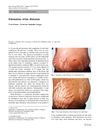
April 2012 in “Internal and Emergency Medicine” In this case report, a 14-year-old girl with nephrotic syndrome developed large edematous striae distensae due to high-dose steroid use and rapid body size increase from edema fluid accumulation.
3 citations
,
September 2016 in “Pediatric Dermatology” This case study reports that hypertrichosis, although not always present, may be an important diagnostic clue for superficial epidermolytic ichthyosis in a young child.
 27 citations
,
June 2005 in “The journal of investigative dermatology/Journal of investigative dermatology”
27 citations
,
June 2005 in “The journal of investigative dermatology/Journal of investigative dermatology” This study identified numerous size polymorphisms in the human ultrahigh sulfur KAP4 genes due to intragenic sequence variations, suggesting these polymorphisms may have arisen through deletions and duplications during evolution.
20 citations
,
August 2003 in “Clinical and Experimental Dermatology” In this study, a novel E583V missense mutation in the hairless gene was identified in an Italian family with atrichia with papular lesions, reinforcing the significance of zinc-finger and LXXLL domains in this condition.
249 citations
,
May 2003 in “Developmental Biology” Ectodysplasin-A1 is crucial for developing hair, teeth, and glands.
139 citations
,
October 2005 in “Journal of Investigative Dermatology” This study describes previously unknown immune characteristics of the normal human nail, highlighting its similarities to the hair follicle immune system and suggesting an immune privilege in the proximal nail matrix that both provides autoimmunity protection and presents infection susceptibility.
44 citations
,
April 2013 in “Proceedings of the National Academy of Sciences of the United States of America” This study found a significant association between reduced FGF13 levels and X-linked congenital generalized hypertrichosis, suggesting FGF13's potential role in hair follicle growth and the hair cycle.
36 citations
,
January 2016 in “The journal of investigative dermatology/Journal of investigative dermatology” This article reviews the connection between PI3K-AKT-mTOR pathway mutations and heritable skin diseases characterized by tissue overgrowth, but it reports no new clinical results.
22 citations
,
June 2024 in “Cell” Understanding tissue self-organization can improve treatments for diseases and advance regenerative medicine.
16 citations
,
November 2024 in “Human Genetics and Genomics Advances” This study identified 24 independent genetic variations and 127 unique genes associated with nociplastic pain, suggesting it is a complex, heritable trait with links to various cognitive and metabolic pathways.
14 citations
,
January 2014 in “Dermatology Research and Practice” This study observed a high incidence of transient infantile zinc deficiency among breastfeeding infants in Northern Ethiopia, but could not determine if genetic or nutritional factors or both contributed to it.
12 citations
,
August 2007 in “Human Molecular Genetics” This study found that Lymphotoxin-beta primarily influences periderm differentiation, impacting epidermal and hair follicle differentiation at later stages.
 10 citations
,
July 2022 in “The journal of investigative dermatology/Journal of investigative dermatology”
10 citations
,
July 2022 in “The journal of investigative dermatology/Journal of investigative dermatology” This study revealed that BMP5 in onychofibroblasts may play a key role in the differentiation of nail matrix keratinocytes, highlighting transcriptional similarities between nail and hair structures.
7 citations
,
January 2008 in “Indian Journal of Dermatology” This review discusses the clinical manifestations and genetic basis of pigmentary mosaicism, highlighting its varied phenotypic expressions, but reports no new clinical results.
2 citations
,
January 2014 in “Case Reports in Clinical Medicine” This case study presents an 81-year-old woman diagnosed with Cronkhite-Canada syndrome and discusses the importance of recognizing its clinical and histopathological features for timely and accurate diagnosis.

This scoping review identifies various pharmacological agents and five key mechanistic strategies being studied in vivo to mitigate multi-organ toxicity caused by cytarabine, with apraglutide and N-acetylcysteine highlighted as promising candidates for clinical application.
December 2025 in “Current Issues in Molecular Biology” In this systematic review, animal studies showed that cytarabine causes multi-organ toxicities, notably neurotoxicity, linked to oxidative stress and other mechanisms, though study quality raises concerns about reliability and translation to human outcomes.
October 2025 in “JPRAS Open” Many are open to telemedicine for hair loss if combined with in-person visits and better technology.
December 2023 in “Indian Journal of Endocrinology and Metabolism” In this case report from People's College of Medical Sciences, a 20-year-old man initially misdiagnosed with Addison's disease was ultimately found to have strongyloidiasis, with his symptoms and weight loss improving after antihelminthic treatment.
May 2023 in “Pharmaceuticals” In this in silico study, researchers analyzed nonsynonymous SNPs in the LIPH gene linked to hypotrichosis and identified three potentially harmful variants (W108R, C246S, and H248N) out of 215 total, using sequence- and architecture-based bioinformatics techniques to differentiate between harmful and benign SNPs.
February 2022 in “Actas dermo-sifiliográficas/Actas dermo-sifiliográficas” This review discusses the classification and diagnosis of hair shaft disorders based on fragility and emphasizes preventive care due to the lack of specific treatments.