 24 citations
,
July 2019 in “Cochrane library”
24 citations
,
July 2019 in “Cochrane library” This review found that oral methotrexate plus oral prednisone may improve disease activity or damage in juvenile active morphea compared to placebo plus prednisone, but adverse events may slightly increase.
 May 2020 in “JAAD case reports”
 This source describes a previous case report that combined anthralin and calcipotriene to treat alopecia areata, showing promising results, but highlights that further research is needed to understand the mechanisms and potential benefits of this combination therapy.
56 citations
,
September 2016 in “Pharmaceutical Research” This study found that imiquimod combined with fish oil in a bigel formulation enhanced antitumor effects and reduced inflammatory side effects in a skin cancer model.
September 2019 in “The journal of investigative dermatology/Journal of investigative dermatology” This study found that the PPARγ modulator NAC-GED-0507-Levo may protect hair follicles from chemotherapy-induced damage, potentially offering a strategy to address irreversible hair loss in cancer patients.
2 citations
,
February 2023 in “Actas Dermo-Sifiliográficas” Baricitinib effectively improved both atopic dermatitis and alopecia areata symptoms in a patient.
 41 citations
,
November 1993 in “Journal of The American Academy of Dermatology”
41 citations
,
November 1993 in “Journal of The American Academy of Dermatology” This study found that DPCP treatment led to cosmetically acceptable hair regrowth in 38% of patients with chronic severe alopecia areata, while adding 5% minoxidil showed no significant clinical benefit.
 3 citations
,
February 2022 in “Rheumatology”
3 citations
,
February 2022 in “Rheumatology” In this report, a 25-year-old female patient with anti-MDA5 antibody-positive dermatomyositis and alopecia areata achieved complete remission of hair loss after treatment with baricitinib.
 November 2025 in “International Journal of Apllied Mathematics”
 In this study, the derivation of certain topological indices was used to represent the molecular structure of drugs for alopecia treatment, like Minoxidil and Finasteride, which may support medication investigations, especially in resource-limited settings.
 11 citations
,
October 2001 in “Dermatologic Clinics”
11 citations
,
October 2001 in “Dermatologic Clinics” In this study, subcutaneous recombinant human IL-12 showed a 43% partial response rate in early-stage mycosis fungoides patients refractory to previous treatments, with generally mild to moderate adverse events reported.
2 citations
,
May 2024 in “International Journal of Medical Arts” This study found that topical DPCP was more effective for hair regrowth in resistant alopecia areata compared to anthralin, with both treatments having similar safety profiles.
January 2026 in “Forum Dermatologicum” This study systematically reviewed literature on paradoxical reactions during biologic treatments for psoriasis, identifying immune dysregulation mechanisms and diverse clinical manifestations, highlighting that mild cases often respond well to topical treatments, while severe cases may require switching to different IL-23 inhibitors.
5 citations
,
July 2003 in “Annals of the Rheumatic Diseases” In this case study, a 13-year-old girl with multiple autoimmune symptoms was successfully treated with the antibiotic and immunomodulatory drug co-trimoxazole.
February 2025 in “Journal of the European Academy of Dermatology and Venereology” In this study, researchers found that mogamulizumab-associated rashes and alopecia are common in patients treated for mycosis fungoides and Sézary syndrome and may be linked with a good treatment response.
3 citations
,
June 2018 in “Internal Medicine” In this study, a patient with Cronkhite-Canada syndrome complicated by severe sepsis and disseminated intravascular coagulation was successfully treated using combined therapies, including recombinant human soluble thrombomodulin, despite the absence of a standard treatment regimen for CCS.
2 citations
,
September 2024 in “Internal Medicine Journal” In this case study, upadacitinib treatment for a patient with coexisting ulcerative colitis and alopecia universalis resulted in significant hair regrowth and maintained UC remission, suggesting potential for treating similar dual-diagnosed cases.
June 2026 in “International Journal of Drug Delivery Technology” This study highlights the potential of polymeric micelles in enhancing the targeted delivery and efficacy of treatments for androgenetic alopecia, by offering improved retention on the scalp, extended release, and reduced systemic side effects compared to conventional therapies like minoxidil and finasteride.
 4 citations
,
January 2023 in “The journal of allergy and clinical immunology/Journal of allergy and clinical immunology/The journal of allergy and clinical immunology”
4 citations
,
January 2023 in “The journal of allergy and clinical immunology/Journal of allergy and clinical immunology/The journal of allergy and clinical immunology” This study reported that dupilumab, an FDA-approved biologic, is a safe and effective first-line systemic treatment for children with moderate-to-severe atopic dermatitis, showing sustained skin improvement and itch reduction, with injection site reactions and conjunctivitis as potential side effects.
 9 citations
,
June 2021 in “International Journal of Pharmaceutics”
9 citations
,
June 2021 in “International Journal of Pharmaceutics” This study found that polymeric micelle nanocarriers delivered pharmacologically relevant amounts of spironolactone to the epidermis and upper dermis, with higher delivery to pilosebaceous units, suggesting potential for treating glucocorticoid-induced impaired wound healing and pilosebaceous androgen-related skin diseases.
March 2023 in “Reactions Weekly” June 2026 in “JEADV Clinical Practice” In this case report, a 77-year-old woman developed alopecia areata after discontinuing cemiplimab treatment for metastatic cutaneous squamous cell carcinoma, suggesting an immune-related adverse effect potentially linked to systemic immune activation.
 6 citations
,
March 2019 in “JAAD case reports”
6 citations
,
March 2019 in “JAAD case reports” This review discusses treatment strategies for alopecia areata, emphasizing current immunomodulation approaches but reports no new clinical results.
 July 2019 in “Reactions Weekly”
 Two women experienced temporary hair loss and other side effects from imiquimod treatment for cervical issues, which stopped after ending the treatment.
5 citations
,
May 2017 in “Journal of dermatological science” This study reviewed the genetic and phenotypic aspects of Olmsted syndrome, highlighting pathogenic mutations in TRPV3 and MBTPS2 genes and their association with specific skin manifestations like symmetrical keratoderma and hyperkeratotic plaques.
June 2025 in “British Journal of Dermatology” This study reviewed therapies for alopecia areata and suggests that Janus kinase inhibitors, such as baricitinib and upadacitinib, show promise in treating both alopecia areata and associated immune-mediated inflammatory diseases.
 June 2020 in “The journal of investigative dermatology/Journal of investigative dermatology”
 In this case report, a patient with early inflammatory linear morphea showed remarkable hair regrowth after treatment with topical creams, highlighting dermoscopy's value in diagnosis and monitoring disease progression.
10 citations
,
August 2019 in “European Journal of Dermatology” This abstract provides no new clinical results; it discusses the role of surgery and interventional radiotherapy in treating cutaneous squamous cell carcinoma.
 12 citations
,
February 2010 in “Tetrahedron Letters”
12 citations
,
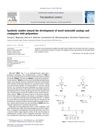
February 2010 in “Tetrahedron Letters” This article describes the synthesis of novel polyamine-modified minoxidil analogs and conjugates to potentially enhance minoxidil's biological activity, selectivity, and water solubility, but reports no new biological results.
 April 2023 in “Journal of Investigative Dermatology”
 This study found that ALRN-6924 effectively protected human hair follicles from cyclophosphamide-induced damage in an ex vivo setting, suggesting it may reduce both acute and permanent chemotherapy-induced alopecia.
 1 citations
,
December 2022 in “Journal of cosmetic dermatology”
1 citations
,
December 2022 in “Journal of cosmetic dermatology” This study found that combining a potent steroid with a vitamin D analogue may offer more convenient treatment for localized alopecia areata than using a superpotent steroid alone, with comparable efficacy but fewer side effects.
 66 citations
,
January 2010 in “Journal of The American Academy of Dermatology”
66 citations
,
January 2010 in “Journal of The American Academy of Dermatology” This study reported that mycophenolate mofetil was effective in reducing signs and symptoms of active lichen planopilaris in 83% of patients who had failed multiple prior treatments.