 17 citations
,
February 2018 in “Journal of Cosmetic and Laser Therapy”
17 citations
,
February 2018 in “Journal of Cosmetic and Laser Therapy” In this study, researchers administered eight sessions of intradermal injections containing growth factors into the scalp of 1000 patients, reporting a significant reduction in hair fall in 83% of participants and increased total hair count and shaft diameter, with promising tolerance and safety.
 13 citations
,
January 2020 in “Experimental Dermatology”
13 citations
,
January 2020 in “Experimental Dermatology” This pilot clinical trial suggests that platelet-rich plasma (PRP) treatment may increase hair density in patients with androgenetic alopecia, though outcomes varied between patients.
 10 citations
,
August 2019 in “The World Journal of Men's Health”
10 citations
,
August 2019 in “The World Journal of Men's Health” This study found that administering a kimchi and cheonggukjang probiotic product promoted hair growth and increased hair thickness in individuals with patterned hair loss without causing adverse effects.
9 citations
,
September 2012 in “Journal of Cosmetic Dermatology” This study introduced hair capacitance mapping as a promising technique for assessing hair surface moisture dynamics, revealing that weathered hair loses moisture more quickly than intact hair.
5 citations
,
August 2020 in “Advances in Hematology” In this study, an intervention to automatically measure ferritin detected iron deficiency in about 28% of women with alopecia, potentially helping to address hair loss.
4 citations
,
June 2025 in “JMIR Formative Research” In this study, researchers reported no statistically significant association between hair cortisol levels and either perceived stress or objective neuroendocrine stress measures in a predominantly male participant group.
 2 citations
,
November 2017 in “Journal of Cosmetic and Laser Therapy”
2 citations
,
November 2017 in “Journal of Cosmetic and Laser Therapy” This study found that JetPeel-assisted topical minoxidil significantly improved hair growth in patients with androgenetic alopecia compared to topical minoxidil alone or no treatment.
March 2026 in “Journal of the American Academy of Dermatology” In this study, patients with active lymphocytic cicatricial alopecia showed significant improvement using a three-stage treatment regimen involving Tofacitinib, Apremilast, and Crisaborole, with 93.5% experiencing marked improvement and only three mild adverse events reported.
January 2026 in “BioMed Research International” This study observed that a combination of rosemary and castor oils promoted hair growth in a mouse model, showing similar hair length trends to 2% minoxidil. However, results from this murine model cannot be directly applied to humans.
 August 2025 in “Majalah Obstetri & Ginekologi”
 In this study, women with PCOS commonly reported persistent long COVID symptoms like fatigue and hair loss; however, vaccination did not worsen PCOS symptoms, reinforcing the importance of completing COVID-19 vaccinations to potentially reduce long COVID risks in this group.
June 2026 in “Dermatologic Surgery”  87 citations
,
September 2016 in “Dermatologic Surgery”
87 citations
,
September 2016 in “Dermatologic Surgery” This study found that platelet-rich plasma did not significantly improve hair mass index or hair count in women with female androgenetic alopecia, though some patients perceived benefits in hair quality.
58 citations
,
June 2009 in “Clinics” This study found that a six-month treatment with isoflavone-rich soy extract significantly increased epidermal thickness, elastic and collagen fibers, and blood vessels in the skin of postmenopausal women.
 48 citations
,
November 2017 in “Journal of the American Academy of Dermatology”
48 citations
,
November 2017 in “Journal of the American Academy of Dermatology” Tofacitinib 2% ointment helped hair regrow in 3 out of 10 patients with alopecia areata, but caused side effects like scalp irritation and raised cholesterol in some.
 42 citations
,
November 2018 in “Archives of dermatological research”
42 citations
,
November 2018 in “Archives of dermatological research” Apremilast was not effective in treating moderate-to-severe alopecia areata.
 23 citations
,
November 2007 in “Journal of cosmetic dermatology”
23 citations
,
November 2007 in “Journal of cosmetic dermatology” This study concluded that both phosphatidylcholine alone and with organic silicium effectively reduced submental fat, achieving optimal results after three sessions with mild and temporary adverse effects.
 16 citations
,
November 2015 in “International Journal of Dermatology”
16 citations
,
November 2015 in “International Journal of Dermatology” This study found that alopecia significantly reduces quality of life among South African Black women, with subjective symptoms and self-image concerns having the greatest impact.
 15 citations
,
February 2014 in “BMC Research Notes”
15 citations
,
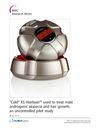
February 2014 in “BMC Research Notes” This study found that male androgenic alopecia patients using the X5 hair laser device showed a statistically significant increase in hair growth over a 26-week period.
 12 citations
,
March 2021 in “Journal of Medical Internet Research”
12 citations
,
March 2021 in “Journal of Medical Internet Research” This study tested the feasibility of using multimodal recruitment strategies to assemble a diverse group of 438 women for a web-based survey on ovulation and menstruation health, finding that internet and community fair methods achieved higher enrollment and completion rates compared to clinic recruitment.
 7 citations
,
April 2020 in “Curēus”
7 citations
,
April 2020 in “Curēus” In this pilot study, both microneedling and CO2 laser combined with hair transplantation and nbUVB demonstrated potential for inducing repigmentation in refractory palmar-plantar vitiligo, though further research is needed to ascertain their relative efficacy.
 3 citations
,
March 2020 in “International Journal of Dermatology”
3 citations
,
March 2020 in “International Journal of Dermatology” This correspondence about the treatment of chronic alopecia areata with tildrakizumab reports no clinical results; the authors present an open-label pilot study setup.
 1 citations
,
January 2013 in “Journal of Cosmetics, Dermatological Sciences and Applications”
1 citations
,
January 2013 in “Journal of Cosmetics, Dermatological Sciences and Applications” This study reported that Nigella sativa essential oil significantly improved hair density, thickness, and reduced inflammation in patients with telogen effluvium over a three-month treatment period.
August 2026 in “Women s Health” This preliminary pilot study found that a combined microneedling-assisted Panax ginseng exosome protocol with adjunctive inner gel use led to short-term improvements in patient-reported vulvovaginal symptoms and qualitative improvements in vulvar skin tone, though results are preliminary and based on a small, uncontrolled sample.
September 2025 in “Journal of the American Academy of Dermatology” April 2025 in “Health Science Reports” PRP treatment improved skin pigmentation and appearance in facial lichen planus pigmentosus.
 June 2024 in “Archives of dermatological research”
 In this self-controlled comparative study of 16 women with Female Pattern Hair Loss, MMP® with Minoxidil showed a better response in the parietal-vertex regions in less advanced cases compared to standard Minoxidil treatment, though overall effectiveness was similar.
July 2023 in “Current Developments in Nutrition” 
This study found that multimodal recruitment strategies successfully achieved target recruitment quickly and created a racially diverse cohort to study ovulation and menstruation health, with higher survey completion rates noted among participants recruited via the internet and community fairs than in clinics.
 January 2019 in “Chulalongkorn Medical Journal”
 This study found that combining a 1,927 nm fractional Thulium-doped fiber laser with platelet-rich plasma significantly increased hair density and mass in men with androgenetic alopecia, suggesting it is an effective treatment.
 January 2015 in “Journal of cosmetology & trichology”
 In this pilot study, eyebrow mesotherapy was reported to achieve clinically apparent thickening and darkening of eyebrows, with 8 out of 12 patients satisfied with the results after 15 days.