 23 citations
,
January 2010 in “Journal of The American Academy of Dermatology”
23 citations
,
January 2010 in “Journal of The American Academy of Dermatology” This article discusses the efficacy and safety of mycophenolate mofetil and hydroxychloroquine for treating lichen planopilaris and reports no new clinical results.
 January 2021 in “International journal of basic and clinical pharmacology”
 This study found that hydroxychloroquine was less effective than betamethasone oral mini pulse therapy in managing alopecia areata, with patients on hydroxychloroquine experiencing score increases and more relapses at 24 weeks, though adverse event rates were similar between the groups.
July 2014 in “Planta Medica” This article reviews the use of Eclipta Alba, a traditional Ayurvedic herb, in liver health, hair growth, and diabetes management, but it reports no new research findings.
January 2015 in “International Journal of Pharma and Bio Sciences” This review discusses the traditional medicinal uses of Tridax procumbens, attributing its therapeutic properties to various active phytochemicals, but reports no new clinical findings.
19 citations
,
May 2022 in “International journal of molecular sciences” This study suggests that PRX01, PRX44, and PRX73 regulate extensin-mediated cell wall properties during root hair cell growth, influencing growth patterns, peroxidase activity, and cell wall thickness.
2 citations
,
May 2024 in “International Journal of Medical Arts” This study found that topical DPCP was more effective for hair regrowth in resistant alopecia areata compared to anthralin, with both treatments having similar safety profiles.
This article provides an overview of the indications, interactions, and various potential adverse reactions associated with several drugs, but it reports no specific new results.
 16 citations
,
April 2014 in “Expert Opinion on Pharmacotherapy”
16 citations
,
April 2014 in “Expert Opinion on Pharmacotherapy” This review discusses the pharmacological profile of teriflunomide for treating relapsing multiple sclerosis, highlighting its safety and effectiveness in reducing relapses and slowing disability progression, though direct comparisons with other oral medications are lacking.
9 citations
,
January 2015 in “Medical hypotheses” This report suggests that TCDD may alter human epidermal stem cell populations by upregulating c-Myc, potentially leading to increased stem cell turnover during chloracne development.
 22 citations
,
January 2021 in “Pharmacognosy Journal”
22 citations
,
January 2021 in “Pharmacognosy Journal” This review discusses the traditional uses, phytochemical, and pharmacological studies on Ageratum conyzoides, Tridax procumbens, and Bidens pilosa, emphasizing the need for further clinical research into their medicinal potential, but it does not report new results.
 January 2010 in “CNR Solar (Scientific Open-access Literature Archive and Repository) (Consiglio Nazionale delle Ricerche)”
 This study found that combining metformin and clomifene citrate improved pregnancy outcomes and reduced miscarriage rates in women with PCOS and infertility undergoing intrauterine insemination.
 58 citations
,
June 2012 in “Journal of Alternative and Complementary Medicine”
58 citations
,
June 2012 in “Journal of Alternative and Complementary Medicine” This review analyzes the traditional Iranian medicine uses of Citrullus colocynthis and compares them with modern phytotherapy findings, reporting no new clinical results but noting safety concerns and dosage considerations.
 4 citations
,
July 2001 in “Journal of Cutaneous Medicine and Surgery”
4 citations
,
July 2001 in “Journal of Cutaneous Medicine and Surgery” This study suggests that oral and topical tacrolimus may effectively treat psoriasis, atopic dermatitis, and hair growth disorders, although results are mostly based on small or animal studies.
 1 citations
,
January 2020 in “International journal of research in pharmacy and chemistry”
1 citations
,
January 2020 in “International journal of research in pharmacy and chemistry” This review provides an overview of the ethnomedicinal uses, chemical composition, and pharmacological profile of Eclipta alba Hassk and presents no new clinical findings.
1 citations
,
July 2024 in “Journal of Investigative Dermatology” Plaquenil can cause a severe skin reaction called AGEP, requiring prompt diagnosis and treatment.
 April 2023 in “Journal of Investigative Dermatology”
 This study found that PX-12 inhibited the NLRP3 inflammasome and reduced psoriasis-like symptoms in a mouse model, suggesting its potential as a treatment for psoriasis.
 23 citations
,
February 2015 in “International Journal of Molecular Sciences”
23 citations
,
February 2015 in “International Journal of Molecular Sciences” This study found that colchicine treatment significantly reduced hair fiber elongation in cultured hair follicles and altered protein expression and activity in dermal papilla cells, suggesting a role for the ubiquitin-proteasome system in its effects.
29 citations
,
October 2009 in “Pharmacology Biochemistry and Behavior”  17 citations
,
January 2012 in “IOSR Journal of Environmental Science Toxicology and Food Technology”
17 citations
,
January 2012 in “IOSR Journal of Environmental Science Toxicology and Food Technology” This study found that high doses of ethyl acetate extract from Tridax procumbens can have specific toxic effects in rats, including organ damage and significant changes in some serum biochemical parameters.
November 2025 in “Portuguese National Funding Agency for Science, Research and Technology (RCAAP Project by FCT)” This study investigates the relationship between chemotherapy for cervical cancer, including drugs like Paclitaxel and Cisplatin, and the development of alopecia, highlighting the need for more research to improve symptom management and the crucial role of pharmacists in patient education and care.
 December 2025 in “Journal of Food Innovation, Nutrition, and Environmental Sciences”
 This study evaluated the effects of sun drying and solar drying on Chaya leaves, finding that solar drying better preserves chlorophyll and phytochemicals while maintaining comparable nutritional quality to sun drying, suggesting its adoption could improve shelf life and maintain quality in areas without refrigeration.
60 citations
,
August 1969 in “British Journal of Dermatology” This study used an autoradiographic technique to observe that germicides in surfactants are primarily deposited on the stratum corneum of guinea-pig and human skin.
2 citations
,
January 2006 in “PubMed” This study found that topical application of carpronium chloride led to arteriolar vasodilation and increased blood flow in rat mesenteric arterioles, without affecting systemic blood pressure.
 18 citations
,
May 1988 in “Journal of The American Academy of Dermatology”
18 citations
,
May 1988 in “Journal of The American Academy of Dermatology” In this study, itraconazole was reported to effectively alleviate clinical symptoms in patients with recalcitrant Trichophyton rubrum infections, though toenail infections often recurred, indicating the need for further research on long-term efficacy and safety.
 1 citations
,
September 2024 in “International Journal of Advanced Multidisciplinary Research and Studies”
1 citations
,
September 2024 in “International Journal of Advanced Multidisciplinary Research and Studies” This study observed that 100% of cancer patients at Dr. Moewardi Surakarta Hospital receiving carboplatin-paclitaxel chemotherapy experienced grade 2 alopecia as an adverse drug reaction.
 3 citations
,
January 2017 in “Evidence-based complementary and alternative medicine”
3 citations
,
January 2017 in “Evidence-based complementary and alternative medicine” This study found that Galla chinensis solution significantly improved skin lesions and fungal eradication in dermatophytosis-infected dogs, showing over 85% efficacy in fungal removal after 14 days and outperforming the positive control treatment.
 8 citations
,
March 2018 in “Journal of Drug Delivery Science and Technology”
8 citations
,
March 2018 in “Journal of Drug Delivery Science and Technology” This study found that treating paracoccidioidomycosis-infected mice with a nanoparticle formulation of itraconazole led to higher drug accumulation in lung, liver, and spleen tissues, improved treatment efficacy, and reduced side effects compared to traditional oral solutions.
 November 2025 in “Frontiers of Agricultural Science and Engineering”
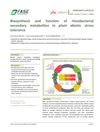
 This study observed that rhizobacterial strain RT3 significantly improved drought tolerance in lettuce by increasing survival rates and fresh biomass after rewatering, with metabolites such as proline and glycine enhancing stress resilience.
1 citations
,
January 2012 in “Türk jinekoloji ve obstetrik derneði dergisi/Türk Jinekoloji ve Obstetrik Derneği dergisi” This study observed that over 90% of patients undergoing paclitaxel and platinum chemotherapy for certain gynecological cancers experienced significant, yet reversible, alopecia by the end of treatment.
 15 citations
,
June 2018 in “Journal of Chromatographic Science”
15 citations
,
June 2018 in “Journal of Chromatographic Science” This study successfully developed a method to measure four flavonoids from Platycladus orientalis leaves in rat plasma, which was used in a pharmacokinetic study on healthy rats.