 9 citations
,
June 2017 in “Journal of Cutaneous Pathology”
9 citations
,
June 2017 in “Journal of Cutaneous Pathology” This study found that follicular acantholysis is a common histopathological feature in pemphigus, with differences in depth between pemphigus vulgaris and pemphigus foliaceus lesions that may aid in diagnosis.
28 citations
,
May 1998 in “Journal of the American Academy of Dermatology” This case report suggests that tufted hair formation can occur in localized exudative inflammatory scalp lesions, as observed in a Japanese man with pemphigus vulgaris.
 March 2024 in “IP Indian journal of clinical and experimental dermatology”
 This case report highlighted the rarity and diagnostic challenges of a giant solitary trichoepithelioma occurring on the neck, noting that while typically benign, these tumors can rarely transform malignantly into basal cell carcinoma.
2 citations
,
July 2001 in “Dermatologic Surgery” This study reports two cases of trichoblastic neoplasms with histologic features suggesting they may be distinct, locally aggressive trichoblastic carcinomas separate from basal cell carcinoma.
2 citations
,
June 2019 in “The Journal of Dermatology” This report describes two cases of aplasia cutis congenita with hair collar signs and hemangioma, which may suggest neural tube defects, although imaging showed no bone or neural tissue abnormalities.
 1 citations
,
June 2021 in “Curēus”
1 citations
,
June 2021 in “Curēus” This study discusses incidental findings of syringomas and syringomatous proliferations in areas of scalp alopecia, suggesting they may be secondary to reactive changes from subclinical alopecia.
November 2025 in “Journal of Investigative Dermatology” PCFCL may have unrecognized subtypes and needs more research.
January 2014 in “International Journal of Dermatology and Venereology” This case report describes a 42-year-old male with alopecia areata and a scalp neurofibroma, emphasizing the tumor's histopathological features and the patient's decision against surgical treatment.
January 2015 in “프로그램북(구 초록집)” This case report describes an unusual instance of eruptive syringomas in a 25-year-old man, persisting for about 10 years, which is atypical given the patient's sex and the condition's usual presentation.
18 citations
,
March 2009 in “Experimental Dermatology” This study suggests that pilomatricoma can differentiate towards various hair follicle structures, including hair matrix, hair cortex, follicular infundibulum, outer root sheath, and hair bulge.
1 citations
,
March 2023 in “Journal of the Turkish Academy of Dermatology” This report suggests a possible association between temporal triangular alopecia and sebaceous nevus, and identifies a pinkish background as a new trichoscopic finding for TTA.
 January 2025 in “Turkiye Klinikleri Journal of Ophthalmology”
 This study of pilomatrixoma cases in children reveals that these benign tumors typically present as painless masses under the eyebrow and can be effectively treated with surgical excision, though rare rapid growth may occur.
1 citations
,
January 2022 in “Journal of veterinary diagnostic investigation” This case report documented a novel presentation of a canine viral plaque appearing as a solitary exophytic keratin-filled mass, highlighting the need to differentiate it from a hair follicle tumor.
37 citations
,
March 1998 in “Lupus” This case report describes a patient with SLE and APLS who developed basaloid follicular hamartomas, which persisted despite aggressive treatment for SLE, although hair regrowth occurred.
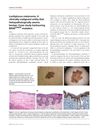 1 citations
,
March 2015 in “Journal of the European Academy of Dermatology and Venereology”
1 citations
,
March 2015 in “Journal of the European Academy of Dermatology and Venereology” This letter to the editor shares a case study of lentiginous melanoma that appears clinically malignant but histopathologically benign, involving the BRAFV600R mutation.
 1 citations
,
September 2011 in “Journal of Dermatology”
1 citations
,
September 2011 in “Journal of Dermatology” This letter reports a woman with nevoid basal carcinoma syndrome and pronounced androgenic alopecia associated with a novel PTCH gene mutation p.Leu1159fsx32, suggesting a genetic link in this case study.
61 citations
,
April 1969 in “Archives of Dermatology” This study highlights a case where progressive baldness initially diagnosed as alopecia universalis was attributed to a basal cell hamartoma of each hair follicle, stressing the importance of skin biopsies for unusual alopecia cases.
 34 citations
,
July 2011 in “Journal of the European Academy of Dermatology and Venereology”
34 citations
,
July 2011 in “Journal of the European Academy of Dermatology and Venereology” This study identified distinct dermoscopic patterns associated with different types of scalp tumors, highlighting variability in lesions related to patient age, gender, and tumor thickness.
21 citations
,
June 1992 in “Pediatric Dermatology” This report describes a 6-year-old girl with eruptive vellus hair cysts and suggests that this condition may be underdiagnosed due to its asymptomatic nature.
 3 citations
,
January 2019 in “Annals of Dermatology”
3 citations
,
January 2019 in “Annals of Dermatology” The study concluded that careful examination is key to differentiate between lipidized fibrous histiocytoma and juvenile xanthogranuloma.
2 citations
,
October 2019 in “Dermatologic Therapy” This study suggests using a handheld dermatoscope may allow for simple and efficient differentiation of eruptive vellus hair cysts by detecting vellus hair shafts, as demonstrated in a familial case involving five women.
August 2024 in “Clinical Case Reports” This case study reports on a rare benign skin tumor known as Pilomatricoma in the lower left orbital region of a 32-year-old male, highlighting its characteristic histopathological features and emphasizing the importance of surgical excision for successful treatment and minimal recurrence risk.
17 citations
,
October 2001 in “British Journal of Ophthalmology” This report highlights a case where intralesional cidofovir successfully treated squamous cell carcinoma without systemic toxicity, suggesting it may be a viable alternative to surgical excision.
 September 2022 in “TURKDERM”
 This article reports an unprecedented case of trichofolliculoma in the gluteal area, previously unreported in English literature.
July 2019 in “Zenodo (CERN European Organization for Nuclear Research)” This case report highlights a rare instance of follicular mucinosis in a 15-year-old male, emphasizing its self-limiting, benign course but noting the need for long-term monitoring due to potential association with mycosis fungoides.
January 2026 in “Indian Journal of Paediatric Dermatology” This case report describes a rare co-existence of Becker nevus and plexiform neurofibroma in a child with genetically confirmed neurofibromatosis type 1, offering insights into the potential cellular and molecular links between these lesions.
1 citations
,
January 2022 in “Indian dermatology online journal” This case report documents the presentation and diagnosis of a rare bullous pilomatrixoma in a 20-year-old female using fine needle aspiration cytopathology, highlighting diagnostic challenges and features.
2 citations
,
September 2021 in “JAAD case reports” This report describes a case of trichodysplasia spinulosa in a renal transplant patient, characterized by unique dermatoscopic features and highlighting the need for timely diagnosis.
 21 citations
,
January 2018 in “Anticancer Research”
21 citations
,
January 2018 in “Anticancer Research” This study suggests that NBCCS and BFHS may be the same genetic condition, which could help improve identification and management of misdiagnosed cases with specific surveillance strategies.
1 citations
,
August 2024 in “Pediatric Dermatology” In this report, researchers describe an unusual case of congenital pili multigemini, a hair follicle disorder, presenting on the eyebrow of a female infant, highlighting its rarity and atypical location.