 July 2026 in “International Journal of Molecular Sciences”
 This study found that TSG-enriched Polygonum multiflorum extract, optimized through microwave-assisted and chromatographic methods, promotes hair regrowth in a mouse model of androgenetic alopecia via 5α-reductase inhibition and Wnt/β-catenin pathway activation, suggesting its potential as a natural treatment.
 18 citations
,
October 2005 in “International Journal of Pharmaceutics”
18 citations
,
October 2005 in “International Journal of Pharmaceutics” This study found that incorporating 0.5% TPGS into topical minoxidil solutions enhanced hair growth in mice, although increasing TPGS to 2% decreased effectiveness.
14 citations
,
June 2024 in “Food Chemistry X” This review highlights that pomegranate leaf exhibits potential health benefits, such as anti-cancer, anti-diabetic, anti-inflammatory, and neuroprotective effects in vitro and in animal models, but calls for comprehensive human clinical trials to confirm these therapeutic benefits and ensure safety.
 3 citations
,
May 2011 in “Journal of the American Academy of Dermatology”
3 citations
,
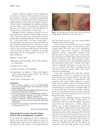
May 2011 in “Journal of the American Academy of Dermatology” This case report describes a 54-year-old woman who developed hypertrichosis around a leg ulcer while using PGE1 ointment, suggesting a potential side effect of the treatment.
March 2025 in “Journal of Cosmetic Dermatology” In this case study, a 29-year-old woman with Pseudopelade of Brocq, a type of scarring alopecia, showed significant hair density improvement following a combination of scalp reduction surgery and concentrated growth factor injections postoperatively, which addressed scar complications and inflammation.
July 2026 in “Research Square” 1 citations
,
November 2024 in “EMBO Reports” In this study, researchers observed that deleting the Gpr54 gene accelerated the hair cycle and enhanced hair regeneration in mice by modifying the NAFTc3-SFRP1-Wnt signaling pathway, suggesting Gpr54 as a potential target for hair loss treatments.
 February 2022 in “Cosmetic Dermatology”
 This article reviews the role of Platelet Rich Plasma in cosmetic dermatology and discusses a new method for storing PRP for personalized home use without reporting clinical outcomes.
 3 citations
,
March 2016 in “Journal of Cosmetic Dermatology”
3 citations
,
March 2016 in “Journal of Cosmetic Dermatology” This study found that the penta-peptide Gly-Pro-Ile-Gly-Ser increased the proportion of thick hair and improved baldness appearance in Japanese men with androgenetic alopecia.
January 2023 in “The Egyptian Journal of Hospital Medicine” This review suggests that platelet-rich plasma therapy may be an effective treatment for androgenetic alopecia, with low downtime and minimal adverse effects reported in the studies analyzed.
 February 2022 in “Programa de Iniciação Científica - PIC/UniCEUB”
 This study compared the effectiveness of platelet-rich plasma and 5% topical minoxidil for androgenetic alopecia in men but did not report conclusive clinical results, relying on patient self-assessments.
 23 citations
,
June 2018 in “Facial Plastic Surgery”
23 citations
,
June 2018 in “Facial Plastic Surgery” This review suggests that platelet-rich plasma is a low-risk treatment for androgenic alopecia with good patient satisfaction and positive objective outcomes, but further research is needed to refine methods and standardize outcome measurements.
November 2014 in “Clinical Neurophysiology” High doses of progesterone can reduce seizures in mice.
 April 2026 in “Inflammopharmacology”
 This study found that Punica granatum ethanolic leaf extract may alleviate skin fibrosis in rats by modulating inflammation-related pathways and reducing dermal alterations.
This study found that platelet-rich plasma treatments improved hair density and regrowth in men and women with androgenetic alopecia, with better results when combined with minoxidil compared to finasteride.
 28 citations
,
October 1992 in “JEADV. Journal of the European Academy of Dermatology and Venereology/Journal of the European Academy of Dermatology and Venereology”
28 citations
,
October 1992 in “JEADV. Journal of the European Academy of Dermatology and Venereology/Journal of the European Academy of Dermatology and Venereology” In this study, Scalp Immersion Proxigraphy (SIP) was shown to produce more accurate measurements of linear hair growth rate than crude phototrichogram techniques, suggesting SIP's suitability for clinical trials monitoring hair growth.

This chapter reviews current and future strategies for identifying ligands and functions of orphan G protein-coupled receptors, but it reports no new experimental results.
July 2020 in “Journal of Tissue Engineering and Reconstructive Surgery”  1 citations
,
June 2017 in “Journal of The American Academy of Dermatology”
1 citations
,
June 2017 in “Journal of The American Academy of Dermatology” PRP treatment for hair loss shows promise, with 58% of patients satisfied and most noticing improvement within 6 months.
 August 2024 in “Plant Signaling & Behavior”
 This study found that overexpressing the gene OsPRX83 in rice plants enhanced osmotic and oxidative stress tolerance compared to wild-type and mutant rice, showing potential for engineering drought-resistant rice varieties through ABA-dependent pathways and ROS scavenging.
 November 2023 in “The Journal of Urology”
 The conclusion is that future trials should report specific details about the PRP composition to better understand its effects on urologic conditions.
 25 citations
,
September 2019 in “PubMed”
25 citations
,
September 2019 in “PubMed” This review discusses the therapeutic potential of platelet-rich plasma in dermatology and highlights the need for standardized treatment protocols, but reports no new clinical results.
July 2025 in “Journal of Investigative Dermatology” In this study, higher expression of PEDF was observed in hair follicles from balding regions in AGA patients, suggesting that targeting PEDF could be a promising approach for treating androgenetic alopecia.

This overview of PRP Bristol clinics explains the growing popularity of Platelet-Rich Plasma therapy as a non-surgical treatment for early-stage hair loss, detailing its process, benefits, and suitability for individuals with androgenetic alopecia.
6 citations
,
May 2021 in “Aesthetic Surgery Journal” This study found that intradermal injections of platelet-rich plasma were equally safe and effective for treating androgenetic alopecia, with higher platelet numbers possibly enhancing hair density and follicle diameter.
1 citations
,
July 2016 in “Nottingham ePrints (University of Nottingham)” This study developed mathematical models to simulate phosphate uptake in rice and Arabidopsis, suggesting a phosphate-sensitive repressor could regulate PHO2 mRNA levels, and highlighting potential targets and traits for improving phosphorus-use efficiency.
 January 2013 in “Otorhinolaryngology clinics : an international journal”
 This review examines platelet-rich plasma's applications in aesthetic surgery and reports no new clinical results; the authors highlight its growing use and potential as a therapeutic modality.
 2 citations
,
April 2016 in “Más dermatología”
2 citations
,
April 2016 in “Más dermatología” This study found that the dietary supplement RJ-SP4AGA significantly improved hair growth and reduced hair loss in post-menopausal women with androgenetic alopecia over 16 weeks.
2 citations
,
January 2021 in “Springer eBooks” PRP is useful for hair restoration, facial rejuvenation, and wound healing.
This study found a significant association between premature greying of hair and deficiencies in vitamin D, vitamin B12, hypothyroidism, and disrupted iron profiles, alongside lifestyle factors like stress and smoking.