 4 citations
,
September 2024 in “Jurnal Pengolahan Hasil Perikanan Indonesia”
4 citations
,
September 2024 in “Jurnal Pengolahan Hasil Perikanan Indonesia” In this study, researchers reported that compounds from Bruguiera gymnorhiza leaves showed anti-inflammatory potential in in silico analyses, with favorable drug properties and specific binding to the IKKβ receptor, suggesting possible development into anti-inflammatory drugs.
 4 citations
,
August 2016 in “JEADV. Journal of the European Academy of Dermatology and Venereology/Journal of the European Academy of Dermatology and Venereology”
4 citations
,
August 2016 in “JEADV. Journal of the European Academy of Dermatology and Venereology/Journal of the European Academy of Dermatology and Venereology” This case report observed that after 6 months of treatment with topical cetirizine and oral vitamin D, hair density and quality improved in three girls with congenital hypotrichosis due to ectodermal dysplasia.
 3 citations
,
May 2021 in “Dermatologic Clinics”
3 citations
,
May 2021 in “Dermatologic Clinics” This article reviews potential therapeutic targets and comorbidities associated with male androgenetic alopecia, but reports no new clinical results; further study is needed for comprehensive management.
 3 citations
,
March 2018 in “Pediatric Dermatology”
3 citations
,
March 2018 in “Pediatric Dermatology” This study found that omeprazole can cause acquired generalized hypertrichosis by significantly increasing duodenal prostaglandin E2 synthesis, which is involved in hair growth regulation.
 3 citations
,
February 2016 in “Nature Biotechnology”
3 citations
,
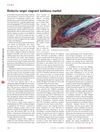
February 2016 in “Nature Biotechnology” New drug shows promise for better hair growth in baldness treatment.
 3 citations
,
November 2015 in “Journal of Investigative Dermatology”
3 citations
,
November 2015 in “Journal of Investigative Dermatology” This study examines the interaction between androgen receptor signaling and the β-catenin/Wnt signaling pathway in mouse hair follicles, but reports no clinical results.
 2 citations
,
April 2022 in “Revista Eletrônica Acervo Médico”
2 citations
,
April 2022 in “Revista Eletrônica Acervo Médico” This review discusses various alternative treatments for androgenetic alopecia, including pharmacological, surgical, and herbal therapies, without presenting new clinical findings.
 2 citations
,
December 2019 in “Journal of The European Academy of Dermatology and Venereology”
2 citations
,
December 2019 in “Journal of The European Academy of Dermatology and Venereology” This letter to the editor provides no abstract and reports no new research findings or results.
 2 citations
,
April 2019 in “Dermatologic Therapy”
2 citations
,
April 2019 in “Dermatologic Therapy” A patient with alopecia had hair regrowth with tofacitinib but developed a skin reaction, choosing to continue the treatment despite the side effect.
 2 citations
,
December 2017 in “Bangladesh Journal of Pharmacology”
2 citations
,
December 2017 in “Bangladesh Journal of Pharmacology” In this study, N. sativa oil and decoction significantly protected against chemotherapy-induced alopecia in albino rats.
 1 citations
,
November 2025 in “Frontiers in Immunology”
1 citations
,
November 2025 in “Frontiers in Immunology” This review explores the complex role of the Innate Immune System in rheumatoid arthritis, highlighting gaps in understanding its functions and interactions with the Adaptive Immune System, offering insights into potential biomarkers and therapeutic strategies for this challenging autoimmune condition.
 1 citations
,
May 2022 in “bioRxiv (Cold Spring Harbor Laboratory)”
1 citations
,
May 2022 in “bioRxiv (Cold Spring Harbor Laboratory)” This study found that ulcerative colitis is associated with diverse molecular changes and chronic inflammation, with some biomarker levels partially recovering during remission.
 1 citations
,
May 2021 in “Revista Eletrônica Acervo Científico”
1 citations
,
May 2021 in “Revista Eletrônica Acervo Científico” This review discusses various treatment options for androgenic alopecia, noting finasteride's greater efficacy in men and identifies ongoing research needs, particularly for therapies like laser and stem cells.
 1 citations
,
March 2021 in “Dermatological reviews”
1 citations
,
March 2021 in “Dermatological reviews” This review discusses recent advances in understanding the pathophysiology and molecular mechanisms of androgenetic alopecia in males, females, and children, but reports no new clinical results.
 1 citations
,
December 2019 in “Journal of medicine and life science”
1 citations
,
December 2019 in “Journal of medicine and life science” This article discusses the role of dermal papilla and dermal sheath cells in the hair cycle and reviews finasteride and minoxidil's mechanisms in promoting hair growth, but presents no new clinical findings.
 1 citations
,
September 2019 in “Practica medicală”
1 citations
,
September 2019 in “Practica medicală” This article discusses the challenges in treating androgenic alopecia and highlights its potential links to coronary heart disease and metabolic syndrome but reports no new clinical findings.
 1 citations
,
July 2018 in “Elsevier eBooks”
1 citations
,
July 2018 in “Elsevier eBooks” This review covers androgenetic alopecia's epidemiology, pathogenesis, current management options, and research trends, concluding that no definitive cure exists despite extensive interest and ongoing genetic research efforts.
 1 citations
,
August 2017
1 citations
,
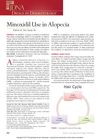
August 2017 This article reviews the mechanism, usage, and alternatives of the medication minoxidil in dermatology and reports no new clinical outcomes.
 1 citations
,
May 2017 in “InTech eBooks”
1 citations
,
May 2017 in “InTech eBooks” This chapter reviews signaling pathways related to androgenic alopecia in dermal papilla cells of balding human scalps, integrating published information and analysis of molecular interactions, without reporting new clinical results.
 1 citations
,
January 2015 in “Journal of Aesthetic & Reconstructive Surgery”
1 citations
,
January 2015 in “Journal of Aesthetic & Reconstructive Surgery” This review discusses techniques for harvesting follicular units, medical treatments for androgenetic alopecia, and potential future advancements in hair restoration therapy, but it reports no new clinical results.
 June 2026 in “Discover Nano”
 This review discusses current treatment strategies for alopecia and highlights the potential of lipid-based nanoparticles to improve drug delivery to the scalp and hair follicles, noting their ability to enhance skin penetration and drug stability while outlining associated challenges and the need for further research.
 June 2026 in “Research Square”
 This study evaluated an herbal emulgel formulation containing extracts from Wedelia chinensis and Cassytha filiformis for hair growth promotion in rats, finding that the combined formulation significantly increased hair growth compared to both individual extracts and the control group.
 May 2026 in “Scientific Reports”
 This study found that kukui nut oil (AMS oil) promotes hair growth in human hair follicle cultures by increasing PGF2α levels and activating Nrf2 signaling, and a human trial confirmed its efficacy in enhancing eyelash growth.
 February 2026 in “Frontiers in Pharmacology”
 This review suggests a shift toward genetically informed treatments for male pattern hair loss by integrating genetic insights and pharmacogenetic markers into therapeutic decision-making.
 February 2026 in “Cureus”
 This review highlights that castor oil has potential dermatological uses, including enhancing hair luster, reducing hyperpigmentation, and improving skin hydration and elasticity, although rare side effects like contact dermatitis occur, necessitating further research to confirm its effectiveness in these applications.
 February 2026 in “Frontiers in Public Health”
 This review discusses the potential impact of lifestyle factors on the progression of androgenetic alopecia and reports no new clinical findings; the authors emphasize the need for more comprehensive studies.
 January 2026 in “Frontiers in Pharmacology”
 This review reports that topical minoxidil remains the primary treatment for androgenetic alopecia, while oral and sublingual forms offer alternative options, each with varying efficacy and side effects.
 January 2026 in “Military Medicine”
 This article discusses how lipopolysaccharide (LPS) from gram-negative bacteria activates platelets and affects vascular responses, emphasizing the role of reactive oxygen species (ROS) in these processes, without reporting new experimental findings.
 December 2025 in “IP Indian Journal of Clinical and Experimental Dermatology”
 This review reports that the treatment of androgenetic alopecia is shifting from single therapies to personalized, multimodal approaches incorporating both traditional and emerging pharmacologics, regenerative strategies, nutraceuticals, cosmeceuticals, and device-based interventions, with combination regimens showing improved outcomes.
 December 2025 in “ADMET & DMPK”
 This review synthesizes recent research to propose a precision framework for treating androgenetic alopecia and alopecia areata based on genetic insights and pathway biology, highlighting the roles of androgen-receptor signaling, immune dysregulation, and emerging therapies like regenerative medicine and AI-assisted diagnostics.