 3 citations
,
January 2023 in “Physiological Research”
3 citations
,
January 2023 in “Physiological Research” This review suggests that mesenchymal stem cells' therapeutic effects might be due to bioactive substances they release, rather than the cells themselves, highlighting the potential of the MSC secretome as a novel, cell-free therapeutic approach.
 2 citations
,
March 2019 in “European Journal of Dermatology”
2 citations
,
March 2019 in “European Journal of Dermatology” This study concluded that shampoos sold in pharmacies generally contain fewer regulated allergens under EU law compared to those sold in mass-market stores or by mail order, and pharmacy-sold baby shampoos were allergen-free.
 May 2026 in “AAPS PharmSciTech”
 This study found that PEGylated LUT-Aspasomes significantly improved neuroprotective effects in stressed rats, enhancing spatial memory, reducing depressive-like behavior, and preserving hippocampal architecture better than free luteolin. Additionally, it increased brain delivery and stability, suggesting potential for treating stress-related neurobehavioral disorders.
 February 2026 in “Frontiers in Materials”
 In this study, researchers developed iron-curcumin-coordinated nanoparticles to enhance curcumin's bioavailability and therapeutic effects, finding that these nanoparticles accelerate wound healing in diabetic mice by reducing inflammation and oxidative stress more effectively than free curcumin.
 April 2024 in “Research Square (Research Square)”
 This study found that extracts of mesenchymal stem cells (MSC-extract) and their protein components (MSC-protein) enhanced the proliferation and migration of periodontal ligament cells and induced significant periodontal tissue regeneration, showing potential as a new cell-free treatment for periodontal disease.
 April 2021 in “Journal of Investigative Dermatology”
 This study identified a unique transcriptional signature in occipital hair follicles that may protect them from miniaturization in androgenetic alopecia, using an animal-free model to investigate gene roles.
 19 citations
,
June 2020 in “Animals”
19 citations
,
June 2020 in “Animals” This study found that maternal sub-maintenance nutrition reduced the density and branching ratio of secondary wool follicles in Merino sheep fetuses and identified genes potentially involved in these processes.
 41 citations
,
November 2003 in “Annals of the New York Academy of Sciences”
41 citations
,
November 2003 in “Annals of the New York Academy of Sciences” This article discusses the complexities of androgen and antiandrogen therapies in women, detailing diagnostic measures, the effects on libido, and the potential benefits of new progestins with antiandrogenic properties, but presents no new empirical findings.
90 citations
,
July 2014 in “Conservation Physiology” This study found that hair cortisol concentration in free-ranging brown bears is influenced by handling methods, body condition, and potentially both short- and long-term stressors.
22 citations
,
September 2024 in “Human Reproduction Update” This study found that total testosterone and free testosterone are recommended as first-line tests for diagnosing biochemical hyperandrogenism in women with PCOS; liquid chromatography with tandem mass spectrometry is preferred for its accuracy.
 15 citations
,
August 2017 in “International Journal of Molecular Medicine”
15 citations
,
August 2017 in “International Journal of Molecular Medicine” This study reported that Panax ginseng extract significantly inhibited DKK-1-induced catagen-like changes in human hair follicles by promoting cell proliferation and reducing apoptosis, suggesting it may help mitigate hair loss associated with DKK-1.
232 citations
,
December 2011 in “Journal of the American Academy of Dermatology” Understanding and targeting specific molecules can help reduce scarring and promote scar-free healing.
14 citations
,
July 2022 in “Applied Sciences” This review discusses the potential of extracellular vesicles as cell-free tools in tissue engineering and regenerative medicine, noting their emerging role in promoting tissue repair without the risk of host rejection.
January 2021 in “Medical research archives” In this study, researchers examined a new propylene glycol-free 5% minoxidil lotion for 6 months among individuals with androgenic alopecia and found it demonstrated good clinical efficacy, with 74% showing a positive response, and very high cosmetic acceptability and tolerability, comparable to traditional formulations.
 May 2022 in “Голова и шея.”
 This research reports that essential oils may enhance athletic performance by improving cerebral hemodynamics and promoting muscle and psycho-emotional relaxation through activation of the limbic system.
19 citations
,
April 2018 in “Clinical cardiology” This study found that among older men, low levels of free dihydrotestosterone were associated with an increased risk of developing atrial fibrillation.
2 citations
,
November 2025 in “Cells” This review presents evidence supporting the potential of adipose-derived stem cell secretome as a promising cell-free therapy for skin repair, emphasizing its application in wound healing, alopecia, skin rejuvenation, and inflammatory skin diseases.
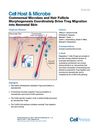 192 citations
,
March 2017 in “Cell host & microbe”
192 citations
,
March 2017 in “Cell host & microbe” The researchers reported that hair follicle development and commensal microbe colonization promote the accumulation of regulatory T cells in neonatal skin, with the Ccl20-Ccr6 pathway playing a key role in this process.
 75 citations
,
March 1999 in “Fertility and sterility”
75 citations
,
March 1999 in “Fertility and sterility” This study concluded that finasteride, cyproterone acetate, and flutamide were similarly effective at reducing hirsutism in women, though they acted through different mechanisms.
 59 citations
,
November 2018 in “Psychoneuroendocrinology”
59 citations
,
November 2018 in “Psychoneuroendocrinology” This study suggests that cerebrospinal fluid levels of the neurosteroids allopregnanolone and pregnanolone correlate negatively with PTSD and negative mood symptoms, with potential sex-specific differences in synthesis enzyme blocks.
 57 citations
,
July 2005 in “Clinics in Plastic Surgery”
57 citations
,
July 2005 in “Clinics in Plastic Surgery” Reconstruct lips with proper planning, templates, and revisions for appearance and function.
 35 citations
,
January 2012 in “The Journal of Sexual Medicine”
35 citations
,
January 2012 in “The Journal of Sexual Medicine” This review examines various androgen deprivation therapy methods for advanced prostate cancer, highlighting benefits and potential cardiovascular and sexual adverse effects, but reports no new clinical results.
 29 citations
,
August 2007 in “Annals of Oncology”
29 citations
,
August 2007 in “Annals of Oncology” Docetaxel and oxaliplatin are effective and have manageable side effects for recurrent platinum-sensitive ovarian cancer.
 26 citations
,
May 1984 in “Journal of Parenteral and Enteral Nutrition”
26 citations
,
May 1984 in “Journal of Parenteral and Enteral Nutrition” In this study, a 54-year-old woman with short bowel syndrome developed biotin deficiency and associated symptoms while on home parenteral nutrition lacking biotin, which improved significantly after supplementation.
18 citations
,
January 2021 in “Theranostics” This study found that actively targeted AN2728-loaded nanocarriers reduced inflammation and improved skin condition in a mouse model of psoriasiform inflammation compared to free drug and non-targeted nanoparticles.
 14 citations
,
May 2020 in “Drug Testing and Analysis”
14 citations
,
May 2020 in “Drug Testing and Analysis” This study reports that hair analysis could potentially monitor metformin use in diabetic patients, suggesting a possible correlation between daily dose and concentration in dark hair but not in light hair.
 7 citations
,
March 2012 in “Journal of Investigative Dermatology”
7 citations
,
March 2012 in “Journal of Investigative Dermatology” This study presents evidence that specific thymus-derived peptides affect human hair follicle growth, identifying thymulin as a potential hair growth stimulator despite interindividual response variations.
 6 citations
,
December 2015 in “JAMA”
6 citations
,
December 2015 in “JAMA” This content is not a research abstract; it includes a website navigation notice and no study findings.
 6 citations
,
November 1997 in “International Journal of Dermatology”
6 citations
,
November 1997 in “International Journal of Dermatology” This study found that women with acne and oligomenorrhea have higher levels of biologically active testosterone compared to those with acne and normal menstrual cycles.
 4 citations
,
May 2020 in “Medicine in Drug Discovery”
4 citations
,
May 2020 in “Medicine in Drug Discovery” This study found that arylsulfatase enzymes in hair follicles can convert the active form of minoxidil back to its inactive form, potentially affecting its effectiveness in treating androgenetic alopecia.