 3 citations
,
October 2021 in “Journal of Cosmetic Dermatology”
3 citations
,
October 2021 in “Journal of Cosmetic Dermatology” This review discusses the characteristic trichoscopy patterns useful in differentiating lichen planopilaris and frontal fibrosing alopecia from similar conditions but reports no new clinical results.
July 2026 in “JAAD reviews.” Female Pattern Hair Loss affects women's quality of life, with limited treatment options and a need for more research.
January 2013 in “Scholarworks (University of Massachusetts Amherst)” This dissertation reveals that FERONIA, a cell wall-binding receptor kinase, plays a crucial role in regulating plant functions such as sugar signaling, pollen tube reception, and RAC/ROP-mediated auxin signaling.
 16 citations
,
October 2008 in “Dermatologic Surgery”
16 citations
,
October 2008 in “Dermatologic Surgery” In this study, the novel powered FUE method was associated with faster harvesting time and lower graft transection rates compared to manual FUE in male patients with alopecia.
 March 2023 in “Journal of the American Academy of Dermatology”
 This review summarizes evidence that pityrosporum folliculitis in immunocompromised patients responds well to topical antifungals and treatment of underlying conditions, based on a limited number of studies with small sample sizes.
 1 citations
,
July 2018 in “Current Sexual Health Reports”
1 citations
,
July 2018 in “Current Sexual Health Reports” This review discusses the occurrence of persistent sexual, physical, neurological, and psychiatric side effects known as post-finasteride syndrome after 5x-reductase inhibitor treatment, and emphasizes the importance of evaluating these risks for patients with benign prostatic hyperplasia or androgenic alopecia.
 April 2023 in “JAAD international”
 This study observed that among a Moroccan population with frontal fibrosing alopecia, common comorbidities included lichen planus pigmentosus (36.8%), rosacea (28.9%), thyroid disorders (23.7%), and dyslipidemia (21.1%), highlighting potential relationships mediated by shared inflammatory or metabolic pathways.
 2 citations
,
October 2017 in “Journal of The American Academy of Dermatology”
2 citations
,
October 2017 in “Journal of The American Academy of Dermatology” In this study, focal atrichia was associated with late-onset female pattern hair loss, providing a clinical clue to its diagnosis, particularly separating it from other hair disorders.
 1 citations
,
December 2022 in “Clinical, Cosmetic and Investigational Dermatology”
1 citations
,
December 2022 in “Clinical, Cosmetic and Investigational Dermatology” In this study, TrichoScan characteristics, particularly hair density and terminal hair percentage in the midscalp, were found to predictively classify female pattern hair loss in a Chinese population.
July 2020 in “Vestnik urologii” This review examines the contentious issue of post-finasteride syndrome linked to 5-alpha reductase inhibitors and reports mixed findings on its sexual, physical, and psychological effects; the authors call for more rigorous studies.
March 2026 in “Actas Dermo-Sifiliográficas” In this study, dermatologists from the Spanish Hair and Nail Disorders Group viewed post-finasteride syndrome as rare and primarily of psychiatric origin, with limited scientific evidence supporting its existence.
 June 2025 in “Dermatologic Surgery”
 This study found that growth factor concentrate provides quicker improvements for patterned hair loss, but platelet-rich plasma offers more sustained benefits after treatment.
October 2022 in “Hair Transplantation” This article reviews the terminology and factors associated with female hair loss, particularly distinguishing it from male pattern hair loss, but reports no new clinical results.
 November 2016 in “Hair transplant forum international”
 This article summarizes Dr. Alan Jacobs's presentation at the 2016 ISHRS World Congress but reports no new research findings.
November 2009 in “Hair transplant forum international” This piece presents no new research findings; it briefly mentions opinions on Female Pattern Hair Loss and the importance of increasing awareness.
5 citations
,
November 2013 in “Case reports in dermatology” This case report details a 57-year-old woman with frontal fibrosing alopecia who developed hyperpigmentation after treatment with dutasteride and pimecrolimus, highlighting no previously reported hyperpigmentation association with this combination.
28 citations
,
June 1995 in “The Journal of Dermatology” This study reports that flaky skin mice exhibit skin and nail features that closely resemble human psoriasis vulgaris, suggesting they may serve as a natural model for this condition.
 7 citations
,
December 2021 in “European Respiratory Review”
7 citations
,
December 2021 in “European Respiratory Review” This review covers the current status of the interstitial pneumonia with autoimmune features (IPAF) category, pointing out the need for revision of its criteria to establish it as a standalone diagnostic term, but reports no new clinical findings.
 December 2015 in “Actas Dermo-Sifiliográficas”
 This review addresses the challenges in treating frontal fibrosing alopecia, highlighting the limited effectiveness of medical treatments and the demand for hair transplantation despite its risks, but it reports no new clinical results.
 October 2023 in “Dermatology practical & conceptual”
 In this case report, folliculitis decalvans with frontal fibrosing alopecia was observed in a patient with a dark phototype, highlighting the phenotypic spectrum of folliculitis decalvans and lichen planopilaris.
 7 citations
,
September 2015 in “Actas Dermo-Sifiliográficas”
7 citations
,
September 2015 in “Actas Dermo-Sifiliográficas” This article reviews the challenges of treating frontal fibrosing alopecia and the potential role of hair transplantation, noting the lack of effective medical treatments and uncertainty surrounding transplant outcomes.
 March 2025 in “International Journal of Trichology”
 This case report describes the first observed instance of fibrosing alopecia in a pattern distribution in a child, suggesting the condition is not solely androgen dependent.
 22 citations
,
November 2021 in “Dermatology and Therapy”
22 citations
,
November 2021 in “Dermatology and Therapy” This study found that the Alopecia Areata Patient Priority Outcomes questionnaire is a reliable and valid tool for measuring the severity and impact of hair loss in individuals with alopecia areata.
 January 2025 in “Revista del Centro Dermatológico Pascua”
 Early diagnosis and treatment can help manage fibrosing alopecia in older women.
 3 citations
,
July 2018 in “Biomedicine & pharmacotherapy”
3 citations
,
July 2018 in “Biomedicine & pharmacotherapy” This study suggests that paeoniflorin's protective effects on brain astrocytes may be mediated by TSPO and neurosteroids biosynthesis.
11 citations
,
January 2018 in “International Journal of Trichology” This commentary reviews the post-Finasteride syndrome and argues that while the condition's validity is debated, comprehensive guidelines are needed to address related risks and treatment options; it reports no new clinical results.
 November 2025 in “PARIPEX-INDIAN JOURNAL OF RESEARCH”
 GFC is more effective than PRP for treating hair loss.
 31 citations
,
April 2010 in “British journal of dermatology/British journal of dermatology, Supplement”
31 citations
,
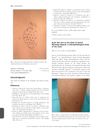
April 2010 in “British journal of dermatology/British journal of dermatology, Supplement” This report describes two patients with frontal fibrosing alopecia who developed acute hair loss on their limbs, revealing that the limb alopecia had similar histological features to scalp alopecia.
2 citations
,
January 2023 in “Skin Appendage Disorders” This study suggests a potential role for systematic scalp examinations in first-degree relatives of patients with pattern cicatricial alopecia.
April 2021 in “The journal of investigative dermatology/Journal of investigative dermatology” This study examined clinical characteristics of lichen planopilaris and frontal fibrosing alopecia in 24 men, revealing common scalp symptoms, frequent beard involvement, and limited association with thyroid disease.