November 2025 in “JDDG Journal der Deutschen Dermatologischen Gesellschaft” This study documented a case of an 11-month-old with PKU who developed acrodermatitis enteropathica-like symptoms due to severe phenylalanine deficiency, requiring dietary adjustment to restore phenylalanine levels.
 January 2023 in “Skin appendage disorders”
 This article describes two cases of plica neuropathica, a rare hair condition involving severe matting, and discusses possible contributing factors and diagnosis methods while reporting no new scientific results.
 June 2022 in “Asian Pacific journal of health sciences”
 This study reports a case of Indralupta (Alopecia Areata) successfully treated using Ayurvedic methods including Prachhan karma, Lepa, and Shirodhara, offering an alternative to conventional treatments like minoxidil and steroids, which may have adverse effects.
January 2022 in “International Research Journal of Ayurveda & Yoga” This narrative review explores Ayurvedic concepts related to polycystic ovarian syndrome and reports no new clinical results; the authors suggest traditional treatment approaches involving lifestyle and specific therapies.
This study found that an ethanolic extract of Semicarpus anacardium nuts reduced blood glucose levels and improved enzyme activities related to carbohydrate metabolism in normal rats.
January 1962 in “Archives of Dermatology” This case report describes a 5-year-old girl with lipoid proteinosis, characterized by a raspy voice, thinning scalp hair, and recurrent crusted lesions leading to pock-like scars.
July 2026 in “Journal of Ayurveda and Integrated Medical Sciences” This study reported that a 30-year-old female patient with hypothyroidism experienced significant health improvements, including weight loss and better lipid profiles, after undergoing Ayurvedic Panchakarma therapies, oral medications, and a tailored diet and yoga plan over one week.
4 citations
,
October 2015 in “JAAD Case Reports” This case report describes a patient experiencing nail nonadherence due to sterile matrix scarring associated with valproic acid use, and suggests nail bed excision with sterile matrix grafting as a potential surgical solution.
43 citations
,
March 2017 in “Drug Design Development and Therapy” The researchers reported that a new nanoformulation of paclitaxel-loaded nanoparticles showed superior antitumor effects against malignant melanoma in vitro and in vivo compared to the commercial formulation Taxol®.
 4 citations
,
July 2012 in “Linguistic Annotation Workshop”
4 citations
,
July 2012 in “Linguistic Annotation Workshop” This study found that greater root surface area due to root hairs contributed to better growth and zinc uptake of wild-type barley compared to its root-hairless mutant in zinc-deficient soil.
April 2025 in “International Ayurvedic Medical Journal” This case study on a 24-year-old male with Indraluptha (patchy hair loss) found that two cupping sessions followed by the application of Gunjapahala Lepa promoted new hair follicle growth and reduced lesion areas.
 April 2019 in “National Journal of Research in Ayurved Science”
 This source reports that triphala, an Ayurvedic herbal preparation made from three fruits, is widely used as a safe and effective laxative and colon cleanser, with potential anti-cancer properties and additional health benefits like improving digestion and detoxifying the body.
 1 citations
,
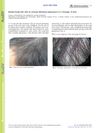
January 2018 in “Acta dermato-venereologica”
1 citations
,
January 2018 in “Acta dermato-venereologica” A teenager's hair with alternating white and dark bands, known as Pili annulati, is a genetic condition that is usually harmless and often considered attractive.
2 citations
,
July 2019 in “Indian dermatology online journal” This report documents a rare case of familial eyelash trichomegaly and synophrys in three siblings, with one sister also having loose anagen hair syndrome, an unreported association.
 7 citations
,
September 2024 in “Journal of Comparative Effectiveness Research”
7 citations
,
September 2024 in “Journal of Comparative Effectiveness Research” This study reports that health-related quality of life was generally maintained, and sometimes improved, in patients with HR+/HER2- advanced or metastatic breast cancer treated with palbociclib, compared to monotherapy, across various study types.
April 2019 in “National Journal of Research in Ayurved Science” This abstract describes how triphala, a traditional Ayurvedic remedy composed of three fruits, is widely regarded as an effective and safe laxative and colon cleanser with potential cancer-fighting properties, supporting the body's strength and overall health without harming nutritional reserves.
 June 2026 in “International Journal Of Ayurvedic And Herbal Medicine”
 This case report described the use of Vidarikandadi Kala Basti, a Panchakarma procedure, which was associated with improved symptoms and a modest Vitamin B12 increase in a patient with deficiency; however, the authors noted that causality cannot be established, and further controlled studies are needed.
 January 2020 in “International journal of medicinal plants and natural products”
 In this case report, virechan therapy led to significant symptom relief and weight reduction in a patient with polycystic ovarian syndrome, with improvements noted in ovarian volume and hormone levels.
 August 2021 in “Journal of emerging technologies and innovative research”
 This review examines the efficacy of platelet-rich plasma for treating hair loss, highlighting the lack of standardized protocols for PRP preparation and delivery and reporting no new clinical results.
 February 2025 in “Journal of Ayurveda and Integrated Medical Sciences”
 This study explores the use of Neem oil and a sesame oil-based formulation in Ayurvedic treatments for hair loss, suggesting their potential to improve scalp health, nourish hair follicles, and balance doshas, thereby aiding in hair loss prevention and management.
 December 2023 in “Journal of ayurveda and integrated medical sciences”
 In this case study, a 17-year-old male with patchy hair loss (Indralupta) experienced significant symptom relief after treatment with Pracchanna Karma and Maricha Lepa, suggesting the therapy was effective and economical within a short duration.
 September 2025 in “International Journal of Advanced Academic Studies”
 This review examines Ayurvedic and modern literature on combining Anu Taila Nasya and Gokshura lepa for hair loss and presents no new clinical results.
 August 2018 in “Journal of The American Academy of Dermatology”
 A 5-year-old girl with a rare skin disorder was effectively treated with skin creams instead of oral medication.
 March 2022 in “Pakistan BioMedical Journal”
 This study found that many adolescent girls in Pakistan were unaware of their PCOS symptoms, which are associated with a high prevalence and may be linked to dietary habits affecting menstrual cycles.
October 2020 in “The American journal of gastroenterology” This case study reports a previously undescribed cause of drug-induced autoimmune hepatitis triggered by para-aminobenzoic acid (PABA), emphasizing the need for caution with this supplement.
August 2026 in “Journal of Cosmetic Dermatology” This study found that platelet-rich plasma showed similar efficacy to intralesional triamcinolone acetonide for treating mild patch-type alopecia areata, offering a potential alternative with fewer steroid-related side effects.
1 citations
,
December 2023 in “The Healer” This case report describes Ayurvedic treatment, including Samshodhan Karma and Shaman Chikitsa, that resulted in pregnancy for a 22-year-old woman with PCOS-related infertility after 3 years of trying to conceive.
May 2025 in “International Ayurvedic Medical Journal” In this case report, a 19-year-old male with alopecia areata showed complete relief from symptoms and increased hair density after 90 days of Shamana therapy, suggesting its potential effectiveness in treating this condition with minimal side effects.
13 citations
,
February 1951 in “Journal of animal science/Journal of animal science ... and ASAS reference compendium” This study found that daily supplementation with 10 to 20 mg of calcium pantothenate led to complete recovery and significant improvement in appetite and growth in young pigs with pantothenic acid deficiency.
 4 citations
,
January 2017 in “Annals of Dermatology”
4 citations
,
January 2017 in “Annals of Dermatology” Frequent hairdryer use may worsen hair fragility in people with Pili Annulati.