 32 citations
,
February 2016 in “The American journal of dermatopathology/American journal of dermatopathology”
32 citations
,
February 2016 in “The American journal of dermatopathology/American journal of dermatopathology” This study observed that in primary extramammary Paget disease, carcinoma commonly spreads to significant depths along hair follicles and eccrine ducts, with a maximal depth of 3.6 mm.
14 citations
,
August 2011 in “Journal of the American Academy of Dermatology” This study reports that two elderly Asian men with primary scrotal extramammary Paget disease showed no response to a 4- to 6-month trial of topical imiquimod 5%.
 December 2018 in “Notulae Botanicae Horti Agrobotanici Cluj-Napoca”
 This issue of Notulae Botanicae Horti Agrobotanici Cluj-Napoca reviews new research topics in plant science, including plant root hair growth in response to hormones and micropropagation techniques, without reporting additional clinical results.
 November 1999 in “Hair transplant forum international”
 This article pays tribute to Emanuel "Manny" Marritt as an influential figure in hair restoration surgery but presents no new clinical findings.
 July 1999 in “Hair transplant forum international”
 This article profiles a respected hair restoration surgeon, Bill Parsley, and honors the "unsung heroes" who work diligently in the field without seeking recognition; it reports no research findings.
1 citations
,
October 2015 in “OakTrust (Texas A&M University Libraries)” This study found that harp seal vibrissal innervation studies focusing only on lateral vibrissae may overestimate total innervation by about 20%, highlighting the importance of considering the entire snout.
 September 2025 in “American Journal of Dermatopathology”
 In this research, most cases of mammary and extramammary Paget disease were reported to express PRAME, expanding the understanding of its presence in cutaneous epithelial tumors, though its diagnostic utility is limited by overlap with other conditions.
 April 2018 in “Journal of Investigative Dermatology”
 This study found that ERBB2 mutations and amplifications are likely key drivers of extramammary Paget disease, suggesting potential for targeted therapies and cancer immunotherapy due to the moderately high mutational load observed.

This case report and literature review concluded that using the follicular unit extraction technique for hair transplants in androgenetic alopecia patients yields satisfactory aesthetic results and high patient satisfaction over 12 months.
This publication reviews articles on the aesthetic benefits of laparoscopic cholecystectomy and the dermatological effects of mask wearing during the COVID-19 pandemic, but presents no new clinical results.
69 citations
,
May 2002 in “Journal of Investigative Dermatology” This study suggests that congenital atrichia with papular lesions may be more common than previously thought and proposes diagnostic criteria including the observation of hypopigmented whitish streaks on the scalp.
February 2003 in “Australasian Journal of Dermatology” This article reviews the book "Hair Loss: Principles of Diagnosis and Management of Alopecia" and reports no new research findings.
 July 1996 in “International Journal of Dermatology”
 This article offers no abstract or new results regarding hair replacement, as reported in the International Journal of Dermatology.
July 2000 in “International Society of Hair Restoration Surgery” This review highlights the significant impact of finasteride on the approach to androgenetic alopecia and hair transplantation and reports no new clinical results.
 15 citations
,
January 1987 in “Electrophoresis”
15 citations
,
January 1987 in “Electrophoresis” This study found that electrophoretic keratin typing of head hair can identify specific polypeptide patterns, suggesting potential applications in genetic and forensic investigations.
 7 citations
,
July 2017 in “Australasian Journal of Dermatology”
7 citations
,
July 2017 in “Australasian Journal of Dermatology” This article evaluates reflectance confocal microscopy features of scalp melanoma but reports no new clinical results, suggesting further investigation is needed.
 1 citations
,
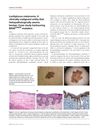
March 2015 in “Journal of the European Academy of Dermatology and Venereology”
1 citations
,
March 2015 in “Journal of the European Academy of Dermatology and Venereology” This letter to the editor shares a case study of lentiginous melanoma that appears clinically malignant but histopathologically benign, involving the BRAFV600R mutation.
 226 citations
,
January 2002 in “Biological and Pharmaceutical Bulletin”
226 citations
,
January 2002 in “Biological and Pharmaceutical Bulletin” This study developed a rapid method to extract proteins from human hair, revealing phosphorylation on serine and threonine residues in alpha-keratins and matrix proteins.
 16 citations
,
August 2015 in “Protein Expression and Purification”
16 citations
,
August 2015 in “Protein Expression and Purification” This study found that recombinant human FGF9 expressed in Arabidopsis thaliana oil bodies significantly promoted the proliferation of NIH/3T3 cells.
 11 citations
,
January 1987 in “Electrophoresis”
11 citations
,
January 1987 in “Electrophoresis” This study found that keratin phenotypes were consistent across different types of hair from the same individual, allowing for successful keratin typing following ABH blood group determination.
5 citations
,
November 2003 in “PubMed” This study found that chemical and photochemical oxidative processes modify the main classes of proteins in hair, confirmed through microspectrophotometric, fluorescence microscopy, and electrophoretic methods.
4 citations
,
October 2013 in “Botanics Targets and Therapy” In this animal study, a herbal preparation demonstrated moderate anti-inflammatory and immunomodulating properties, suggesting its potential usefulness for preventing and treating alopecia.
4 citations
,
December 1995 in “Anthropologischer Anzeiger” This study reports that electrophoretic patterns of hair keratins are more similar among family members than unrelated individuals, potentially aiding genetic studies.
2 citations
,
June 2017 in “ScienceRise” This study developed a mask-cream containing Sabal palm extract and Sophora japonica tincture for androgenic alopecia prevention and treatment, establishing optimal production techniques using a reverse emulsion method.
2 citations
,
August 1987 in “Analytical Biochemistry” This study introduced a method to isolate and separate microfibrillar proteins from human hair, identifying previously undetected glycine- and tyrosine-rich proteins.
 January 2025 in “International Journal of Molecular Biology and Biochemistry”
 In this study, researchers found that the Shindai method effectively extracts keratin from human hair, with female hair yielding more keratin than male hair. The extracted keratin showed high absorption with UV spectrometry and was confirmed as α-keratin through SDS-PAGE analysis.
 January 2014 in “Sen'i Gakkaishi”
 This study highlights that dyeing and other processing methods can impact the identification of animal species from hair fibers using an amino acid sequence analysis technique.
May 2009 in “International Journal of Cosmetic Science” In this study, permanent waving treatments, especially those using lotion B and repeated procedures, were found to significantly damage hair protein content and physical properties.
5 citations
,
October 2003 in “Archives of Dermatology” This abstract is a website information page and provides no research findings, results, or conclusions.
 53 citations
,
May 2010 in “Dermatologic Surgery”
53 citations
,
May 2010 in “Dermatologic Surgery” This article appears to be a table of contents or navigation page for a journal, not presenting any new findings or research results.