48 citations
,
July 1998 in “Pediatric Dermatology” This study found that pulsed doses of prednisolone led to excellent hair growth in 60% of young patients with widespread alopecia areata, with minimal side effects.
18 citations
,
July 1998 in “Pediatric Dermatology” This study observed that pulsed doses of prednisolone resulted in excellent hair growth in 60% of young patients with widespread alopecia areata after six months, with minimal side effects.
June 2025 in “British Journal of Dermatology” This study compared oral tofacitinib and methotrexate in treating moderate-to-severe alopecia areata, finding that tofacitinib was more effective at reducing SALT scores and improving scalp hair assessment PRO scores, though both treatments reduced psychological distress similarly without serious adverse effects.
June 2025 in “British Journal of Dermatology” This study found that both tofacitinib and methotrexate effectively reduced hair loss and psychological distress in patients with moderate-to-severe alopecia areata, but tofacitinib showed much greater efficacy. Both treatments had similar safety profiles, with no serious adverse effects reported.
 15 citations
,
January 2022 in “Journal of Oleo Science”
15 citations
,
January 2022 in “Journal of Oleo Science” This study found that a phytosomal delivery system improved the bioavailability of Cuscuta reflexa extract compared to the plain extract, suggesting enhanced potential for this formulation.
18 citations
,
November 2009 in “Calcified tissue international” A genetic mutation caused severe rickets and alopecia in an Indian patient, but high-dose calcium and phosphate treatment improved their condition.
October 1990 in “Pediatric Research” This case report details a severe instance of VDR-II where intravenous calcium infusions, administered nightly, successfully improved clinical, radiological, and biochemical signs of rickets without alopecia despite ineffective calcitriol therapy.
November 2025 in “American Journal of Case Reports” This case report describes a child with acrodermatitis enteropathica and normal zinc levels who developed Kaposi's varicelliform eruption, highlighting the role of novel SLC39A4 variants and the importance of early zinc supplementation and antiviral prophylaxis.
 10 citations
,
January 2017 in “Expert Opinion on Pharmacotherapy”
10 citations
,
January 2017 in “Expert Opinion on Pharmacotherapy” This review discusses the clinical features and treatment options for adult acne, highlighting the need for tailored management in specific populations, but reports no new findings.
12 citations
,
September 1981 in “Acta Dermato Venereologica” This case study reports that oral zinc therapy improved hair growth and pigmentation in a young girl with sucrase deficiency and low zinc levels.
 1 citations
,
January 2016 in “Journal of Nepal Paediatric Society”
1 citations
,
January 2016 in “Journal of Nepal Paediatric Society” This case report discusses a 27-month-old girl with vitamin D-dependent rickets type II, who showed minor improvement in skeletal features and alopecia after high-dose oral calcium and vitamin D3 treatment.
 9 citations
,
January 2015 in “Laboratory Animal Research”
9 citations
,
January 2015 in “Laboratory Animal Research” This study found that oral administration of Laminaria japonica and Cistanche tubulosa extracts may improve hair regrowth in mice, comparable to the effects of 3% Minoxidil, potentially due to their anti-inflammatory properties.
 7 citations
,
December 2020 in “Endocrine-related Cancer”
7 citations
,
December 2020 in “Endocrine-related Cancer” This article discusses the potential role of oral DHEA, available as a 'dietary supplement' in the US, in COVID-19 morbidity and mortality, calling for clinical trials to assess its safety.
 7 citations
,
June 2016 in “Bone Research”
7 citations
,
June 2016 in “Bone Research” In this study, a Chinese Han family with hereditary vitamin D-resistant rickets was found to have a homozygous missense mutation in the VDR gene, and the affected individual uniquely responded well to treatment with oral calcium and low-dose calcitriol.
12 citations
,
October 1978 in “PubMed” This study found that the aromatic retinoic acid derivative Ro 10-9359 provided excellent results in 64% of severe psoriasis patients, especially in those with erythrodermic and pustular types, though relapses and side effects were noted.
2 citations
,
May 2023 in “The Journal of Immunology” This animal study observed that treatment with the S1PR modulator NXC736 significantly reduced lesion area and CD8+ T cell infiltration in mice with alopecia areata, suggesting its potential as a promising therapy for the condition.
52 citations
,
August 1993 in “Clinical endocrinology” This study found that intravenous high dose calcium infusions followed by high dose oral calcium effectively treated vitamin D dependent rickets type II, leading to complete biochemical and radiological healing and improved growth in two patients.
 4 citations
,
May 2011 in “Current Drug Discovery Technologies”
4 citations
,
May 2011 in “Current Drug Discovery Technologies” This study found that a dutasteride-loaded liposomal system significantly increased skin permeability and drug deposition in mouse skin compared to other formulations, suggesting improved localized treatment potential for androgenetic alopecia.
 14 citations
,
January 2015 in “Acta dermato-venereologica”
14 citations
,
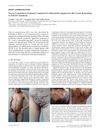
January 2015 in “Acta dermato-venereologica” Acitretin significantly reduced inflammatory attacks in a woman with Naevus Comedonicus Syndrome but caused side effects.
 January 2023 in “International Journal of Contemporary Pediatrics”
 This case study describes a 5-year-old boy with vitamin D dependent rickets type 2, motor delays, and alopecia totalis who showed improved biochemical parameters with calcium and calcitriol treatment.
63 citations
,
November 2015 in “Pharmaceutical Sciences” This study reports that a Rutin-loaded nanophytosomal formulation with improved physical stability can enhance the bioavailability and antioxidant property of rutin for use in food and pharmaceutical products.
10 citations
,
November 2019 in “Journal of Traditional and Complementary Medicine” This study found that oral treatment with Chamaecyparis obtusa var. formosana leaf extracts improved glucose metabolism and reduced insulin resistance in hyperglycemic rats, suggesting potential as a diabetes health supplement.
June 2013 in “Ciencia e Investigación” In this study, oral administration of modified aloe gel significantly reduced liver enzymes AST and ALT and led to hair regrowth in carbon tetrachloride-treated albino mice after 33 days.
 February 1990 in “Journal of The American Academy of Dermatology”
 This review summarizes therapeutic advances reported in English-language literature from December 1987 to December 1988 and states no new clinical results.
 July 1988 in “Journal of The American Academy of Dermatology”
 This article reviews therapeutic advances published between December 1986 and December 1987 but reports no new research findings; readers are advised to consult the original articles before considering new therapies.
 18 citations
,
October 2018 in “Nutrients”
18 citations
,
October 2018 in “Nutrients” This study found that Annurca apple polyphenolic extracts reprogram hair follicle metabolism in mice, enhancing mitochondrial activity and keratin production while inhibiting some metabolic pathways.
 9 citations
,
August 2019 in “Journal of The European Academy of Dermatology and Venereology”
9 citations
,
August 2019 in “Journal of The European Academy of Dermatology and Venereology” Minoxidil activation by hair enzymes predicts treatment success for female hair loss.
 3 citations
,
March 2019 in “Fayoum University Medical Journal/Fayoum University Medical Journal ”
3 citations
,
March 2019 in “Fayoum University Medical Journal/Fayoum University Medical Journal ” In this study, topical calcipotriol was found to be more effective than oral vitamin D for improving mild to moderate alopecia areata, with a 68% improvement rate and no correlation between serum vitamin D levels and treatment efficacy.
 1 citations
,
January 2018 in “Journal of Steroids & Hormonal Science”
1 citations
,
January 2018 in “Journal of Steroids & Hormonal Science” This study observed no significant difference in vitamin D levels between children with alopecia areata and controls, but higher complete improvement in alopecia was noted among patients with vitamin D deficiency undergoing oral vitamin D treatment.
 March 2025 in “Journal of Pakistan Association of Dermatologists”
 In this randomized clinical trial, the authors reported that after 12 weeks, 5% dapsone gel was more effective than 1% clindamycin phosphate gel in treating mild to moderate acne vulgaris, showing efficacy in 78.2% of patients compared to 52.7% with clindamycin.