32 citations
,
February 1993 in “British Journal of Clinical Pharmacology” This study found that OPC-17116 can be reliably detected in hair, suggesting it can serve as an index of drug exposure and a time-marker in hair analysis.
 138 citations
,
November 2015 in “Journal of Pharmacology and Experimental Therapeutics”
138 citations
,
November 2015 in “Journal of Pharmacology and Experimental Therapeutics” This review discusses the mechanisms associated with protoporphyrin IX in living cells and reports no clinical results; the authors emphasize its potential in cancer diagnosis and the risks of toxicity.
4 citations
,
January 2019 in “Indian Dermatology Online Journal” This report discusses two cases of porokeratotic eccrine ostial and dermal duct nevus and porokeratotic eccrine and hair follicle nevus, suggesting they may represent a single clinical entity, but reports no therapeutic outcomes.
1 citations
,
October 2023 in “The Laryngoscope” In this study, single-port endoscopic removal of forehead osteoma in adult patients showed complete tumor removal with excellent cosmetic results, highlighting otolaryngologists' expertise in minimally invasive techniques and achieving low surgical morbidity.
 December 2001 in “Fertility and Sterility”
 The book provides a clear overview of PCOD and is recommended for medical trainees and clinicians, but may lack depth for advanced researchers.
 2 citations
,
January 1970 in “Asian journal of pharmaceutical research and development”
2 citations
,
January 1970 in “Asian journal of pharmaceutical research and development” This review discusses the varying prevalence, symptoms, and potential genetic factors associated with Polycystic Ovary Syndrome in different populations, including its significant health impacts, and reports no new data on India's prevalence.
 April 2024 in “Pharmaceuticals”
 This review highlights the clinical usefulness of bimatoprost in lowering intraocular pressure for glaucoma patients and its promising results in promoting hair growth for conditions like alopecia, with research also exploring potential new applications and delivery systems.
 December 2021 in “Journal of oncology research reviews & reports”
 This article discusses the treatment options for women with polycystic ovarian syndrome and notes the need for further research to improve patient management.
January 2015 in “프로그램북(구 초록집)” This study highlights that the combination of adapalene and benzoyl peroxide (Epiduo®) is an effective first-line treatment for acne, significantly inhibiting antibiotic-susceptible and antibiotic-resistant P. acnes strains.
 September 2020 in “Adnan Menderes Üniversitesi Sağlık Bilimleri Fakültesi Dergisi”
 This review investigates the relationship between certain gene polymorphisms associated with obesity (FTO and MC4R) and Polycystic Ovarian Syndrome, reporting no new results but suggesting a potential genetic link.
 October 2007 in “Current Respiratory Medicine Reviews”
 This review discusses the relationship between polycystic ovarian syndrome and sleep-disordered breathing but reports no new findings, emphasizing the need for further investigation.
This study found that Anovlar effectively reduced pain in severe dysmenorrhea cases and regulated cycles in oligomenorrhea patients, but some side effects and occasional treatment failures were reported.
This review discusses the diagnostic criteria and management challenges for polycystic ovarian syndrome and reports no clinical results, highlighting complications associated with pregnancy in women with the condition.
5 citations
,
August 2014 in “Dermatologic surgery” Advanced fluorescence technology effectively treats skin discoloration from certain creams.
 January 2023 in “International journal of homoeopathic sciences”
 This study collected data on PCOS symptoms among female students and assessed the prevalence of menstrual irregularities, obesity, hirsutism, alopecia, and severe acne in this group.
 June 2026 in “Pathology & Oncology Research”
 In this study, the Orbis PAXMAN® scalp cooling system showed effectiveness and good tolerability in preventing chemotherapy-induced hair loss in breast cancer patients, particularly those receiving anthracycline-free chemotherapy, though the presence of comorbidities was linked to a higher risk of severe alopecia.
This chapter reviews a case study of a woman with irregular menstruation and excess hair growth, highlighting potential links to Polycystic Ovary Syndrome and exploring nutrition, diagnostics, and dietary intervention strategies, but reports no new clinical findings.
May 2021 in “Veterinarìâ, tehnologìï tvarinnictva ta prirodokoristuvannâ” This study found 100% efficacy in treating psoroptosis in sheep and wild goats using macrolide injections "Iveron-10" and "Dectomax," complemented by "Butox-50" bathing in sheep, though infestation initially affected all animals with varied severity.
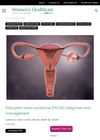 September 2022 in “Women's healthcare”
 This review discusses various aspects of polycystic ovary syndrome, including its prevalence, diagnosis, and treatment options, and reports no new empirical results.
 60 citations
,
May 2015 in “Archives of dermatological research”
60 citations
,
May 2015 in “Archives of dermatological research” This review discusses the role of peroxisome proliferator-activated receptors and their agonists in dermatology but reports no new clinical results.
 105 citations
,
February 2011 in “The Journal of Clinical Endocrinology & Metabolism”
105 citations
,
February 2011 in “The Journal of Clinical Endocrinology & Metabolism” Treating sleep apnea in young obese women with PCOS can improve heart health and insulin sensitivity.
 December 2021 in “THE THERAPIST (Journal of Therapies & Rehabilitation Sciences)”
 This review highlights the increased need for awareness about Polycystic Ovarian Syndrome (PCOS) and suggests that more research is necessary to understand its management through lifestyle modifications.
 991 citations
,
January 2011 in “Nature Reviews Endocrinology”
991 citations
,
January 2011 in “Nature Reviews Endocrinology” This paper reviews the diagnostic criteria, associated morbidities, and possible evolutionary advantages of polycystic ovary syndrome, but does not report any new findings.
 11 citations
,
August 2018 in “Endokrynologia Polska”
11 citations
,
August 2018 in “Endokrynologia Polska” This consensus paper reviews current challenges and recommendations for diagnosing and treating polycystic ovary syndrome, highlighting the utility of the Rotterdam criteria for adults and different criteria for teenagers without requiring polycystic ovaries.
 68 citations
,
January 2022 in “International Journal of Molecular Sciences”
68 citations
,
January 2022 in “International Journal of Molecular Sciences” This review summarizes factors involved in polycystic ovary syndrome pathogenesis and management, highlights commonly prescribed and repurposed medications, and calls for well-designed clinical trials to evaluate these treatments further.
 December 2020 in “Research Square (Research Square)”
 In this study, researchers using the Flo app data found that bloating was the most frequently reported symptom and main predictor of PCOS among women from various countries.
May 2026 in “International Journal of Pharmaceutical Quality Assurance” This study reported that among 95 women with polycystic ovarian syndrome at a tertiary care hospital in India, menstrual irregularities were the most common issue, affecting 86.3% of participants, with many also experiencing hyperandrogenic symptoms, obesity, and infertility.
5 citations
,
November 2022 in “The Journal of Obstetrics and Gynecology of India” 2 citations
,
December 2024 in “Clinical Endocrinology” This study suggests that persistent symptoms in patients with controlled functioning adenomas may indicate a coexisting PCOS diagnosis, highlighting the need for precise differentiation and timely management of these conditions.
 December 2015 in “Kosin Medical Journal”
 This review discusses the diagnosis, symptoms, metabolic complications, and treatment options for polycystic ovary syndrome but reports no new findings.