 85 citations
,
June 2015 in “Scientific Reports”
85 citations
,
June 2015 in “Scientific Reports” This study applied semantic text-mining to identify phenotypes linked to over 6,000 diseases, demonstrating that these phenotypes can accurately identify known disease-associated genes, creating a human disease network based on phenotypic similarity.
 65 citations
,
January 2013 in “Cochrane library”
65 citations
,
January 2013 in “Cochrane library” This review found that infliximab, golimumab, and some forms of radiotherapy significantly improved nail psoriasis compared to controls, although they could have serious adverse effects and are not commonly used specifically for nail issues.
 61 citations
,
October 2010 in “Postgraduate Medical Journal”
61 citations
,
October 2010 in “Postgraduate Medical Journal” This study found that dermatological issues, such as xerosis and pigmentation, are common in chronic kidney disease patients and increase with the severity and duration of the disease, indicating that dialysis often exacerbates these conditions.
 54 citations
,
October 2019 in “Australian Journal of General Practice”
54 citations
,
October 2019 in “Australian Journal of General Practice” This article provides an updated overview of the diagnosis and management of tinea infections but reports no new clinical findings.
 54 citations
,
June 1990 in “Journal of The American Academy of Dermatology”
54 citations
,
June 1990 in “Journal of The American Academy of Dermatology” This review discusses various skin infections and conditions that commonly occur in patients with HIV, but it does not report new research findings.
 53 citations
,
November 1992 in “Mayo Clinic Proceedings”
53 citations
,
November 1992 in “Mayo Clinic Proceedings” This review discusses the cutaneous manifestations associated with HIV infection, highlighting that these skin conditions often present atypically and are more severe compared to those in non-HIV-infected individuals; it reports no new clinical findings.
 49 citations
,
April 2000 in “Journal of The American Academy of Dermatology”
49 citations
,
April 2000 in “Journal of The American Academy of Dermatology” This article discusses the etiology, clinical features, diagnosis, histopathology, and treatment of alopecia areata but reports no new clinical findings; it emphasizes the palliative nature of current treatments.
 36 citations
,
October 2022 in “ULTRASONOGRAPHY”
36 citations
,
October 2022 in “ULTRASONOGRAPHY” This article reviews the expanding role of dermatologic ultrasonography in patient management for various skin conditions, highlighting its advantages over other imaging techniques, but reports no new findings.
 35 citations
,
January 2013 in “Indian Journal of Dermatology, Venereology and Leprology”
35 citations
,
January 2013 in “Indian Journal of Dermatology, Venereology and Leprology” This study found that intralesional triamcinolone acetonide is effective for treating localized patchy alopecia areata, with dermoscopy aiding in early detection of clinical response and adverse effects.
 30 citations
,
August 2010 in “American Journal of Clinical Dermatology”
30 citations
,
August 2010 in “American Journal of Clinical Dermatology” This article reviews eyelash elongation as a side effect of EGFR inhibitors in cancer treatment, finding that the condition is typically not severe and may be managed by trimming.
 26 citations
,
September 2012 in “Journal of The American Academy of Dermatology”
26 citations
,
September 2012 in “Journal of The American Academy of Dermatology” This study observed that patients with rapidly progressive alopecia areata may have a favorable prognosis regardless of treatment, and regenerated vellus hairs were linked to higher improvement or cure rates.
 25 citations
,
October 2015 in “Dermatology”
25 citations
,
October 2015 in “Dermatology” This study observed that dapsone may be effective for treating pustular psoriasis, as four out of five patients showed improvement after previously failing other treatments.
 21 citations
,
October 1980 in “Gastroenterology”
21 citations
,
October 1980 in “Gastroenterology” This report is the first to associate Cronkhite-Canada syndrome with multiple myeloma, describing regenerative pseudopolyps in a 58-year-old woman rather than true adenomatous polyps.
 20 citations
,
October 2016 in “Veterinary dermatology”
20 citations
,
October 2016 in “Veterinary dermatology” This study reports that generalized discoid lupus erythematosus is a recognized canine variant of cutaneous lupus erythematosus, resembling its human counterpart, with varied treatment responses and common relapses.
 19 citations
,
August 2020 in “Gastroenterology report”
19 citations
,
August 2020 in “Gastroenterology report” This review discusses the characteristics and challenges in treating Cronkhite–Canada syndrome but reports no new clinical findings, emphasizing the need for better understanding and uniform treatment approaches.
 19 citations
,
March 2013 in “Journal of Cutaneous Pathology”
19 citations
,
March 2013 in “Journal of Cutaneous Pathology” This case report describes a 26-year-old female with linear morphea and unique alopecia characterized by atrophic follicular remnants, resembling telogen follicles but indicating permanent alopecia, unlike typical findings in morphea-related alopecia.
 19 citations
,
October 2011 in “Clinics in Dermatology”
19 citations
,
October 2011 in “Clinics in Dermatology” This review discusses the cutaneous side effects of chemotherapy, noting that they frequently involve changes to skin, hair, and nails, and reports no new results.
 16 citations
,
July 2021 in “Histopathology”
16 citations
,
July 2021 in “Histopathology” This review discusses recent findings on molecular changes in cutaneous adnexal tumours and reports novel markers and pathways involved, highlighting the diverse oncogenic drivers and tumour suppressor alterations.
 14 citations
,
January 1985 in “International Journal of Dermatology”
14 citations
,
January 1985 in “International Journal of Dermatology” The cause of alopecia areata was unknown, and while various treatments existed, no best treatment was agreed upon.
 13 citations
,
August 2020 in “Mayo Clinic proceedings”
13 citations
,
August 2020 in “Mayo Clinic proceedings” In this study, women with lichen planopilaris were found to have high rates of thyroid disease, depression, and anxiety, and about half experienced slowed or stabilized disease progression with treatment.
 13 citations
,
July 2019 in “Dermatologic therapy”
13 citations
,
July 2019 in “Dermatologic therapy” This case report describes a 37-year-old woman who developed scalp psoriasis and severe alopecia after taking adalimumab, with complete hair regrowth following treatment change.
 12 citations
,
February 2012 in “New England journal of medicine/The New England journal of medicine”
12 citations
,
February 2012 in “New England journal of medicine/The New England journal of medicine” This clinical case report describes a 72-year-old man who experienced significant weight loss and frequent loose stools over eight months, presenting with fatigue.
 11 citations
,
November 2005 in “The Journal of Dermatology”
11 citations
,
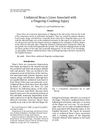
November 2005 in “The Journal of Dermatology” This report presents a unique case where a man developed Beau's lines on all fingers of one hand after a thumb injury, with the lines eventually disappearing as the nails grew.
 8 citations
,
December 2018 in “Journal of Dermatological Treatment”
8 citations
,
December 2018 in “Journal of Dermatological Treatment” This study found that a PRP-like cosmetic product called TR-M-PRP plus significantly improved hair growth in individuals with alopecia areata over three months, as measured by the SALT score, suggesting it could be a safer alternative to traditional PRP treatments.
 7 citations
,
January 2012 in “Dermatology”
7 citations
,
January 2012 in “Dermatology” This study found that internal medicine inpatients had numerous undiagnosed skin conditions, notably age-related ones, and often requested treatment for symptomatic issues like xerosis, indicating a need for proper dermatological care.
 7 citations
,
January 2011 in “Veterinary Pathology”
7 citations
,
January 2011 in “Veterinary Pathology” In this case report, a 9-year-old horse was diagnosed with alopecia areata contributing to Malassezia dermatitis, involving lymphocyte infiltration and symptoms consistent with yeast presence.
 7 citations
,
December 2008 in “Expert Review of Dermatology”
7 citations
,
December 2008 in “Expert Review of Dermatology” This article reviews hair and nail disorders in children, emphasizing their prevalence, congenital and acquired origins, and the diagnostic challenges compared to treatment, but reports no new clinical results.
 6 citations
,
June 2008 in “Journal of the European Academy of Dermatology and Venereology”
6 citations
,
June 2008 in “Journal of the European Academy of Dermatology and Venereology” This paper discusses a case of acrodermatitis continua that was resistant to treatment with etanercept, highlighting the therapeutic challenges faced, but reports no new research results.
 5 citations
,
October 2013 in “Veterinary Clinics of North America: Equine Practice”
5 citations
,
October 2013 in “Veterinary Clinics of North America: Equine Practice” This review discusses various noninflammatory alopecias in horses, particularly alopecia areata, and reports no new treatment results, emphasizing the need for differential diagnosis through examination and biopsy.
 4 citations
,
November 2011 in “Archives of Dermatology”
4 citations
,
November 2011 in “Archives of Dermatology” Hamilton scale imprecise, hair shaft diameter decreases, stem cell transplant regrows hair, ECP ineffective for alopecia areata universalis.