 March 2021 in “bioRxiv (Cold Spring Harbor Laboratory)”
 This study found that the absence of Hif-p4h-2 in specific mouse skin cells disrupted hair follicle development, leading to hair loss due to irregular keratin formation and pathway signaling.
April 2019 in “Journal of Investigative Dermatology” This study found that frontal fibrosing alopecia involves distinct molecular changes, such as downregulation of steroid and cholesterol pathways and upregulation of fibrotic and immune response genes, which may help guide treatment strategies.
November 1968 in “Journal of the American Pharmaceutical Association”  1 citations
,
September 2021 in “CRC Press eBooks”
1 citations
,
September 2021 in “CRC Press eBooks” This chapter reviews trichoscopic-pathologic correlations in Frontal Fibrosing Alopecia and reports no new clinical results; the authors discuss genetics, clinical patterns, and unusual variants associated with this condition.
 January 2025 in “Epsilon Archive for Student Projects (University of Southampton)”
 In this study investigating goat herds in Zambia, both mange and orf were detected, but with low occurrence linked to diagnostic challenges and mild clinical signs; further research, especially in conditions favoring mange mites, is recommended to better understand and manage these diseases.
 123 citations
,
August 2005 in “Journal of the European Academy of Dermatology and Venereology”
123 citations
,
August 2005 in “Journal of the European Academy of Dermatology and Venereology” In this study, the researchers observed that treatment with intralesional and topical corticosteroids, finasteride, and minoxidil may stop the progression of frontal fibrosing alopecia in postmenopausal and premenopausal women.
June 2020 in “International Journal of Women’s Dermatology” This case report highlights the importance of considering frontal fibrosing alopecia in young women, emphasizing early diagnosis to preserve hair and limit inflammation.
July 2024 in “Journal of Investigative Dermatology” Human hair follicles have their own thyroid hormone system.
 June 2025 in “Biomolecules”
 In this study, researchers found that activating RORA in hair follicle stem cells reduced the expression of cytoskeleton-related genes, affecting cell migration and adhesion, which may aid in understanding hair follicle development and potentially inform alopecia treatments.
 9 citations
,
October 2018 in “Journal of international medical research”
9 citations
,
October 2018 in “Journal of international medical research” This study found no correlation between the extent of frontal fibrosing alopecia and quality of life, but observed a strong association with thyroid disease in affected women.
 April 2023 in “JAAD international”
 This study observed that among a Moroccan population with frontal fibrosing alopecia, common comorbidities included lichen planus pigmentosus (36.8%), rosacea (28.9%), thyroid disorders (23.7%), and dyslipidemia (21.1%), highlighting potential relationships mediated by shared inflammatory or metabolic pathways.
 September 2017 in “Journal of Investigative Dermatology Symposium Proceedings”
 This review discusses the clinical features of hypopigmented mycosis fungoides in primary cutaneous T cell lymphoma and reports no new clinical results.
February 2020 in “Journal of chemical neuroanatomy” This study suggests that five small molecules can induce hair follicle neural crest stem cells to differentiate toward motor neuron progenitor cells with a unipotent differentiation potential.
 53 citations
,
May 2010 in “Dermatologic Surgery”
53 citations
,
May 2010 in “Dermatologic Surgery” This article appears to be a table of contents or navigation page for a journal, not presenting any new findings or research results.
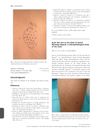 31 citations
,
April 2010 in “British journal of dermatology/British journal of dermatology, Supplement”
31 citations
,
April 2010 in “British journal of dermatology/British journal of dermatology, Supplement” This report describes two patients with frontal fibrosing alopecia who developed acute hair loss on their limbs, revealing that the limb alopecia had similar histological features to scalp alopecia.
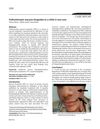 1 citations
,
October 2023 in “Journal of the Pakistan Medical Association”
1 citations
,
October 2023 in “Journal of the Pakistan Medical Association” This source describes a case of a 12-year-old male diagnosed with folliculotropic mycosis fungoides, presenting with an asymptomatic, erythematous plaque. Histology and immunohistochemistry confirmed FMF, which is typically rare in children and marked by follicular infiltration by CD4+ lymphocytes.
 9 citations
,
August 2018 in “Journal der Deutschen Dermatologischen Gesellschaft”
9 citations
,
August 2018 in “Journal der Deutschen Dermatologischen Gesellschaft” This study provides the most comprehensive review to date of published cases of frontal fibrosing alopecia, emphasizing a notable association with thyroid disease.
47 citations
,
September 2012 in “Human molecular genetics online/Human molecular genetics” This study suggests that the interaction between folliculin and plakophilin-4 (p0071) may play a role in folliculin's tumor suppressor function by regulating RhoA signaling, impacting cell migration and junction formation.
14 citations
,
January 2014 in “Indian Journal of Dermatology Venereology and Leprology” Frontal fibrosing alopecia can affect men's beards and leads to permanent hair loss.
 1 citations
,
January 2020 in “Skin appendage disorders”
1 citations
,
January 2020 in “Skin appendage disorders” Finasteride may help treat frontal fibrosing alopecia, but more research is needed.
October 2025 in “Pharmaceuticals” This review discusses the repurposing of auranofin for oncological and non-oncological uses and highlights its early-stage clinical trial findings, suggesting further exploration of its therapeutic potential.
1 citations
,
March 2022 in “Journal of biological chemistry/The Journal of biological chemistry” This study found that HIF-P4H-2 function in FoxD1-lineage cells is crucial for normal hair follicle development and homeostasis in mice, implicating disrupted HIF, TGF-β, and Notch signaling pathways in associated defects.
 1 citations
,
September 2016 in “Journal of Dermatological Science”
1 citations
,
September 2016 in “Journal of Dermatological Science” This study found that FGF18 signaling helps protect hair follicles from radiation damage by maintaining the resting phase and supporting stem cell survival, potentially reducing radiation-induced hair loss.
64 citations
,
March 2004 in “Journal of Clinical Investigation” This study found that inhibiting the enzyme ornithine decarboxylase (ODC) prevented UVB-induced basal cell carcinomas in a mouse model, suggesting ODC is a potential target for chemoprevention strategies.
November 2012 in “Annales de Dermatologie et de Vénéréologie” This report describes the first known pediatric cases of frontal fibrosing alopecia, a condition typically affecting postmenopausal women, highlighting its occurrence in children including female twins.
 1 citations
,
October 2008 in “Expert Review of Dermatology”
1 citations
,
October 2008 in “Expert Review of Dermatology” This review discusses frontal fibrosing alopecia, noting its frequent misdiagnosis and highlighting the need for larger studies to better understand its epidemiology, causes, and treatment options; it reports no new clinical findings.
 1 citations
,
May 2014 in “European Journal of Inflammation”
1 citations
,
May 2014 in “European Journal of Inflammation” This study found that a topical lotion containing minoxidil, hydrocortisone butyrate, and 17α-estradiol improved or stabilized frontal fibrosing alopecia in 35 out of 40 women over 36 months.
November 2009 in “Hair transplant forum international” This piece presents no new research findings; it briefly mentions opinions on Female Pattern Hair Loss and the importance of increasing awareness.
February 2025 in “Actas Dermo-Sifiliográficas” This study found that oral minoxidil can improve hair and eyebrow growth and increase the density of the frontotemporal hairline in patients with FFA, though adverse effects were reported by a third of participants.
 1 citations
,
August 2023 in “International Journal of Molecular Sciences”
1 citations
,
August 2023 in “International Journal of Molecular Sciences” This review compiles evidence from 20 relevant studies and suggests that platelet-rich plasma-derived extracellular vesicles represent a promising therapeutic option in regenerative medicine, although the authors emphasize the need for standardized protocols due to inconsistencies across studies.