 July 2022 in “Journal of Investigative Dermatology”
 This study found that the cosmetic olfactory receptor agonist cyclohexyl salicylate may stimulate hair growth and expand stem cell progeny, suggesting potential as a cosmetic adjuvant for hair loss.
 November 2022 in “Journal of Investigative Dermatology”
 This study found that stimulating the olfactory receptor OR2A4/7 with cyclohexyl salicylate promoted human hair growth and increased progeny of hair follicle epithelial stem cells in an ex vivo setting.
June 2025 in “Molecular Therapy — Nucleic Acids” In this study, researchers identified a specific DNA aptamer, Ap.OR2AT4.17, that effectively prolonged hair growth and increased hair shaft elongation in organ-cultured human hair follicles by targeting the olfactory receptor OR2AT4. This finding suggests the aptamer's potential as a novel therapy for hair loss disorders.
May 2020 in “Authorea (Authorea)” This review discusses the diverse functions and therapeutic potential of ectopic olfactory receptors throughout the body, emphasizing their roles in various cellular processes and potential in cancer detection and therapy, but reports no new clinical results.
July 2026 in “Journal of Investigative Dermatology” ABS-201 may effectively promote hair growth in men by targeting the prolactin receptor.
 82 citations
,
September 2018 in “Nature Communications”
82 citations
,
September 2018 in “Nature Communications” This study found that stimulating the olfactory receptor OR2AT4 in human hair follicles with a synthetic sandalwood odorant promotes hair growth ex vivo by decreasing apoptosis and increasing IGF-1 production.
 11 citations
,
July 2020 in “Journal of Cosmetic Dermatology”
11 citations
,
July 2020 in “Journal of Cosmetic Dermatology” This study found that a 1% Sandalore® solution reduced hair shedding and improved hair volume and anagen phase duration in women with telogen effluvium over 24 weeks, compared to placebo.
6 citations
,
November 2022 in “Antioxidants” In this study, sandalore was found to activate OR2AT4, which inhibits senescent cell traits and restores proliferation in human keratinocytes, suggesting potential anti-aging applications.
November 2024 in “Journal of Investigative Dermatology” Stimulating OR10J1 can promote hair growth and may help treat hair loss.
July 2024 in “Journal of Investigative Dermatology” Linalool in fragrances may harm hair follicles and contribute to hair loss.
 April 2023 in “Journal of Investigative Dermatology”
 This study found that olfactory receptor genes are differentially expressed in sweat glands of AIGA patients, suggesting these receptors may play a role in regulating sweating activity.
 67 citations
,
December 2019 in “PloS one”
67 citations
,
December 2019 in “PloS one” This study found that beta-caryophyllene enhanced re-epithelialization in cutaneous wounds of female mice, suggesting its potential for improving wound healing through multiple pathways.
 18 citations
,
April 2021 in “Experimental Dermatology”
18 citations
,
April 2021 in “Experimental Dermatology” This study in Italy observed telogen effluvium and trichodynia as common hair-related complications following COVID-19 infection, raising questions about underlying hair follicle biology and potential receptor involvement.
 3 citations
,
May 2018 in “Italian journal of dermatology and venereology”
3 citations
,
May 2018 in “Italian journal of dermatology and venereology” In this study, using a lotion containing N1-methylspermidine and Sandalore® for 3 months significantly reduced hair loss and stimulated hair growth in both men and women with chronic telogen effluvium, with benefits persisting 3 months after treatment ended.
April 2019 in “The journal of investigative dermatology/Journal of investigative dermatology” This study suggests that stimulating olfactory receptors in human hair follicles with Sandalore® increases antimicrobial activity by upregulating dermcidin production, potentially offering a novel approach for treating hair follicle diseases with bacterial issues.
 August 2016 in “Journal of Investigative Dermatology”
 This study found that stimulating olfactory receptor OR2AT4 in human hair follicles with Sandalore® may slow catagen development and reduce keratinocyte apoptosis, suggesting potential implications for hair growth management.
 1 citations
,
August 2016 in “Journal of Investigative Dermatology”
1 citations
,
August 2016 in “Journal of Investigative Dermatology” This research reported that STAT5 activation in the dermal papilla plays a crucial role in triggering anagen entry during post-developmental hair follicle cycling.
 May 2024 in “Scientific Reports”
 In this study, researchers examined androgen receptor activity in the adult mouse brain and found specific expression in key brain areas, which could inform understanding of cognitive side effects in humans undergoing androgen deprivation therapy for prostate cancer.
 4 citations
,
November 2024 in “Cell Biology and Toxicology”
4 citations
,
November 2024 in “Cell Biology and Toxicology” This study suggests that targeting olfactory receptors in the lung epithelium might help treat odorant-induced asthma in cases without type 2 inflammation, as these receptors could play a role in airway sensitivity to smells.
 September 2019 in “Journal of Investigative Dermatology”
 This clinical trial found that Sandalore® 1% significantly reduced hair shedding and increased hair volume and anagen hair follicles in women with telogen effluvium compared to placebo.
 April 2019 in “Journal of Investigative Dermatology”
 This clinical trial found that topical application of Sandalore® 1% significantly reduced hair shedding and increased hair volume in women with telogen effluvium compared to placebo.
 15 citations
,
September 2018 in “Indian Research Journal of Pharmacy and Science”
15 citations
,
September 2018 in “Indian Research Journal of Pharmacy and Science” This article reviews the historical and therapeutic aspects of aromatherapy, discussing its effects on psychological and physical well-being but providing no new clinical findings.
 August 2016 in “Journal of Investigative Dermatology”
 This study reported improvement in hair loss lesions in C3H/HeJ mice with alopecia areata following treatment with the CCR5 inhibitor maraviroc, alongside reduced infiltration of specific T cells in the lesions.
 40 citations
,
December 2019 in “Neurobiology of Stress”
40 citations
,
December 2019 in “Neurobiology of Stress” This review focuses on neuroactive steroids' influence on GABA-ergic signaling and discusses challenges in developing them for various therapeutic uses, citing recent excitement from FDA approval of allopregnanolone for postpartum depression but reporting no new results.
 31 citations
,
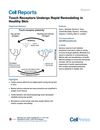
November 2016 in “Cell Reports”
31 citations
,
November 2016 in “Cell Reports” This study reveals that somatosensory neurons in mouse skin exhibit structural plasticity during hair-follicle regeneration, which may temporarily impair the reliability of encoding gentle touch.
 June 2026 in “Cell Regeneration”
 This review highlights the roles of key transcription factors and signaling pathways in regulating olfactory epithelium regeneration, discussing recent advances in single-cell and spatial transcriptomics as well as organoid models to enhance understanding of olfactory regeneration mechanisms.
 33 citations
,
December 2015 in “Neuroendocrinology”
33 citations
,
December 2015 in “Neuroendocrinology” This study found that subchronic finasteride treatment in male rats altered neuroactive steroid levels and steroid receptor expression in the brain, with some changes persisting after drug withdrawal.
 9 citations
,
June 2021 in “International Journal of Pharmaceutics”
9 citations
,
June 2021 in “International Journal of Pharmaceutics” This study found that polymeric micelle nanocarriers delivered pharmacologically relevant amounts of spironolactone to the epidermis and upper dermis, with higher delivery to pilosebaceous units, suggesting potential for treating glucocorticoid-induced impaired wound healing and pilosebaceous androgen-related skin diseases.
 December 2025 in “Nature Communications”
 In this study using mouse models, researchers found that elevated IL-17a in aged olfactory epithelium impairs olfactory function, while IL-17a inhibition promotes regeneration and mitigates age-related decline.
 58 citations
,
June 2000 in “The Journal of Steroid Biochemistry and Molecular Biology”
58 citations
,
June 2000 in “The Journal of Steroid Biochemistry and Molecular Biology” This study found that Atlantic croaker nuclear androgen receptors AR1 and AR2 have different binding affinities for androgens, suggesting that they may mediate distinct physiological actions in teleosts.