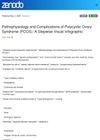
 May 2026 in “Zenodo (CERN European Organization for Nuclear Research)”
 This infographic reviews the pathophysiology and complications of PCOS, illustrating how genetic and environmental factors contribute to its development, and highlights associated metabolic and neuroendocrine effects.
This review discusses polycystic ovary syndrome, focusing on its primary features of ovulatory dysfunction and hyperandrogenism, and reports no new findings.
 2 citations
,
August 2023 in “Human Reproduction”
2 citations
,
August 2023 in “Human Reproduction” This update of the 2023 International Guideline for PCOS offers refined diagnostic criteria and management recommendations, emphasizing evidence-based care, but notes that research quality remains low to moderate.
January 2016 in “cIRcle (University of British Columbia)” This literature review discusses the need for a clinical practice guideline to help Canadian Nurse Practitioners in diagnosing and managing PCOS, noting its complexity and lack of existing guidelines.
August 2002 in “British journal of ophthalmology” This article reports that while surgical excision is often the best treatment for SCC, intralesional cidofovir also showed success without systemic toxicity in the case discussed.
 August 2024 in “Medicine”
 This study found that medroxyprogesterone acetate and ethinyl estradiol with drospirenone were the most frequently prescribed medications for PCOS, with some patients experiencing drug changes or discontinuation due to side effects or therapeutic failure.
 1 citations
,
May 2009 in “Wiley-Blackwell eBooks”
1 citations
,
May 2009 in “Wiley-Blackwell eBooks” Early treatment of PCOS in teens is crucial to prevent long-term health issues like diabetes and heart disease.
40 citations
,
March 2014 in “Journal of Family Planning and Reproductive Health Care” This review discusses a strategy using ovarian biology to better understand and manage polycystic ovary syndrome but reports no new research findings.
 January 2017 in “Clinical & medical biochemistry”
 This study observed that Greek Caucasian women with PCOS had distinct serum hormone levels and a specific AKT2 gene SNP, which may play a role in the condition's characteristics.
January 2010 in “Belarusian State Pedagogical University repository (Belarusian State Pedagogical University)” This question-based abstract lists potential survey questions regarding contraception, hormone therapy, and related health issues but presents no new research findings.
 20 citations
,
January 2016 in “Open Journal of Endocrine and Metabolic Diseases”
20 citations
,
January 2016 in “Open Journal of Endocrine and Metabolic Diseases” This article discusses the prevalence, diagnosis, and treatment of polycystic ovary syndrome, emphasizing its early diagnosis and management due to potential reproductive and metabolic complications, but reports no new findings.
 December 2022 in “BioScientific review”
 This review discusses the complex pathophysiology, diagnosis, and management of Polycystic Ovary Syndrome and reports no new results, underscoring the need for comprehensive treatment plans.
49 citations
,
November 2022 in “Life” This review discusses global variations in polycystic ovary syndrome prevalence and highlights the need for more comprehensive studies to understand its association with race, ethnicity, and diagnosis criteria; it reports no new results.
 4 citations
,
November 2023 in “Acta obstetricia et gynecologica Scandinavica”
4 citations
,
November 2023 in “Acta obstetricia et gynecologica Scandinavica” In this guideline update, researchers emphasized refining diagnostic criteria for polycystic ovary syndrome using ultrasound or hormone levels, while highlighting a healthy lifestyle's importance without specific diet recommendations, and reviewed treatments with a focus on comorbidities and pregnancies from a Nordic standpoint.
1 citations
,
July 2021 in “Forensic science international” This study found that segmental single hair analysis produced ocfentanil concentration profiles similar to those from hair lock analysis, supporting its use in cases with limited samples.
This study presents the G4 transgenic mouse model, which suggests a direct link between polycystic ovary syndrome and the Gm10800 gene, offering a valuable tool for understanding the disease and testing treatments.
 2 citations
,
March 2016 in “InnovAiT”
2 citations
,
March 2016 in “InnovAiT” This article discusses the signs, symptoms, and associated risks of polycystic ovary syndrome, without providing new clinical results; it emphasizes the link between being overweight and increased metabolic risks.
 130 citations
,
August 2015 in “Experimental Dermatology”
130 citations
,
August 2015 in “Experimental Dermatology” This review provides a comprehensive guide to serum-free human hair follicle organ culture methods, highlighting research opportunities, standardization efforts, and potential applications without reporting new empirical findings.
 June 2022 in “COJ Biomedical Science & Research”
 PCOS management includes lifestyle changes and medications to improve fertility.
This study found that ocu-miR-205 promotes changes in signaling pathways and shifts in hair follicle phases, affecting Rex rabbit hair density by increasing secondary follicles.
April 2019 in “Faculty Opinions – Post-Publication Peer Review of the Biomedical Literature” This study identified three new genetic loci associated with PCOS and found a similar genetic structure across different diagnostic criteria, suggesting a genetic basis for shared metabolic traits and potential causal links to other conditions.
 December 2001 in “Fertility and Sterility”
 The book provides a clear overview of PCOD and is recommended for medical trainees and clinicians, but may lack depth for advanced researchers.
 October 2022 in “Journal of Pediatric and Adolescent Gynecology”
 This case study observed that unilateral oophorectomy may improve severe hyperandrogenism in adolescents with PCOS, even when imaging and SVS do not indicate neoplasm.
 February 2020 in “Acta Scientific Women's Health”
 This narrative review discusses the various symptoms, diagnosis challenges, and treatment options for polycystic ovary syndrome, emphasizing the need for increased awareness and early diagnosis to prevent complications.
 December 2025 in “Editora Pasteur eBooks”
 A combined medical and aesthetic approach is crucial for effectively managing PCOS and its skin-related issues.
 373 citations
,
September 2009 in “Obstetrics & Gynecology”
373 citations
,
September 2009 in “Obstetrics & Gynecology” This review examines the best available evidence for diagnosing and managing PCOS but reports no new clinical results.
1 citations
,
July 2022 in “Zenodo (CERN European Organization for Nuclear Research)” This paper discusses the role of food and exercise in managing polycystic ovarian syndrome and reports no new results.
 10 citations
,
March 2016 in “The Journal of Obstetrics and Gynecology of India”
10 citations
,
March 2016 in “The Journal of Obstetrics and Gynecology of India” This review proposes renaming polycystic ovarian syndrome to "Hyperandrogenic Persistent Ovulatory Dysfunction Syndrome" to better reflect its diagnostic criteria and promote consistency in research, but reports no new clinical findings.
 May 2024 in “Reproductive BioMedicine Online”
 This systematic review found that interactions between patients with polycystic ovary syndrome and healthcare professionals often face challenges due to insufficient information sharing, inadequate patient support, and health system barriers.
 1 citations
,
January 2001 in “Drug and therapeutics bulletin”
1 citations
,
January 2001 in “Drug and therapeutics bulletin” This review discusses the management of polycystic ovary syndrome in women and reports no new clinical results.