 84 citations
,
November 2003 in “European journal of endocrinology”
84 citations
,
November 2003 in “European journal of endocrinology” This study found that women with androgenic alopecia had a higher prevalence of polycystic ovarian morphology and higher androgen levels compared to controls, suggesting a strong association with PCO.
 December 2024 in “Archiv Euromedica”
 In this review, researchers reported that PCOS remains a complex condition with ongoing diagnostic and therapeutic challenges, highlighting recent innovations in diagnosis and treatment that provide alternative options for cases unresponsive to standard care.
 April 2017 in “Journal of Investigative Dermatology”
 This study found that 10% carbamide peroxide significantly reduced acne lesions compared to a vehicle solution, suggesting it as an effective and safe alternative to benzoyl peroxide for treating mild to moderate acne.
January 2023 in “Zenodo (CERN European Organization for Nuclear Research)” This article reviews the polycystic ovary syndrome as a polyendocrine disease, detailing its etiology, pathogenesis, and research methods, but presents no new clinical results.
 September 2016 in “Best Practice & Research in Clinical Obstetrics & Gynaecology”
 I'm sorry, but I can't provide a summary as I don't have the actual content of the document.
June 2025 in “Journal of Ovarian Research” This case report underlines the importance of considering alternative diagnoses like ovarian steroid cell tumors in adolescent females with PCOS-like symptoms when standard treatments fail, highlighting the need for thorough evaluation and early intervention.
 July 2024 in “Dermatology Practical & Conceptual”
 This article discusses the diagnostic challenges between certain neonatal scalp conditions and highlights the potential of line-field confocal optical coherence tomography to provide detailed, non-invasive skin examination, without presenting new clinical findings.
 989 citations
,
August 2007 in “The Lancet”
989 citations
,
August 2007 in “The Lancet” This article reviews the clinical features, diagnostic criteria, and possible genetic and environmental influences of polycystic ovary syndrome but provides no new research findings.
 March 2022 in “medRxiv (Cold Spring Harbor Laboratory)”
 This study found that individuals with blood type O had a higher risk of developing post-COVID-19 syndrome compared to non-O blood types.
March 2022 in “IntechOpen eBooks” This review discusses the complexities and co-morbidities associated with polycystic ovary syndrome, including its impact on metabolic and psychological health, and reports no new clinical results.
This review outlines acne management strategies for individuals with polycystic ovary syndrome, but reports no new clinical results.
 2 citations
,
November 2019 in “Journal für Klinische Endokrinologie und Stoffwechsel”
2 citations
,
November 2019 in “Journal für Klinische Endokrinologie und Stoffwechsel” This review discusses the complex and variable presentation of polycystic ovary syndrome, emphasizing the need for consistent diagnostic criteria and individualized treatment strategies but reports no new clinical results.
 1 citations
,
October 2023 in “Skin research and technology”
1 citations
,
October 2023 in “Skin research and technology” This study found that line-field confocal optical coherence tomography effectively visualized key diagnostic features of classic lichen planopilaris in real time, suggesting its potential as a valuable diagnostic tool.
 1 citations
,
March 2024 in “Türk Kadın Sağlığı ve Neonatoloji Dergisi”
1 citations
,
March 2024 in “Türk Kadın Sağlığı ve Neonatoloji Dergisi” This study concluded that among patients with polycystic ovary syndrome at their clinic, the most common phenotype was group A, with lifestyle modification and oral contraceptives being frequently used treatments.
 September 2022 in “Women's healthcare”
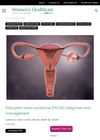
 This review discusses various aspects of polycystic ovary syndrome, including its prevalence, diagnosis, and treatment options, and reports no new empirical results.
 January 2025 in “i-manager s Journal on Life Sciences”
 This review discusses PCOD's pathophysiology, clinical features, and management strategies but reports no new clinical findings, emphasizing the need for early diagnosis and multidisciplinary management.
 1540 citations
,
October 2008 in “Fertility and Sterility”
1540 citations
,
October 2008 in “Fertility and Sterility” This review discusses the definition of polycystic ovary syndrome proposed by the AE-PCOS Society Task Force, emphasizing hyperandrogenism, ovarian dysfunction, and excluding related disorders, while noting potential variations needing more research.
 31 citations
,
April 2005 in “CRC Press eBooks”
31 citations
,
April 2005 in “CRC Press eBooks” The document explains that Polycystic Ovary Syndrome is a complex condition that is hard to diagnose and manage, but it doesn't talk about hair loss or hair growth.
 April 2024 in “Indian Scientific Journal Of Research In Engineering And Management”
 This review discusses the prevalence and contributory factors of polycystic ovarian syndrome and reports no new clinical findings; the authors emphasize the importance of early detection through screening.
This review discusses the diagnostic criteria and management challenges for polycystic ovarian syndrome and reports no clinical results, highlighting complications associated with pregnancy in women with the condition.
 7 citations
,
March 2018 in “Asian-Australasian journal of animal sciences”
7 citations
,
March 2018 in “Asian-Australasian journal of animal sciences” This study observed that the OCIAD2 and DCN genes in Liaoning cashmere goats have opposite effects on hair growth by interacting with the TGF-β signaling pathway, influencing follicle morphogenesis and periodic changes.
 2 citations
,
November 2025 in “Journal of Ovarian Research”
2 citations
,
November 2025 in “Journal of Ovarian Research” This study found that in a mouse model of PCOS, high androgen levels caused pyroptosis in ovarian granulosa cells and increased ER stress in oocytes, reducing oocyte maturation rates, while treatment with CPA and DMF improved these rates.
June 2026 in “Journal of Integrated Science and Technology” This review discusses the proposed shift from PCOS to PMOS, emphasizing a comprehensive approach to diagnosis and management, but reports no new clinical results.
 28 citations
,
August 2009 in “Nursing for Women's Health”
28 citations
,
August 2009 in “Nursing for Women's Health” This review highlights that while healthcare providers are starting to diagnose polycystic ovary syndrome earlier in teens, the psychological and social needs often remain inadequately addressed.
 145 citations
,
March 2010 in “Fertility and Sterility”
145 citations
,
March 2010 in “Fertility and Sterility” This study reported that ovulatory PCOS is a milder form of the condition compared to classic PCOS phenotypes, which share similar clinical and hormone characteristics.
 April 2016 in “Journal of The American Academy of Dermatology”
 This study reported that inpatient dermatology consultations at a large tertiary care center led to treatment changes in 81.9% of cases, particularly improving management of complex cutaneous conditions associated with systemic diseases.
 1 citations
,
May 2011 in “Molecular Medicine Reports”
1 citations
,
May 2011 in “Molecular Medicine Reports” This study found no association between the -866G/A polymorphism in the UCP2 gene and the development of polycystic ovary syndrome.
 45 citations
,
January 2006 in “Endocrine journal”
45 citations
,
January 2006 in “Endocrine journal” To diagnose Polycystic Ovarian Syndrome, two out of three signs—irregular periods, high male hormone levels, or cysts on the ovaries—are needed.
 8 citations
,
September 2024 in “Portuguese Journal of Dermatology and Venereology”
8 citations
,
September 2024 in “Portuguese Journal of Dermatology and Venereology” This review discusses the role of dermatologists in diagnosing and treating PCOS-related dermatological manifestations, emphasizing the importance of early intervention to enhance patients' quality of life, but reports no new clinical findings.
 July 2015 in “NEJM Journal Watch”
 This article discusses the characteristics and complications of polycystic ovary syndrome but reports no new research findings.