 December 2022 in “International Journal of Women's Dermatology”
 This study reported that using the Sinclair Shedding Scale and intralesional corticosteroid injections may help diagnose and manage alopecia areata incognita in women experiencing excessive hair shedding without clear diagnostic indicators.
 April 2023 in “The journal of investigative dermatology/Journal of investigative dermatology”
 This study analyzed blood samples from individuals with alopecia areata and found that NKG2D+ immune cells, particularly memory-like NK cells, may better correlate with disease activity compared to CD8+ cells, though significant variability among individuals complicates these findings.
2 citations
,
January 2024 in “Revista Paulista de Pediatria” In this case report, researchers described a 6-year-old girl with severe mandibuloacral dysplasia type A, noting unique physical deformities and a rare homozygous LMNA gene mutation not commonly associated with the condition.
1 citations
,
November 2023 in “Journal of Maxillofacial and Oral Surgery”  August 2023 in “Journal of inflammation research”
 This case report observed alopecia universalis, a complete hair loss condition, in a patient during a clinical trial with the angiotensin receptor-neprilysin inhibitor sacubitril/alisartan, indicating that ARNI therapy might be associated with such cutaneous reactions.
 August 2023 in “Dermatology and Therapy”
 This consensus statement from Saudi Arabia outlines evidence- and experience-based recommendations for diagnosing and managing alopecia areata, focusing on severity assessment, prognostic indicators, and therapeutic options, with special attention to pediatric patients and uncommon cases.
 September 2022 in “Journal of Investigative Dermatology”
 This study found that the Severity of Alopecia Tool score does not predict the quality of life in patients with alopecia areata, suggesting patient-reported outcomes better reflect the impact on life quality.
January 2025 in “Clinical Case Reports” This case study details the successful treatment of macrophage activation syndrome with dexamethasone and cyclosporine in a 36-year-old woman with adult-onset Still's disease, highlighting the critical importance of timely aggressive treatment.
This research found that nod factor can induce root hair reorientation and gene expression in Medicago truncatula with as little as a single molecule, implicating heterotrimeric G-protein signaling in this process.
June 2021 in “The Journal of Family Practice” This case report discusses a 69-year-old woman with alopecia areata who presented with a growing lesion on her hand, raising diagnostic considerations during her appointment for scalp steroid injections.
 3 citations
,
January 2008 in “Endocrine journal”
3 citations
,
January 2008 in “Endocrine journal” In this case report, the authors describe a partial androgen insensitivity syndrome patient with a novel AR gene mutation, highlighting challenges in gender assignment decisions for infants with partial AIS.
 115 citations
,
October 2009 in “The Journal of clinical endocrinology and metabolism/Journal of clinical endocrinology & metabolism”
115 citations
,
October 2009 in “The Journal of clinical endocrinology and metabolism/Journal of clinical endocrinology & metabolism” In this study, researchers identified novel LMNA mutations in patients with atypical progeroid syndrome, revealing clinical features distinct from other similar disorders, but unrelated to mutant prelamin A accumulation.
44 citations
,
September 2011 in “Journal of Pediatric Gastroenterology and Nutrition” This study reported four new cases of NISCH syndrome in a Moroccan family, confirming genetic variability in liver disease severity and suggesting potential benefits from early UDCA therapy.
 2 citations
,
June 2018 in “Journal of the American Academy of Dermatology”
2 citations
,
June 2018 in “Journal of the American Academy of Dermatology” This review discusses various nail changes in alopecia areata and suggests that they may be more prevalent than previously recognized, impacting quality of life and potentially indicating disease progression.
17 citations
,
May 2021 in “Journal of Cell Science” In this study, the researchers discovered that specific polyamine depletion enhances stemness in hair follicle stem cells through a mechanism independent of mRNA translation.
 11 citations
,
October 2011 in “Allergologia et immunopathologia”
11 citations
,
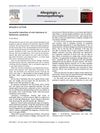
October 2011 in “Allergologia et immunopathologia” A girl with Netherton syndrome was able to eat wheat without allergies after a special treatment.
1 citations
,
July 2023 in “Current Developments in Nutrition”  1 citations
,
September 2025 in “Clinical Cosmetic and Investigational Dermatology”
1 citations
,
September 2025 in “Clinical Cosmetic and Investigational Dermatology” Upadacitinib is effective and safe for treating severe Alopecia Areata in adolescents.
November 2021 in “Circulation” This case report highlights the first known instance of ANA-negative systemic lupus erythematosus presenting as spontaneous coronary artery dissection, emphasizing a need for rheumatological evaluation in such patients.
17 citations
,
July 2018 in “Environmental and Experimental Botany” The researchers reported that silencing the NtNCED3-2 gene in tobacco reduced ABA content and drought tolerance, inhibited root and leaf development, and decreased photosynthetic ability due to altered isoprenoid metabolism.
1 citations
,
March 2025 in “Pediatric Dermatology” This review highlights the evolution of assessment tools for alopecia areata, revealing newer tools that evaluate beyond scalp hair loss, including psychosocial impact and disease chronicity, which can aid clinicians in developing individualized treatment strategies and enhance research in pediatric dermatology.
6 citations
,
March 2024 in “Therapeutic Delivery” This review highlights novel treatment options for alopecia areata, focusing on nanoparticulate drug-delivery systems to improve the effectiveness and targeting of therapies for this complex autoimmune condition.
 30 citations
,
September 2017 in “Clinics in Dermatology”
30 citations
,
September 2017 in “Clinics in Dermatology” This article reviews the clinical and histological features of acanthosis nigricans and its associations with insulin resistance and other conditions, but highlights the need for more research on its classification, severity assessment, and treatment options.
 1 citations
,
September 2019 in “Steroids”
1 citations
,
September 2019 in “Steroids” In this study, genetic testing confirmed the diagnosis of Androgen insensitivity syndrome in most CAIS patients in Tunisia and identified two previously unreported mutations in the androgen receptor gene.
November 2019 in “Harper's Textbook of Pediatric Dermatology” This article reviews Netherton syndrome, focusing on its genetic basis, clinical presentation, and treatment options, and reports no clinical results; the authors mention potential benefits of targeted therapies and gene therapy.
December 2025 in “Clinical Case Reports” In this study, researchers reported that dermoscopic examination of eyebrow hairs can help in the early diagnosis of Netherton syndrome in children by detecting trichorrhexis invaginata, facilitating prompt counseling and care while awaiting genetic test results.
 March 2026 in “Mendeley Data”
 In this study, researchers developed an open-source browser-based tool to enhance the reproducibility and accuracy of SALT score calculations from scalp photos, aimed particularly at assessing partial regrowth in alopecia areata patients on JAK inhibitor therapy.
2 citations
,
April 2012 in “American Journal of Dermatopathology” This report describes two cases of nevus lipomatosus superficialis with the unusual feature of dilated hair follicles, emphasizing the need for precise histopathological diagnosis to differentiate from similar conditions.
June 2025 in “Formosa Journal of Sustainable Research” In this study, the NADES extract of mangkokan leaves (Polyscias scutellaria) demonstrated antibacterial activity against Escherichia coli and Staphylococcus aureus, with a total flavonoid content measured at 4.944 mgEQ/gSimplisia using the disc diffusion method.
 30 citations
,
June 2019 in “Frontiers in Endocrinology”
30 citations
,
June 2019 in “Frontiers in Endocrinology” This article discusses the challenges in diagnosing non-classical congenital adrenal hyperplasia and emphasizes personalized treatment approaches, reporting no new clinical results.