 March 2021 in “Research Square (Research Square)”
 This study found that strontium ranelate may promote cartilage regeneration by enhancing chondrogenic differentiation and inhibiting the Wnt/β-catenin signaling pathway in rat models of cartilage defects.
July 2025 in “Journal of Investigative Dermatology” AI-09 is safe, effective, and reduces wrinkles for up to 6 months.
 3 citations
,
January 2022 in “Scientific Reports”
3 citations
,
January 2022 in “Scientific Reports” This study found that SAMiRNA-AR68, a nanomedicine targeting androgen receptor mRNA, increased hair counts in androgenetic alopecia patients with no observed side effects.
1 citations
,
November 2025 in “American Journal of Clinical Dermatology” This study reports that long-term treatment with ritlecitinib is generally well tolerated for up to approximately five years in patients aged 12 and older with alopecia areata, with the safety profile aligning with previous data from the ALLEGRO clinical trials.
 1 citations
,
October 2020 in “Journal of Cosmetic Dermatology”
1 citations
,
October 2020 in “Journal of Cosmetic Dermatology” This study found that metabolic syndrome was more prevalent among androgenetic alopecia patients than controls, with higher serum RANTES levels suggesting a potential role in the syndrome's pathogenesis.
 July 2008 in “Hair transplant forum international”
 This piece marks the tenth anniversary of the American Board of Hair Restoration Surgery and highlights the addition of 14 new diplomates from diverse countries, while reporting no new clinical findings.
 42 citations
,
April 2009 in “Human Genetics”
42 citations
,
April 2009 in “Human Genetics” This study suggests that the AGA risk haplotype in Europeans was driven to high frequency by positive selection, likely associated with a variant in the EDA2R gene.
 7 citations
,
January 2025 in “Archives of Gynecology and Obstetrics”
7 citations
,
January 2025 in “Archives of Gynecology and Obstetrics” In this review, the authors aim to improve the differential diagnosis between hyperandrogenic PCOS and NCAH, which could lead to more personalized treatment strategies for patients experiencing hyperandrogenism.
December 2010 in “TSpace” In this study, selective overexpression of androgen receptors in muscle cells increased lean muscle mass and reduced fat mass in transgenic rodents, suggesting a potential target for drug development.
 April 2016 in “Plastic and reconstructive surgery. Global open”
 This article from the PRS Global Open and ASPS Education Network does not present any new research findings; it likely serves as an introductory or descriptive overview.
 56 citations
,
December 2011 in “Steroids”
56 citations
,
December 2011 in “Steroids” This review discusses the genetics and variable phenotypic expression of nonclassic congenital adrenal hyperplasia, and reports no new clinical results; the authors call for further research on long-term health impacts and treatment strategies.
June 2022 in “Plastic & Reconstructive Surgery Global Open” This document reviews various studies presented at the Plastic Surgery Research Council (PSRC) Annual Meetings and reports no new research findings; it discusses topics ranging from reconstructive techniques to gender-affirming surgeries.
 27 citations
,
September 2017 in “Journal of Medicinal Food”
27 citations
,
September 2017 in “Journal of Medicinal Food” In this study, researchers found that a polyphenolic extract from Annurca apples, high in procyanidin B2, increased hair growth, density, and keratin content in healthy subjects after 2 months of use, and stimulated keratin biosynthesis in vitro.
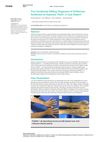
This study presents a rare instance of Netherton syndrome diagnosed incidentally in siblings of consanguineous parents, initially misdiagnosed as other skin conditions, emphasizing the need for careful evaluation in chronic skin cases to prevent misdiagnosis.
September 2025 in “OPAL (Open@LaTrobe) (La Trobe University)” This study found that a chemically modified small-interfering RNA candidate, AR-27 E-Chol, effectively stimulated hair regrowth and reduced androgen receptor gene expression in a mouse model of androgenetic alopecia, indicating its potential as a novel therapeutic approach.
 23 citations
,
March 1994 in “Fertility and sterility”
23 citations
,
March 1994 in “Fertility and sterility” This study found that oral contraceptives effectively suppressed hyperandrogenemia in most patients with hyperandrogenic-insulin-resistant acanthosis nigricans syndrome, though GnRH-a therapy was beneficial for those not responding initially.
 7 citations
,
January 2013 in “European Urology”
7 citations
,
January 2013 in “European Urology” This study developed solid lipid nanoparticles for delivering a shRNA-encoding plasmid that effectively reduced 5α-reductase enzyme levels in vitro without significant cytotoxicity, suggesting potential therapeutic applications.
3 citations
,
September 2024 in “Brain and Behavior” This study found that combining ASA with conditioned medium from adipose tissue-derived MSCs may offer a promising approach for protecting against hippocampal injuries, suggesting potential synergistic therapeutic benefits that merit further investigation.
2 citations
,
July 2025 in “Forensic Sciences” This review concludes that anabolic–androgenic steroid abuse may lead to significant neurotoxicity, affecting brain structure, neurotransmitter systems, and increasing the risk of mood disorders and cognitive deficits.
 142 citations
,
March 2019 in “Frontiers in Cellular Neuroscience”
142 citations
,
March 2019 in “Frontiers in Cellular Neuroscience” This review discusses the development and potential therapeutic applications of adenosine receptor agonists and positive allosteric modulators, noting that while many clinical trials have been unsuccessful, initial results for new compounds are promising.
 47 citations
,
June 2019 in “Nature Communications”
47 citations
,
June 2019 in “Nature Communications” This study found that self-noncoding dsRNA activates TLR3 to stimulate intrinsic retinoic acid synthesis, promoting new hair follicle formation in wounded mice and showing similar gene expression changes in humans treated with rejuvenation lasers.
64 citations
,
March 2004 in “The journal of investigative dermatology/Journal of investigative dermatology” This study describes GPRC5D's unique expression pattern in tissues that produce hard keratin, with retinoic acid inducing its expression in hair bulb cells and affecting keratin gene regulation.
129 citations
,
January 2004 in “Journal of medicinal chemistry” This study synthesized nonsteroidal ligands as second-generation androgen receptor agonists and identified three compounds with significant anabolic activity and moderate to minimal androgenic activity in vivo.
 16 citations
,
October 1994 in “The Journal of Steroid Biochemistry and Molecular Biology”
16 citations
,
October 1994 in “The Journal of Steroid Biochemistry and Molecular Biology” Two non-steroidal antiandrogens, RU 58841 and RU 56187, form a common metabolite at different rates, which may influence their effects; RU 56187 could be used for prostate cancer treatment and RU 58841 for acne treatment.
56 citations
,
November 2007 in “Molecular and cellular endocrinology” This study identified enzymes responsible for regulating androgen action in the human prostate, suggesting that inhibiting AKR1C2 or RL-HSD may have therapeutic potential in androgen insufficiency or benign prostatic hyperplasia, respectively.
9 citations
,
May 2002 in “PubMed” This study demonstrated that mice lacking skin-specific RXRalpha expression developed hair follicle degeneration and alopecia, indicating the importance of RXRalpha/VDR heterodimers in maintaining hair follicle homeostasis.
 1 citations
,
September 2025 in “Dermatology and Therapy”
1 citations
,
September 2025 in “Dermatology and Therapy” This review suggests that glucagon-like peptide 1 receptor agonists (GLP-1 RAs) have potential benefits for dermatologic conditions but may also cause adverse skin reactions and impact surgical outcomes.
 July 2022 in “Journal of the Dermatology Nurses' Association”
 This editorial summarizes key dermatological insights and learnings from the 2022 Dermatology Nurses' Association Convention, covering conditions like lichen sclerosus and melanoma, and issues related to nail disorders and skin of color.
February 2026 in “Advanced Science” This study found that the combination of TTNPB and CHIR99021 enhanced the derivation of highly advanced neural stem cells from human pluripotent stem cells, with improved chromatin accessibility and neuroectodermal gene expression, and these cells successfully engrafted in rat hippocampi to ameliorate depression-like symptoms.
 December 2017 in “The journal of investigative dermatology. Symposium proceedings/The Journal of investigative dermatology symposium proceedings”
 This article reviews the role of the National Alopecia Areata Foundation in promoting research and collaboration to find treatments or a cure for alopecia areata and reports no clinical results.