294 citations
,
August 1999 in “Journal of the American Academy of Dermatology” This study observed that the majority of side effects from laser-assisted hair removal were associated with ruby and alexandrite lasers, particularly in patients with tanned or darker skin types.
53 citations
,
October 2012 in “Journal of dermatological treatment” This study found that low-fluence 1064 nm Q-switched Nd:YAG laser treatment effectively improved melasma in Asian patients without serious side effects, achieving an average improvement rate of 50-74%.
45 citations
,
July 2025 in “Journal of Medicinal Chemistry” This article discusses the development and clinical progress of PROTAC technology, particularly focusing on the New Drug Application for vepdegestrant, an estrogen receptor-targeting PROTAC, marking significant advancements in targeted protein degradation therapies.
36 citations
,
June 2016 in “Journal of dermatological treatment” This study found that a combination of low-fluence Q-switched 1064 nm Nd:YAG laser, hydroquinone cream, and oral tranexamic acid showed promising results for Riehl’s melanosis in Asian patients, with no serious adverse events reported.
 31 citations
,
April 1999 in “Dermatologic Clinics”
31 citations
,
April 1999 in “Dermatologic Clinics” This article reviews the use of the Nd:YAG laser for hair removal and reports no new research findings.
27 citations
,
July 2013 in “Journal of dermatological treatment” This report describes a case where a recalcitrant folliculitis decalvans was successfully treated with a long-pulsed Nd:YAG laser.
 19 citations
,
January 2001 in “Journal of cutaneous laser therapy”
19 citations
,
January 2001 in “Journal of cutaneous laser therapy” This study found that the long-pulse Nd:YAG laser effectively reduces unwanted facial hair across various skin types, with hair regrowth delayed significantly longer than with self-applied methods.
 10 citations
,
January 2010 in “Indian journal of dermatology, venereology, and leprology”
10 citations
,
January 2010 in “Indian journal of dermatology, venereology, and leprology” This study found that long pulsed Nd: YAG laser is a safe and effective method for hair reduction in individuals with skin types IV and V, with significant improvements observed over six sessions.
7 citations
,
June 2024 in “Skin Research and Technology” Combining treatments significantly reduces dark circles and wrinkles better than nanofat alone.
5 citations
,
March 2013 in “Journal of cosmetic and laser therapy” This case report describes an 8-year-old girl who developed fronto-temporal hypertrichosis from 2% minoxidil solution and achieved complete resolution after two Nd:YAG laser hair removal sessions.
 4 citations
,
December 2013 in “Acupuncture and related therapies”
4 citations
,
December 2013 in “Acupuncture and related therapies” This review summarizes the potential of N-acetyl-cysteine in managing diseases linked to redox imbalance, discussing its effects from cellular mechanisms to clinical applications, though further research is suggested for broader use.
 1 citations
,
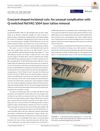
November 2020 in “Journal of Cosmetic Dermatology”
1 citations
,
November 2020 in “Journal of Cosmetic Dermatology” This letter to the editor discusses an unusual complication, crescent-shaped incisional cuts, observed with Q-switched Nd:YAG 1064 laser tattoo removal and reports no new clinical results.
 1 citations
,
January 2020 in “ARC Journal of Dermatology”
1 citations
,
January 2020 in “ARC Journal of Dermatology” This study observed that five cases of primary cicatricial alopecia showed an excellent response to a combination of oral zinc and long-pulsed Nd:YAG 1064-nm laser treatment, suggesting this approach may be beneficial for certain types of this condition.
 April 2023 in “Journal of Investigative Dermatology”
 In this study, Nd:YAG picosecond lasers using fractional micro-lens array were found to have a comparable effect to ablative fractional Er:YAG lasers in treating atrophic acne scars, with better safety profiles but slightly less patient satisfaction.
 March 2019 in “Applied sciences”
 This case report suggests that 1064 nm picosecond Nd:YAG laser therapy may effectively improve alopecia totalis when used as an alternative adjuvant treatment, as demonstrated in a split-scalp study showing better results than steroid treatment alone.
 May 2015 in “Journal of The American Academy of Dermatology”
 The Nd:YAG laser is a successful and safe way to treat ingrown and pincer nails.
September 2020 in “Journal of Mind and Medical Sciences” This study reported that using a Cutera Xeo laser with specific probes may help treat rosacea symptoms like diffuse facial erythema and telangiectasias, with some risks like bruises and hypopigmentation.
 April 2018 in “Journal of Investigative Dermatology”
 This study found that NDRG1 expression increases during the proliferation of infantile hemangioma and may positively regulate its growth, while FOXO1 downregulation plays a role in its pathogenesis.
 December 2020 in “Lasers in Surgery and Medicine”
 In this study, using a 1064 nm picosecond Nd:YAG laser effectively removed undesirable scalp micropigmentation in four patients within 1–3 treatment sessions, with no unexpected adverse events reported.
 13 citations
,
May 2021 in “Plants”
13 citations
,
May 2021 in “Plants” This study found that the n-hexane fraction from Leea indica leaves significantly increased hair growth in mice and showed potential as a natural treatment for alopecia.
 1 citations
,
January 2019 in “Clinical, Cosmetic and Investigational Dermatology”
1 citations
,
January 2019 in “Clinical, Cosmetic and Investigational Dermatology” In this study, a gel containing extracts from Coffea arabica and Larrea divaricata was found to significantly thicken eyebrows and eyelashes in most premenopausal and postmenopausal women, without causing adverse effects, but showed no statistical difference from a placebo in overall hair growth.
68 citations
,
January 2012 in “Lasers in surgery and medicine” This study found that combining microdermabrasion, a topical regimen, and low-fluence QS Nd:YAG laser treatment effectively cleared melasma in women, with 81% of participants achieving over 75% clearance and minimal side effects.
54 citations
,
November 2014 in “JEADV. Journal of the European Academy of Dermatology and Venereology/Journal of the European Academy of Dermatology and Venereology” This study found that combining low-fluence Q-switched Nd: YAG laser and intense pulsed light led to faster and more effective melasma treatment compared to using the laser alone, though recurrence still occurred.
11 citations
,
January 2014 in “PubMed” This study found that patients with high androgen levels due to PCOS required more sessions of Nd-YAG laser therapy for hair reduction compared to those with normal or low hormone levels.
 4 citations
,
August 2022 in “Lasers in medical science”
4 citations
,
August 2022 in “Lasers in medical science” In this study, both 1565-nm non-ablative fractional laser and long-pulsed 1064-nm Nd:YAG laser effectively reduced enlarged facial pores, with no significant difference in efficacy and minimal side effects, though the Nd:YAG laser had less severe side effects.
1 citations
,
July 2024 in “Journal of lasers in medical sciences” This case study reports that treating a female patient with facial partial unilateral lentiginosis using a 532-nm Nd:YAG fractional picosecond laser resulted in significant improvement in pigmentation without notable side effects, indicating it may be an effective and well-tolerated treatment option.
1 citations
,
March 2018 in “Journal of lasers in medical sciences” This study found that combining topical capislow with laser hair removal significantly enhanced hair reduction compared to laser alone, although the beneficial effects lasted only while capislow was applied.

This study found that 1064 nm QS Nd:YAG laser treatment effectively lightens hair and improves skin appearance in Indian subjects with minimal adverse effects, offering a safer alternative to chemical lightening products.
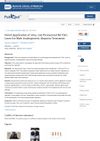
In this pilot study, researchers found that fractional picosecond laser therapy may promote hair regrowth in men with mild-to-moderate androgenetic alopecia, with significant improvements in expert assessments and patient satisfaction observed over a four-month period, though further research is needed to confirm these findings.
 February 2009 in “Journal of The American Academy of Dermatology”
 Fractional infrared technology is effective and safe for treating cervical laxity.