 July 2023 in “New phytologist”
 This research identified a genetic mutation in Brachypodium distachyon that initially allows root hair initiation but fails to elongate them, while also affecting root growth and nitrate sensitivity; the mutation is linked to a previously uncharacterized cyclin-dependent kinase-like gene.
May 2022 in “Journal of the Dermatology Nurses' Association” This article summarizes highlights from the 40th Annual DNA Convention, covering various dermatology topics, but it does not report new clinical results.
2 citations
,
January 1989 This article discusses the history and understanding of Tay syndrome, recognizing it as a distinct condition related to ichthyotic erythroderma, mental retardation, and brittle hair but reports no new clinical results.
 1 citations
,
September 2023 in “Meditsinskiy sovet = Medical Council”
1 citations
,
September 2023 in “Meditsinskiy sovet = Medical Council” In this study involving children with alopecia areata, researchers found that adding narrowband UVB 311 nm therapy to standard treatment significantly improved hair regrowth in those with coexisting atopic dermatitis compared to those without the condition.
July 2024 in “Journal of Investigative Dermatology” This study found that systemic treatment with DS77754007, a KLK5 inhibitor, improved skin symptoms in a mouse model of Netherton Syndrome more effectively than certain antibody treatments, suggesting KLK5 inhibition as a promising therapeutic approach for this condition.
 December 2025 in “IP Indian Journal of Clinical and Experimental Dermatology”
 This study observed that topical dinitrochlorobenzene was significantly more effective than topical betamethasone in treating patients with alopecia areata, with 53.3% achieving excellent hair regrowth compared to 13.3% using betamethasone.
 April 2019 in “Journal of Investigative Dermatology”
 This study identifies a mechanism where dsRNA activates TLR3 to induce RA production, promoting hair follicle regeneration in mice and suggesting a potential role in human tissue regeneration.
 7 citations
,
September 2011 in “International Journal of Dermatology”
7 citations
,
September 2011 in “International Journal of Dermatology” This study investigated demographic and clinical characteristics of twenty-nail dystrophy in Korea, identifying differences in subtype and gender predominance between children and adults.
 3 citations
,
August 2020 in “bioRxiv (Cold Spring Harbor Laboratory)”
3 citations
,
August 2020 in “bioRxiv (Cold Spring Harbor Laboratory)” This study found that the DNN-DTIs prediction model achieved high accuracy in predicting drug-target interactions, suggesting its potential application in drug repositioning and the discovery of new uses for existing drugs.
September 2022 in “European Journal of Dermatology” This study identified a novel pathogenic splice-site variant of the LAMB3 gene in patients with junctional epidermolysis bullosa, highlighting the importance of gene sequencing for diagnosis.
 May 2014 in “Journal of The American Academy of Dermatology”
 The number of new cases of cutaneous B-cell lymphoma has leveled off since the early 2000s, and survival rates have improved since 1973.
86 citations
,
January 1990 in “The Journal of Pediatrics” This study suggests that biotin therapy may be beneficial for individuals with partial biotinidase deficiency, as some developed symptoms later, which resolved with treatment.
 37 citations
,
December 2014 in “Journal of Biomedical Informatics”
37 citations
,
December 2014 in “Journal of Biomedical Informatics” This study introduced LabeledIn, a semi-automatic, human-reviewed catalog of drug-disease treatment relationships, highlighting the important role of human input in creating accurate and detailed drug indication resources.
5 citations
,
June 2024 in “Phenomics” 2 citations
,
September 2024 in “PLoS ONE” This study suggests that combining bendamustine with tucidinostat may improve survival in patients with relapsed or refractory adult T-cell leukemia/lymphoma, highlighting its potential for clinical investigation.
41 citations
,
December 2008 in “Pediatric Dermatology” This case report indicates that trichoscopy may significantly improve the diagnosis of Netherton syndrome by noninvasively identifying typical hair abnormalities without the need to pull hair.
 65 citations
,
September 2010 in “Journal of the Neurological Sciences”
65 citations
,
September 2010 in “Journal of the Neurological Sciences” This article discusses Kennedy's disease, detailing its genetic cause, symptoms, and diagnostic criteria, but reports no new clinical findings and highlights a lack of causal therapy.
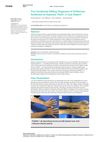
This study presents a rare instance of Netherton syndrome diagnosed incidentally in siblings of consanguineous parents, initially misdiagnosed as other skin conditions, emphasizing the need for careful evaluation in chronic skin cases to prevent misdiagnosis.
 November 2022 in “Journal of Investigative Dermatology”
 This study found that non-balding dermal papilla cells emphasized extracellular matrix organization and reduced inflammation when cultured in 3D or with adipose-derived stem cells, unlike balding cells which maintained inflammatory pathways.
 April 2023 in “Journal of Investigative Dermatology”
 This study demonstrated that the Epidermal Biopotential Sensing System (EBSS) can measure digital biomarkers of pain in mice, suggesting potential applications in assessing pain and screening analgesics in populations with communication difficulties.
 1 citations
,
January 2009 in “Elsevier eBooks”
1 citations
,
January 2009 in “Elsevier eBooks” This article reviews the endocrine changes in anorexia nervosa and bulimia nervosa, highlighting hypoleptinemia as a potential mediator, but does not present any new clinical results.
April 2021 in “Journal of Investigative Dermatology” A deep learning model was developed to help diagnose trichothiodystrophy by analyzing hair patterns.
2 citations
,
November 2024 in “PLoS ONE” This study assessed breeding value estimation methods for Korean Sapsaree dogs, finding varied accuracy across BLUP approaches and identifying significant genomic regions affecting traits like body height and hair length. The researchers suggest these findings can enhance breeding strategies for this culturally significant breed.
 October 2023 in “Indian dermatology online journal”
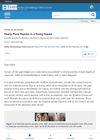
 This report describes a case study of a 23-year-old female exhibiting multiple trichodiscomas, a type of benign tumor of the hair follicular discs common in familial cases and potentially linked to Birt-Hogg-Dube syndrome, though genetic testing was not performed due to financial constraints.
 1 citations
,
November 2001 in “Acc Current Journal Review”
1 citations
,
November 2001 in “Acc Current Journal Review” This review found that 5α‐reductase inhibitors were associated with slightly increased rates of decreased libido, erectile and ejaculatory dysfunction, gynecomastia, and mood disorders compared to placebo, though their long-term effects remain unclear.
February 2026 in “Skin Appendage Disorders” This study found a significant association between pseudofolliculitis barbae and mood disorders such as depression and anxiety, but not with obsessive-compulsive disorder.
March 2026 in “Zenodo (CERN European Organization for Nuclear Research)” This bibliography catalogues 335+ publications produced using the N-K Model over 13 months and reports no new scientific results.
1 citations
,
February 2022 in “Journal of the American Academy of Dermatology” This review discusses biotin supplementation for dermatological conditions and highlights the lack of strong evidence supporting its efficacy, as well as the potential for laboratory testing interference.
1 citations
,
April 2025 in “American Journal of Medical Genetics Part C Seminars in Medical Genetics” The researchers reported that repurposing the drug eflornithine may offer a treatment option for Bachmann-Bupp Syndrome, highlighting a potential model for other rare diseases.