January 2026 in “Microorganisms” In a DNFB-induced mouse model of atopic dermatitis, this study found that both topical and oral formulations of the probiotic Bifidobacterium animalis J12 improved AD symptoms through distinct mechanisms, with topical applications reducing local inflammation and oral administration enhancing gut microbiota and reducing systemic inflammation.
19 citations
,
December 2008 in “Arthritis Care & Research” This study found that the decision board is a reliable and valid tool for assessing treatment preferences in systemic lupus erythematosus patients, who tended to favor oral medication due to concerns about side effects.
6 citations
,
January 2020 in “Open Journal of Psychiatry” This study concludes that the Greek version of the Dysmorphic Concern Questionnaire is a reliable and valid tool for assessing body dysmorphic disorder-related concerns in both research and clinical settings.
3 citations
,
September 2022 in “European Journal of Dermatology” This report identifies a novel splice-site variant in the LAMB3 gene linked to junctional epidermolysis bullosa, emphasizing the need for gene sequencing in diagnosing the disease.
January 2026 in “Animals” This study researched the dun coat color in Mongolian horses, finding that variations in TBX3 expression in different skin areas are linked to Bider markings, suggesting TBX3's role in this specific pigment pattern, while further investigation is needed on its regulation.
September 2023 in “Journal of the American Academy of Dermatology” In this study of pediatric melanocytic lesions, researchers at Massachusetts General Hospital observed no concurrent BAP1 loss and BRAFV600E positivity, characteristics of adult BIMT, suggesting that these tumors may develop at a later age rather than in childhood.
January 2026 in “Figshare” This report presents gene set enrichment scores for hair follicle compartments using tape strip and bulk biopsy methods, providing statistical data but no new experimental findings.
99 citations
,
March 2013 in “Journal of Investigative Dermatology” This study identified ABCB6 as the first gene linked to dyschromatosis universalis hereditaria (DUH) in a large Chinese family, suggesting it plays a role in skin pigmentation.
7 citations
,
June 2015 in “EMBO Reports” This article discusses how DNA-based phenotyping is used by police to create visual profiles of suspects from crime scene samples, but reports no new research findings.
 93 citations
,
May 2010 in “European Journal of Cancer”
93 citations
,
May 2010 in “European Journal of Cancer” This phase II trial found that BI 2536 demonstrated limited antitumor activity across five solid tumor types, with no confirmed objective responses observed.
99 citations
,
May 2013 in “Familial cancer” This article discusses the pulmonary manifestations of Birt-Hogg-Dubé syndrome, noting diagnostic challenges in differentiating it from other lung conditions, and underlines the need for further research on folliculin's role in cyst formation.
13 citations
,
June 2024 in “Frontiers in Genetics” This review examined genetic factors in 46, XY differences/disorders of sex development and found that whole-exome sequencing is more effective than panel sequencing for molecular diagnosis. It identified regional genetic variation and emphasized next-generation sequencing's role in detecting variants related to gonadal and androgen-related genes.
December 2025 in “International Journal of Dermatology” This case report describes a unique instance of late-onset Björnstad syndrome in an 18-year-old female, mimicking androgenetic alopecia, and indicates potential improvement with JAK inhibitor baricitinib, highlighting the need for considering this syndrome in similar cases of patterned hair loss in young individuals.
 1 citations
,
April 2016 in “British Journal of Dermatology”
1 citations
,
April 2016 in “British Journal of Dermatology” Buschke-Ollendorff syndrome is a rare genetic disorder causing skin and bone changes, with some cases also showing ADHD or developmental delays.
 February 2026 in “Dermatology and Therapy”
 This study observed that sonidegib led to a meaningful clinical response in a real-world Chinese cohort with locally advanced basal cell carcinoma, although pathological biopsy remains essential to confirm tumor clearance due to false positives in noninvasive assessments.
 18 citations
,
June 2019 in “Twin research and human genetics”
18 citations
,
June 2019 in “Twin research and human genetics” This article describes the 25Up study on psychological and behavioral risk factors for mental illness in Australian twins and their siblings and reports prevalence data for various mental disorders.
7 citations
,
August 2021 in “Open Access Macedonian Journal of Medical Sciences” In this case–control study, the researchers in Ukraine found no significant link between VDR rs2228570 polymorphism and decreased serum BDNF levels, though they observed a moderate correlation between serum BDNF and 25-OH Vitamin D levels in patients with thyroid disorders.
 81 citations
,
July 2012 in “Translational Psychiatry”
81 citations
,
July 2012 in “Translational Psychiatry” In this pilot study, no significant differences were observed between memantine and placebo groups in young adults with Down syndrome on the primary memory outcomes, but some improvement was noted in a secondary measure.
October 2025 in “Indian Journal of Paediatric Dermatology” In this case report, a 6-year-old boy with Netherton syndrome was diagnosed using trichoscopy, which revealed characteristic hair shaft abnormalities such as bamboo, golf tee, and matchstick hairs.
1 citations
,
February 2025 in “Journal of the Neurological Sciences” This study suggests that BTP levels in cerebrospinal fluid might help diagnose CIDP and predict therapy response but require validation in larger cohorts.
 December 2024 in “Brazilian Journal of Hair Health”
 In this case study, a 66-year-old woman with hair-related Body Dysmorphic Disorder and newly diagnosed bipolar disorder experienced significant symptom improvement with psychiatric medications, highlighting a unique comorbidity and response to treatment.
 March 2018 in “Gazi medical journal”
 This study found that adults with β-thalassemia major had a significantly higher prevalence of skin, hair, and nail disorders compared to healthy controls, influenced by factors like age, gender, and ferritin levels.
 October 2023 in “Pediatric dermatology”
 This study found that Middle Eastern patients with epidermolysis bullosa show specific correlations between their genetic variants and clinical features, which may aid in diagnosis and genetic counseling.
 2 citations
,
March 2023 in “Research Square (Research Square)”
2 citations
,
March 2023 in “Research Square (Research Square)” This review discusses existing forensic DNA phenotyping panels for biogeographical ancestry and externally visible characteristics and highlights major technical limitations, including terminology issues, genetic knowledge gaps, and technological debates; it reports no new results.
 1 citations
,
June 2018 in “International Journal of Dermatology”
1 citations
,
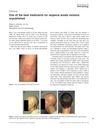
June 2018 in “International Journal of Dermatology” DNCB is highly effective for treating alopecia areata with minimal long-term side effects.
 July 2012 in “Hair transplant forum international”
 This article defines body dysmorphic disorder as excessive concern over perceived physical defects that cause distress and affect social or functional activities, but it reports no new results.
 September 2023 in “Cureus”
 This study at B.J. Medical College and Civil Hospital highlighted an extensive range of nail disorders, with onychomycosis being the most common, and emphasized the importance of nails in diagnosing both dermatological and systemic conditions.
32 citations
,
September 2013 in “Breast cancer research” This study identified a specific SNP in the CACNB4 gene associated with a higher risk of chemotherapy-induced alopecia in breast cancer patients, which may help develop interventions to improve their quality of life.
 2 citations
,
January 2000 in “Journal of Toxicologic Pathology”
2 citations
,
January 2000 in “Journal of Toxicologic Pathology” This study identified a single autosomal recessive gene responsible for hypotrichosis in a mutant rabbit strain, affecting hair growth and causing epidermal and hair follicle abnormalities.
 July 2023 in “New phytologist”
 This research identified a genetic mutation in Brachypodium distachyon that initially allows root hair initiation but fails to elongate them, while also affecting root growth and nitrate sensitivity; the mutation is linked to a previously uncharacterized cyclin-dependent kinase-like gene.