In this study, researchers identified IL18R+ thymus-resident regulatory T cells in mice, demonstrating their unique molecular features and resistance to age- and stress-induced thymus involution, highlighting IL18 signaling's role in Treg migration and retention.
 39 citations
,
May 2014 in “Frontiers in Pharmacology”
39 citations
,
May 2014 in “Frontiers in Pharmacology” In this study, CD4+CD25+FoxP3+ Regulatory T cells were found to reduce TGF-b1 induced lung fibrosis and fibrocyte accumulation in mice, partly by suppressing fibroblast growth factor 9.
This study found that IL18 signaling plays a crucial role in the homing and retention of mature regulatory T cells in the mouse thymus, primarily by upregulating the chemokine receptor CCR6.
 12 citations
,
September 2024 in “Frontiers in Immunology”
12 citations
,
September 2024 in “Frontiers in Immunology” This study found that metabolism-related genes significantly impact the prognosis and metastasis in breast cancer, and the development of prediction models may guide personalized therapeutic strategies.
26 citations
,
February 2021 in “FEBS Journal” This review discusses potential immune therapies targeting regulatory T cells for age-related diseases and emphasizes the need for further research to translate these therapies into clinical practice.
January 2019 in “eScholarship (California Digital Library)” This study concluded that CNS1-dependent peripheral Tregs do not significantly impact type 1 diabetes in the NOD mouse model, with thymus-derived Tregs being the primary regulators.
March 2005 in “Journal of the American Academy of Dermatology” Recognizing minor skin lesions can help identify serious cancer syndromes.
 192 citations
,
March 2017 in “Cell host & microbe”
192 citations
,
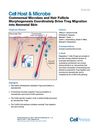
March 2017 in “Cell host & microbe” The researchers reported that hair follicle development and commensal microbe colonization promote the accumulation of regulatory T cells in neonatal skin, with the Ccl20-Ccr6 pathway playing a key role in this process.
 October 2023 in “bioRxiv (Cold Spring Harbor Laboratory)”
 This study found that neonatal Regulatory T cells are crucial for maintaining PPARγ signaling in hair follicles, which supports melanocyte stem cell function and skin pigmentation during early postnatal development.
33 citations
,
September 2020 in “Current Rheumatology Reports” This review discusses the emerging role of AMT in fibrosis and suggests that targeting AMT could offer a novel approach to treatment; it reports no new clinical results.
 January 2012 in “heiDOK (Heidelberg University)”
 In this study, researchers observed that dormant TRP-2+ melanoma cells in bone marrow can interact with CD8+ T cells in tumor-bearing ret transgenic mice, potentially influencing immune responses.
 August 2019 in “Journal of Invertebrate Pathology”
 This study observed that different alkaline buffers had a significant impact on the volume of liquid consumed by fall armyworm larvae, emphasizing the importance of measuring imbibed volumes to reduce dose errors in bioassays.
2 citations
,
January 2014 in “Journal of Cytology & Histology” In a mouse model, this study found that LAM/TSC cells invaded the uterus and increased angiogenesis, while anti-EGFR antibody and rapamycin effectively reduced cell presence and blood vessel proliferation.
4 citations
,
September 2024 in “Development” This study investigated transcription factors in human trophectoderm cells during development, finding that GATA2 and GATA3 are essential for transforming stem cells into induced trophoblast stem cells, which display characteristics similar to placental progenitor cells, offering new methods for modeling placental-associated diseases.
39 citations
,
April 2019 in “The journal of immunology/The Journal of immunology” This study found that Malt1, particularly its protease activity, plays a crucial role in maintaining Treg cell function and homeostasis, with its inactivation leading to autoimmune diseases and altered immune responses in mice.
September 2017 in “The journal of investigative dermatology/Journal of investigative dermatology” The researchers reported that TGM2 appears to play a crucial role in sebocyte differentiation and may act as a negative regulator of lipid metabolism in sebaceous glands.
March 2025 in “European Journal of Cell Biology” This review discusses the role of regulatory T cells, highlighting recent research on how prostanoids may modulate their function, but it reports no new findings.
21 citations
,
February 2006 in “Clinical Cancer Research” This commentary discusses how microphthalmic-associated transcription factor levels in circulating tumor cells correlate with melanoma progression and suggests the factor may be up-regulated in vivo, but it reports no new clinical results.
 24 citations
,
March 2018 in “Experimental Dermatology”
24 citations
,
March 2018 in “Experimental Dermatology” This review explores the role of regulatory T cells in autoimmune skin disorders like alopecia areata and vitiligo, emphasizing unanswered questions and reporting no new experimental results.
5 citations
,
January 2016 in “Open Journal of Regenerative Medicine” This article describes the potential applications of myoblast implantation for muscle regeneration and its promising social and economic value but reports no new clinical results.
 14 citations
,
January 2021 in “Scientific Reports”
14 citations
,
January 2021 in “Scientific Reports” This study found that "micro skin tissue columns" improved wound healing by enhancing re-epithelialization, collagen deposition, dermal remodeling, and reducing inflammation without causing long-term donor site morbidity.
 October 2022 in “The American journal of gastroenterology”
 This case report details a patient with myasthenia gravis and a malignant thymoma whose rising liver function tests, initially thought to be related to antibiotic use, were ultimately attributed to thymoma-associated multiorgan autoimmunity.
October 2024 in “Journal of the Endocrine Society” This case report highlights that a patient with resistance to thyroid hormone was misdiagnosed as having Graves’ disease, leading to unnecessary radioactive iodine treatment.
July 2025 in “Journal of Investigative Dermatology” Enhancing Tregs can protect against alopecia areata.
August 2025 in “BMC Pharmacology and Toxicology” The LTF gene may help predict and manage nonspecific orbital inflammation.
3 citations
,
August 2022 in “International Journal of Molecular Sciences” This study demonstrated that 5-azacytidine treatment may reduce TSC lesion-related hair follicles in mice, suggesting chromatin remodeling agents could be effective for tuberous sclerosis cutaneous lesions lacking tuberin.
 3 citations
,
May 2025 in “Cell Death and Disease”
3 citations
,
May 2025 in “Cell Death and Disease” This study found that METTL1 is upregulated in papillary thyroid cancer tissues and promotes cancer cell proliferation and metastasis through its tRNA methyltransferase activity.
 April 2023 in “The journal of investigative dermatology/Journal of investigative dermatology”
 This study revealed distinct cellular and transcriptomic differences among various subtypes of cutaneous T-cell lymphoma, particularly highlighting characteristics unique to folliculotropic mycosis fungoides.
3 citations
,
January 2017 in “Acta Dermato Venereologica” This study found that a specific T-cell receptor motif associated with lipid-antigen stimulation may play a role in the pathogenesis of folliculotropic mycosis fungoides.
 3 citations
,
May 2019 in “Cytotherapy”
3 citations
,
May 2019 in “Cytotherapy” In this study, only a subset of proposed biomarkers universally responded to priming in mesenchymal stromal cells, suggesting limited utility for standardized potency assays across different MSC types and conditions.