2 citations
,
January 2022 in “The Application of Clinical Genetics” This case report presents the first Russian patient with Meier-Gorlin syndrome 5, expanding clinical understanding through the identification of two novel CDC6 gene variants.
July 2025 in “Journal of Investigative Dermatology” TRIV-509 quickly improves skin barrier and cell health in atopic dermatitis.
June 1996 in “Journal of Dermatological Science” July 2024 in “Journal of Investigative Dermatology” OR101 may effectively treat atopic dermatitis and similar skin conditions.
February 2026 in “Toxicology Letters” This study used an in silico/in vitro approach to identify potential inhibitors of the enzyme SRD5A2, finding that the androgen receptor modulator MK-0773 is a moderate inhibitor, although it does not act as a covalent inhibitor like finasteride.
June 2025 in “British Journal of Dermatology” In this report, two cases of melanocytic matricoma, a rare benign hair follicle lesion that mimics melanoma and basal cell carcinoma, were described and successfully treated with complete surgical excision. Histological analysis was crucial for differentiation from similar malignant lesions.
2 citations
,
December 2024 in “Microscopy Research and Technique” This study introduced a novel microscopy system using an Er3 + −doped femtosecond fiber laser, achieving detailed imaging of biological structures in plant and skin samples with improved spatial resolution for various applications, including in vivo imaging.
July 2026 in “Journal of Investigative Dermatology” 17 citations
,
September 2018 in “Matrix Biology” The researchers reported that mouse keratinocyte-specific deletion of laminin γ1 led to delayed coat pigmentation due to impaired melanocyte migration and differentiation, linked to altered laminin composition in the basement membrane.
 3 citations
,
January 2018 in “Food Science and Technology Research”
3 citations
,
January 2018 in “Food Science and Technology Research” This study found that 6-methylsulfinylhexyl isothiocyanate (6-MSITC) significantly promoted proliferation and upregulated specific mRNA levels in human dermal papilla cells, suggesting potential as a hair growth stimulant.
8 citations
,
March 2023 in “International Wound Journal” The researchers reported that several m6A-related genes, particularly IGF2BP3, were differentially expressed in keloid tissue compared to normal skin, indicating potential targets for understanding keloid pathogenesis and treatment.
September 2025 in “OPAL (Open@LaTrobe) (La Trobe University)” This study developed a partially automated protocol utilizing hair follicles for DNA extraction in marmosets, achieving reliable whole genome sequencing with low chimerism, offering an efficient alternative to blood for genetic studies in non-human primates.
822 citations
,
January 2021 in “Genome biology” This study presents a new method called scMC that effectively distinguishes biological from technical variation in single-cell genomics datasets, demonstrating its ability to accurately align and detect biological signals across various experiments.
74 citations
,
February 2018 in “Journal of the American Academy of Dermatology” 2 citations
,
December 2022 in “Bio-Design and Manufacturing” This study demonstrates that the newly developed portable reflectance confocal microscope (PRCM) offers real-time, noninvasive monitoring of wound healing processes by visualizing skin morphology in both mice and humans.
5 citations
,
June 2020 in “Medicine” This report discusses a 22-year-old patient with MELAS syndrome carrying the m.10158T>C mutation, and highlights the need for extensive genetic testing when initial hot-spot mutation tests are negative.
This study introduces a new type of tissue micromodule, the micro tissue precursor (μTP), which can form complex 3D tissues, including lung stroma and skin models supporting hair viability.
 July 2005 in “SKINmed/Skinmed”
 This study reported that BRL 7660 significantly reduced sebum secretion and acne symptoms in human studies with topical administration, but the placebo effect and commercial pressures halted further investigations.
54 citations
,
February 1994 in “Journal of Investigative Dermatology” 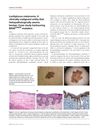 1 citations
,
March 2015 in “Journal of the European Academy of Dermatology and Venereology”
1 citations
,
March 2015 in “Journal of the European Academy of Dermatology and Venereology” This letter to the editor shares a case study of lentiginous melanoma that appears clinically malignant but histopathologically benign, involving the BRAFV600R mutation.
50 citations
,
September 2023 in “Biomarker Research” This review focuses on S100A6, a Ca²⁺-binding protein, detailing its role in cell functions, the regulation of its expression, and its potential as a biomarker and therapeutic target in various diseases.
September 2023 in “Journal of the American Academy of Dermatology” 1 citations
,
July 2024 in “New Phytologist” In this study, researchers identified that three homologous genes—ZmSPL10, ZmSPL14, and ZmSPL26—are crucial for the development of stigmatic papilla in maize, with triple knockout mutants lacking these genes showing almost no stigmatic papilla and significantly reduced kernel setting.
6 citations
,
March 2022 in “Molecules” This study found that methyl jasmonate can induce tanshinone biosynthesis in S. miltiorrhiza by affecting the expression of the SmMEC gene, as supported by RT-PCR and transcriptomic data.
1 citations
,
April 2010 in “Digital WPI” This study found that CLK1 is necessary for epidermal differentiation but does not affect sebocyte differentiation in a telogen skin stem cell line.
9 citations
,
December 2023 in “Materials Today Bio” This study found that modified microcrystalline cellulose with citric and ascorbic acid demonstrated enhanced hemostatic properties and biocompatibility in vitro and in animal hemorrhage models.
4 citations
,
May 2023 in “Pigment Cell & Melanoma Research” In this study, researchers found that deleting the Bmi1 gene in murine melanocytes caused premature hair greying and loss of melanocyte lineage cells, highlighting BMI1's role in protecting melanocyte stem cells from stress and oxidative damage.
October 2019 in “Research Square (Research Square)” This study will investigate the efficacy of YH0618 granules on reducing chemotherapy-induced hair loss in breast cancer patients, focusing on potential mechanisms related to kidney deficiency, with outcomes not yet reported.
15 citations
,
May 2009 in “Chemical Physics Letters” This study demonstrated that a metric based on rotational echo intensity in 2H magic-angle spinning NMR can derive kinetic information for conformational exchange without complex modelling, achieving activation barriers consistent with prior findings.
 December 2025 in “Journal of Ovarian Research”
 This study found that multiple vitamins, including B6, increased the number of growing follicles in newborn mouse ovaries in vitro. VB6 promoted primordial follicle activation via the PI3K/Akt signaling pathway in both cultured mouse and human ovarian tissues.