3 citations
,
January 2011 in “Proceedings of SPIE, the International Society for Optical Engineering/Proceedings of SPIE” This study found that variations in mouse skin thickness, influenced by gender and hair growth cycles, significantly affect optical scattering measurements, which are important for developing biomedical optics techniques.
4 citations
,
August 2015 in “Journal of Cosmetic Dermatology” This study found that UVA blocker-containing sunscreens instantly reduced follicular fluorescence due to porphyrins in facial skin, with the effect lasting for a few hours, influenced by sunscreen amount and formulation.
2 citations
,
May 2025 in “Diagnostics” This study found that ATR-FTIR spectroscopy combined with machine learning effectively differentiated alopecia areata patients from healthy controls with an AUC of 0.85, and also showed promise in predicting treatment response, particularly through alterations in the Amide I band.
May 2019 in “International Journal of Research In Pharmaceutical Chemistry and Analysis” This study developed and validated a UV spectrophotometric method for accurately estimating Minoxidil in tablet form, showing linearity across concentrations from 1-6µg/ml.
 September 2005 in “Eclética Química”
 This study demonstrated that a photometric flow titration method using KMnO4 and minoxidil provided recovery rates of 97.6 to 102.8% for commercial samples, with relative errors of 3.5 to 4.0% compared to chromatographic procedures.
 September 2014 in “Proceedings of SPIE, the International Society for Optical Engineering/Proceedings of SPIE”
 This study found that high-speed optical coherence tomography may be a promising non-invasive tool for analyzing human hair conditions.
This pilot study employed in-vivo multiphoton microscopy to visualize pigment-producing melanocytes in vitiligo patients, aiming to enhance understanding of treatment impacts and potentially improve transplantation therapies.
 2 citations
,
January 2012 in “Pharmaceutical Methods”
2 citations
,
January 2012 in “Pharmaceutical Methods” In this study, the researchers reported that their proposed methods accurately determined the studied drug with good recovery rates despite the presence of oxidative degradation products.
 4 citations
,
January 2015 in “Journal of analytical & bioanalytical techniques”
4 citations
,
January 2015 in “Journal of analytical & bioanalytical techniques” This study developed a rapid and sensitive method for determining finasteride concentrations in pharmaceuticals, with results comparable to those from the standard HPLC method.
 January 2025 in “Dermatology and Therapy”
 This study found that ultraviolet-induced fluorescence trichoscopy can help differentiate between scarring and non-scarring alopecia and between psoriasis and seborrheic dermatitis.
June 2012 in “International journal of scientific research” In this study, Raman micro-spectroscopy did not support the hypothesis of structural changes in hair follicles due to miniaturization in women with androgenetic alopecia.
 February 2023 in “International journal of research - granthaalayah”
 This article reviews a tabletop microscopy method for recording electromagnetic radiation from tissues, using hair follicles as a model, and presents no new clinical findings.
27 citations
,
January 2016 in “Indian Dermatology Online Journal” This article discusses the advantages and different techniques of dermoscopy for skin lesion visualization and reviewing no new clinical results; it emphasizes the integration of polarized light and the importance of training.
4 citations
,
January 1993 in “Clinical Chemistry and Laboratory Medicine (CCLM)” This study developed a highly sensitive fluorescent assay for measuring enzyme activity in single hair follicles, allowing the efficient analysis of over 100 samples per day.
 58 citations
,
November 2013 in “Journal of Innovative Optical Health Sciences”
58 citations
,
November 2013 in “Journal of Innovative Optical Health Sciences” This review discusses the development and application of multiphoton microscopy in dermatology, highlighting its advantages and potential future research directions without reporting new clinical results.
March 2026 in “Mendeley Data” This abstract presents supplementary trichoscopy images for alopecia areata and scarring alopecia but reports no clinical findings.
 1 citations
,
May 2016 in “Dermatologic Surgery”
1 citations
,
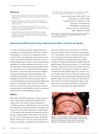
May 2016 in “Dermatologic Surgery” The document concludes that using a phototrichogram with a protractor and tapeline is a reliable and noninvasive way to measure hair loss.
10 citations
,
January 2011 in “Journal of biomedical optics” This study found that optical coherence tomography provides highly reproducible and less variable measurements of hair shaft thickness compared to standard light microscopy, offering a promising noninvasive tool for clinical practice.
2 citations
,
November 2025 in “Comprehensive Reviews in Food Science and Food Safety” This review discusses the growing role of colorimetric sensors in food safety, highlighting their potential to enhance detection accuracy and manageability, while also noting challenges such as environmental interference and the need for further industrial validation.
8 citations
,
September 2011 in “Scanning” This study found that multiphoton microscopy effectively visualizes the microstructure of in vivo mouse skin, offering a clear view of various skin layers and components like corneocytes and collagen fibers.
 39 citations
,
June 2017 in “Scientific Reports”
39 citations
,
June 2017 in “Scientific Reports” Different lab conditions and light treatment methods change how human skin cells respond to light therapy.
 April 2016 in “Journal of Investigative Dermatology”
 This study found a perfect correlation between laser Doppler velocimetry measurements of scalp blood perfusion after minoxidil application and sulfotransferase enzyme activity in hair follicles, indicating a potential non-invasive test to predict minoxidil response in female pattern hair loss.
12 citations
,
May 2012 in “Journal of Biomedical Optics” In this study, Trichoscan®, reflectance confocal microscopy, and optical coherence tomography were found to be reliable noninvasive tools for measuring hair growth and follicle analysis after hair removal.
 65 citations
,
March 2016 in “Lasers in Medical Science”
65 citations
,
March 2016 in “Lasers in Medical Science” This review found that many low-level light therapy studies report beneficial effects but often fail to provide adequate measurement details, affecting the reliability and repeatability of the research.
 5 citations
,
September 2014 in “Journal of Pharmaceutical Sciences” 2 citations
,
July 2025 in “Analytical Chemistry”
5 citations
,
September 2014 in “Journal of Pharmaceutical Sciences” 2 citations
,
July 2025 in “Analytical Chemistry” This study reported the development of a workflow that combines SIMS and X-ray elemental mapping techniques for multimodal imaging at the single cell level, successfully applied to visualize elements, metals, and lipids in porcine skin without loss or delocalization.
 October 2006 in “Eclética Química”
 This study presents three spectrophotometric methods for determining finasteride in bulk and tablet forms, showing a linear relationship between absorbance and finasteride concentration.
This study shows that multiphoton microscopy can non-invasively distinguish scarring from non-scarring alopecia by identifying specific morphological features in hair follicle structures.
 June 2026 in “Ophthalmology and Therapy”
 This review concluded that near-infrared and red light photobiomodulation shows potential for certain ocular conditions like age-related macular degeneration and dry eye disease, but clinical evidence is still mixed and insufficient to establish it as a standard therapy.
 October 2023 in “Spectrochimica acta. Part A, Molecular and biomolecular spectroscopy”
 This study introduces three spectrophotometric techniques for accurately determining finasteride and tadalafil in their combined pharmaceutical form, demonstrating their sustainability, sensitivity, and suitability for quality assurance, alongside a dissolution study following FDA guidelines.