14 citations
,
January 2014 in “Dermatology Research and Practice” This study observed a high incidence of transient infantile zinc deficiency among breastfeeding infants in Northern Ethiopia, but could not determine if genetic or nutritional factors or both contributed to it.
September 2025 in “Cosmetics” In this study, oral supplementation with NMN for 12 weeks in middle-aged Japanese women significantly increased hair growth density and diameter and improved subjective assessments of hair texture and quality of life, with no significant changes in hair hormone concentrations observed.
This review highlights the potential analytic interference of high-dose biotin with immunochemical tests, which may lead to diagnostic errors and suggests pausing biotin consumption before laboratory testing.
 1 citations
,
December 2018 in “IntechOpen eBooks”
1 citations
,
December 2018 in “IntechOpen eBooks” This review discusses the potential of using human hair proteomics for non-invasive diagnostic and forensic applications but reports no new results; the authors highlight areas needing further research.
January 2026 in “JAAD International” 2 citations
,
August 2004 This study found that early diagnosis using gas chromatography/mass spectrometry and appropriate long-term treatment are crucial for improving outcomes in patients with methylmalonic acidemia.
3 citations
,
November 2024 in “Electrochimica Acta” A new, quick method accurately detects minoxidil in drugs and cosmetics.
 73 citations
,
May 1976 in “JAMA”
73 citations
,
May 1976 in “JAMA” This case report associates severe zinc deficiency with long-term total parenteral nutrition, suggesting the need for trace element supplementation in such nutritional management.
1 citations
,
March 2022 in “Spectrochimica Acta Part A: Molecular and Biomolecular Spectroscopy” This study developed a simple and rapid method using silver nanoparticles to detect minoxidil concentration in hair-growth formulations, demonstrating a detection limit of 0.35 mM.
 4 citations
,
January 2011 in “Analytical Letters”
4 citations
,
January 2011 in “Analytical Letters” This study demonstrated that a flow injection method using potassium permanganate for detecting minoxidil provided accurate recoveries and agreed closely with HPLC results, showing potential for effective analysis of commercial samples.
21 citations
,
June 2024 in “Pharmaceuticals” This review examines the potential of swellable microneedles in drug delivery and diagnostics, highlighting innovations and challenges in their use for chronic disease treatment, but noting that issues like physiological responsiveness and long-term stability still require research.

This study examined hair mineral and free amino acid components in various diseases and found that when using effect size analysis, specific components related to diabetes and other conditions were identified, suggesting their potential as novel health indicators.
 2 citations
,
December 2017 in “Journal of The American Academy of Dermatology”
2 citations
,
December 2017 in “Journal of The American Academy of Dermatology” This article highlights the need for dermatologists to define evidence-based standards to provide high-value care and reduce unnecessary testing, as recommended by the American Academy of Dermatology.
1 citations
,
February 2025 in “International Journal For Multidisciplinary Research” This study developed and validated a simple, accurate, and sensitive HPTLC method for estimating minoxidil and aminexil in topical solutions, demonstrating effective separation and linear measurement of these compounds with %RSD under 2% and high regression coefficients.
October 2008 in “Trace Elements and Electrolytes” In this study, perimenopausal women with initially high hair concentrations of calcium, magnesium, and silicon experienced a decrease in these elements after intermittent dietary supplementation with calcium, magnesium, silicon, and vitamin D.
13 citations
,
July 2019 in “Chemical papers/Chemické zvesti” This study developed and optimized a molecularly imprinted polymer-based electrochemical sensor, demonstrating its ability to detect minoxidil with high sensitivity and selectivity at concentrations as low as 0.3 nM, and successfully applied it for minoxidil measurement in various real sample matrices.
 June 2025 in “Samarra Journal of Pure and Applied Science”
 This study developed a rapid and accurate spectrophotometric method using diazotized sulfanilic acid to measure minoxidil in both pharmaceutical formulations and pure form, demonstrating high precision and linearity within a concentration range of 5-40 μg/ml.
12 citations
,
March 2023 in “Pharmaceutics” In this study, researchers developed microparticle-embedded gas-propelled microneedles that showed higher drug loading and transdermal delivery efficiency compared to traditional microneedles.
 October 2024 in “INTERNATIONAL JOURNAL OF SCIENTIFIC RESEARCH”
 This study found that trichoscopy can effectively identify specific patterns associated with Vitamin B12, Vitamin D3, and serum ferritin deficiencies in patients with Telogen Effluvium, offering a non-invasive alternative to blood tests for early diagnosis and management.
203 citations
,
May 2017 in “Journal of controlled release” This review discusses completed and ongoing clinical studies on microneedle-based technologies for cosmetic, therapeutic, and diagnostic applications and reports no new clinical results.
January 2024 in “Ageing & longevity” This study observed low levels of zinc, copper, iron, and selenium in the plasma and hair of Ukrainian adults, suggesting a need for better nutritional interventions; it highlighted higher hair zinc levels in individuals with COVID-19 history potentially due to more frequent zinc supplementation.
73 citations
,
April 2017 in “Scientific Reports” In this study, nitrogen starvation in Chlorella sp. FC2 IITG led to increased lipid accumulation by altering the expression of enzymes involved in various metabolic pathways, suggesting potential for genetic engineering of microalgae.
June 2024 in “British Journal of Dermatology” This study found that there is substantial variability in laboratory testing practices among dermatologists specializing in alopecia areata across the globe, indicating the need for renewed discussions around guidelines for such testing.
 48 citations
,
February 2025 in “Nano-Micro Letters”
48 citations
,
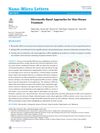
February 2025 in “Nano-Micro Letters” This review summarizes the application of microneedles in treating various skin diseases and highlights challenges like low drug loading, noting no new clinical results are reported.
September 2010 in “대한화장품학회지(J. Soc. Cosmet. Scientists Korea)” This study developed and validated a method to analyze active ingredients in hair nourisher products, which was successfully applied to products from the market.
 12 citations
,
December 2017 in “Scientific reports”
12 citations
,
December 2017 in “Scientific reports” This study reported that pulverizing hair samples significantly improves the precision of testosterone measurement, with higher testosterone concentrations observed in men than in women.
 August 2024 in “Journal of Cosmetic Dermatology”
 This study investigates differences in nutritional status, vitamin, and mineral levels between individuals with telogen effluvium and a control group, aiming to understand the nutritional factors involved in this condition.
July 2025 in “Nano Research” This review highlights the application of microneedle technology as a promising advancement in psoriasis management, focusing on its roles in enhanced transdermal drug delivery and minimally invasive biomarker monitoring, while also discussing current challenges and future research directions.
29 citations
,
August 2011 in “PubMed” This study describes how shotgun proteomics can identify over 300 proteins in hair shafts, potentially allowing for the diagnosis of diseases through noninvasive human proteome sampling.
 20 citations
,
October 2004 in “Journal of Pharmaceutical and Biomedical Analysis”
20 citations
,
October 2004 in “Journal of Pharmaceutical and Biomedical Analysis” Quick method to measure minoxidil in blood, accurate and useful for labs.