 60 citations
,
September 2015 in “Expert Review of Clinical Immunology”
60 citations
,
September 2015 in “Expert Review of Clinical Immunology” This study suggests that CD8+ cytotoxic T lymphocytes play a crucial role in the development of alopecia areata, based on observations in rodent models that mimic human autoimmune disease.
 11 citations
,
March 2020 in “Immunology”
11 citations
,
March 2020 in “Immunology” This study reports that immunologically inert and skewed immune cell populations in developing human skin may contribute to wound healing and structural changes during skin development.
 9 citations
,
May 2021 in “Immunological Reviews”
9 citations
,
May 2021 in “Immunological Reviews” This review discusses the role of fibroblast heterogeneity in kidney pathology, particularly their contribution to tertiary lymphoid tissue formation, and reports no new results.
 5 citations
,
January 2022 in “PloS one”
5 citations
,
January 2022 in “PloS one” This study found that lineage-restricted loss of p63 in murine thymic epithelial cells resulted in severe thymic hypoplasia and absence of hair follicles, indicating p63's critical role in thymic and hair follicle development.
 4 citations
,
November 2014
4 citations
,
November 2014 The skin protects the body, regulates temperature, senses touch, and makes vitamin D.
 January 2024 in “Tropical journal of pharmaceutical research”
 This study found that extracts from Cirsium japonicum var. spinossimum seeds are rich in polyphenols and flavonoids, demonstrating significant anti-inflammatory and cell proliferation effects in specific cell models, suggesting potential as a source for anti-inflammatory and anticancer agents.
 January 2024 in “Journal of Ayurveda Campus”
 In this review, researchers reported that Psoralea corylifolia, extensively used in Ayurveda and Traditional Chinese Medicine, exhibits various pharmacological activities, including antioxidant and antidiabetic effects, and is primarily used for treating skin diseases. The authors suggest further clinical trials to explore its therapeutic potential.
 December 2013 in “Research Portal (King's College London)”
 This article discusses the anatomical and biological aspects of hair follicle stem cells in the bulge region but reports no new research findings.
 191 citations
,
May 2018 in “British journal of dermatology/British journal of dermatology, Supplement”
191 citations
,
May 2018 in “British journal of dermatology/British journal of dermatology, Supplement” This study reviewed recent theories on alopecia areata's pathogenesis, highlighting its autoimmune nature due to immune privilege disruption in hair follicles, and noted current treatments have limited efficacy with high relapse rates, underscoring the need for further research into its mechanisms for better therapies.
 50 citations
,
January 2016 in “The FEBS journal”
50 citations
,
January 2016 in “The FEBS journal” This review discusses the various roles of RANK signaling in bone remodeling, immune function, and epithelial differentiation, highlighting its potential involvement in cancer mechanisms; it reports no new clinical results.
 27 citations
,
September 2018 in “Nanomedicine: Nanotechnology, Biology and Medicine”
27 citations
,
September 2018 in “Nanomedicine: Nanotechnology, Biology and Medicine” This review discusses recent advances in hair regeneration therapies, highlighting the potential of nanotechnology and pluripotent stem cells, and reports no new results, emphasizing the need for further research.
 3 citations
,
December 2022 in “bioRxiv (Cold Spring Harbor Laboratory)”
3 citations
,
December 2022 in “bioRxiv (Cold Spring Harbor Laboratory)” This study revealed key cellular dynamics and interactions during early embryonic mouse skin development, highlighting complex transitions from precursor states to diverse multilayered structures.
 May 2018 in “White Rose eTheses Online (University of Leeds, The University of Sheffield, University of York)”
 In this study, researchers found that alopecia areata patients show a significant reduction in suppressive regulatory T-cells and an increase in inflammatory T-cell populations, suggesting an immunological imbalance contributing to the disease.
 191 citations
,
September 2011 in “Cell stem cell”
191 citations
,
September 2011 in “Cell stem cell” This study found that polycomb-group-mediated repression plays a key role in regulating hair follicle stem cell states and lineage progression by distinct mechanisms in adult mouse skin.
 31 citations
,
July 2017 in “Clinical Science”
31 citations
,
July 2017 in “Clinical Science” This review discusses the role of microRNAs in skin function and potential therapeutic applications, emphasizing their importance in wound healing and disease management, though it reports no new experimental findings.
 7 citations
,
May 2020 in “Trends in molecular medicine”
7 citations
,
May 2020 in “Trends in molecular medicine” This study explored the immune environment of the hair follicle's bulge region and suggested that its unique signaling may prevent melanoma formation by lacking necessary proinflammatory signals for full oncogenic transformation, indicating potential strategies for melanoma prevention by replicating this immune-privileged environment.
 192 citations
,
March 2017 in “Cell host & microbe”
192 citations
,
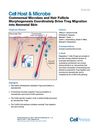
March 2017 in “Cell host & microbe” The researchers reported that hair follicle development and commensal microbe colonization promote the accumulation of regulatory T cells in neonatal skin, with the Ccl20-Ccr6 pathway playing a key role in this process.
 172 citations
,
May 2018 in “Nature”
172 citations
,
May 2018 in “Nature” Mammalian organs regenerate using stem cells and cell plasticity, but this ability declines with age.
 157 citations
,
May 2021 in “Endocrine Reviews”
157 citations
,
May 2021 in “Endocrine Reviews” This review discusses recent advancements in understanding and managing congenital adrenal hyperplasia, including improvements in screening, diagnostics, and potential genetic and cell-based treatments, but reports no new clinical findings.
 112 citations
,
January 2014 in “Molecular and cellular therapies”
112 citations
,
January 2014 in “Molecular and cellular therapies” This review summarizes the current understanding of Wnt signaling in relation to its roles in tissue regeneration and cancer progression and discusses recent medical advancements targeting this pathway for therapeutic purposes.
 56 citations
,
January 2021 in “Clinical and Experimental Medicine”
56 citations
,
January 2021 in “Clinical and Experimental Medicine” This review highlights the challenges in treating alopecia areata, noting that current therapies often lead to relapse and have uncertain long-term effectiveness; it also points to potential future treatments such as JAK-STAT inhibitors and PRP.
 46 citations
,
March 2015 in “Regeneration”
46 citations
,
March 2015 in “Regeneration” This review revisits the mechanisms of wound induced hair follicle neogenesis in mice and concludes that the process involves canonical WNT signaling activated by Fgf9 from γδ T cells, but more research is needed to fully understand its cellular bases.
 40 citations
,
January 2016 in “Elsevier eBooks”
40 citations
,
January 2016 in “Elsevier eBooks” This article explains the structure and multifunctional roles of the human skin, including its protective, regulatory, and sensory functions, but does not report new research findings.
 31 citations
,
January 2021 in “Experimental Dermatology”
31 citations
,
January 2021 in “Experimental Dermatology” This review discusses recent advancements in generating appendage-bearing skin organoids from pluripotent stem cells and their potential applications in dermatological research, but reports no new clinical results.
 31 citations
,
April 2019 in “Cell reports”
31 citations
,
April 2019 in “Cell reports” This study found that human iPSC-derived melanocytes from vitiligo patients successfully integrated into mouse hair follicles and epidermis, demonstrating potential for personalized therapy for depigmentation.
 31 citations
,
April 2007 in “Experimental Dermatology”
31 citations
,
April 2007 in “Experimental Dermatology” This study found that foot shock stress prolonged the telogen stage and delayed anagen induction in the hair cycle of non-depilated mice, potentially through stress-induced actions of substance P.
 30 citations
,
April 2020 in “Stem Cell Research & Therapy”
30 citations
,
April 2020 in “Stem Cell Research & Therapy” This study found that the PI3K-Akt signaling pathway is essential for regenerating new hair follicles when epidermal stem cells and skin-derived precursors are combined, suggesting potential therapeutic applications for hair regeneration.
 29 citations
,
April 2020 in “Journal of Tissue Engineering and Regenerative Medicine”
29 citations
,
April 2020 in “Journal of Tissue Engineering and Regenerative Medicine” This study demonstrates that incorporating human neopapilla into reconstructed human skin can initiate hair follicle morphogenesis by stimulating epidermal invagination and maintaining follicle-inductive properties in vitro.
 27 citations
,
August 2014 in “Wiley interdisciplinary reviews. Developmental biology”
27 citations
,
August 2014 in “Wiley interdisciplinary reviews. Developmental biology” This review highlights similarities in the development of thymus and skin epidermis, reporting no new results; the authors emphasize shared molecular mechanisms despite different embryonic origins.
 25 citations
,
February 2013 in “The journal of investigative dermatology/Journal of investigative dermatology”
25 citations
,
February 2013 in “The journal of investigative dermatology/Journal of investigative dermatology” In this study, topical application of the SCD1 inhibitor XEN103 significantly reduced sebaceous gland size and number in mouse skin, suggesting potential local therapeutic effects for acne treatment without systemic side effects.