 1 citations
,
January 2017 in “Clinical approaches and procedures in cosmetic dermatology”
1 citations
,
January 2017 in “Clinical approaches and procedures in cosmetic dermatology” This chapter reviews the anatomy and structure of hair, discusses hair damage and analyses, and explores methods for processing hair changes, but presents no new research findings.
 July 2026 in “npj Regenerative Medicine”
 This study identified a crucial Gli2-Serpinh1 regulatory axis that regulates fibroblast state transitions during skin wound healing, shedding light on fibroblast heterogeneity and suggesting potential precision regenerative therapies.
 July 2026 in “International Journal of Aquatic Research and Environmental Studies”
 In this experimental study, researchers developed and optimized metformin-loaded mucoadhesive microspheres for sustained anti-hyperglycemic and anticancer activity, demonstrating high entrapment efficiency, enhanced α-amylase and α-glucosidase inhibition, improved cytotoxicity against breast cancer cells, and promising stability.
 June 2026 in “Gümüşhane Üniversitesi Fen Bilimleri Enstitüsü Dergisi”
 This study observed that biodegradable PVA/agar films with incorporated Achillea millefolium L. essential oil, especially at 1% (v/v), demonstrated good mechanical performance and selective antibacterial activity against E. coli, suggesting their potential as wound dressings.
 June 2026 in “International Journal of Drug Delivery Technology”
 This review explores the potential of herbal therapies and modern delivery methods for managing premature hair greying, highlighting promising plant-based treatments and emphasizing the need for clinical trials to validate their effectiveness.
 May 2026 in “AAPS PharmSciTech”
 This study found that PEGylated LUT-Aspasomes significantly improved neuroprotective effects in stressed rats, enhancing spatial memory, reducing depressive-like behavior, and preserving hippocampal architecture better than free luteolin. Additionally, it increased brain delivery and stability, suggesting potential for treating stress-related neurobehavioral disorders.
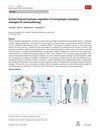
This review highlights that surface mechanical regulation can program macrophage behavior through specific mechanical cues on material surfaces, potentially advancing immunotherapies and regenerative medicine by enabling precise control over macrophage functions.
 April 2026 in “BMC Biotechnology”
 This study found that curcumin spanlastics demonstrated greater antimicrobial, antioxidant, and anticancer activities in the MCF-7 breast cancer cell line compared to curcumin alone or curcumin nanocrystals, also affecting several cancer-related protein markers and showing enhanced solubility and activity.
 March 2026 in “Frontiers in Medicine”
 This study provides a framework for understanding different types of alopecias based on immune privilege collapse at specific follicular sites, revealing distinct patterns in immune effector programs and stromal influences depending on the alopecia type.
 March 2026 in “Tissue Engineering and Regenerative Medicine”
 In this review, the authors discuss recent advancements in underwater adhesion technologies, specifically highlighting mussel-inspired catechol-based adhesives, which offer strong underwater bonding through various interfacial interactions and the influence of dopamine-modified polymeric tissue adhesives.
 March 2026 in “The Indian Journal of Animal Sciences”
 This study on Indian dromedary camel breeds investigated the KRTAP7 protein, finding all four breeds shared an identical gene sequence, with 13 phosphorylation and glycosylation sites influencing hair characteristics, alongside predicted interactions with other biosynthesis-related proteins.
 March 2026 in “Folia Histochemica et Cytobiologica”
 This review highlights LTBP1 as a critical integrator in disease processes, showing its dual role in cancer progression and suppression, its pathological influence in fibrosis, and its contribution to various disorders, suggesting its potential as a biomarker and therapeutic target.
 January 2026 in “Nano-Micro Letters”
 This review discusses the principles, materials, and applications of melt electrowriting-based 4D printing for creating biomimetic scaffolds, but reports no new clinical results; it highlights recent advancements and remaining challenges in the field.
 October 2025 in “bioRxiv (Cold Spring Harbor Laboratory)”
 This study experimentally validated Lockhart's viscoplastic framework for tip growth in Arabidopsis root hairs by demonstrating alignment with observed growth rates and estimating yield turgor pressure and cell wall viscosity, offering a methodology adaptable to other species and conditions.
This study introduced ElixirSeeker2, a computational framework for designing anti-aging peptides, and found that some newly identified peptides significantly delayed cellular senescence and enhanced cellular and locomotor functions in aged Caenorhabditis elegans.
 October 2025 in “Clinical Cosmetic and Investigational Dermatology”
 This study synthesizes knowledge of how dendritic cell signals, epithelial integrins, and fibroblast activity converge on TGF-β1 to maintain or disrupt skin healing, contrasting normal and fibrotic scar formation and suggesting possible integrin and immune-targeted treatments for skin fibrosis.
 August 2025 in “Frontiers in Pharmacology”
 This study identified three Ayurvedic compounds that may serve as potential treatments against the macrolide-resistant enzyme murE of *Tropheryma whipplei*, addressing challenges in treating Whipple disease.
July 2025 in “Highlights in Science Engineering and Technology” In this study, researchers found that nanomaterials designed for plastic surgery applications show promising results, including a 95% dynamic wrinkle filling rate and enhanced hair density by 41%; however, challenges like potential long-term safety issues and high production costs must be addressed.
 January 2025 in “Open Medicine”
 This study found that high-concentration cell-free adipose extract effectively reduced collagen deposition and blood vessel formation in a rabbit ear model, showing promise for preventing and treating hypertrophic scars.

This study utilized polarized light microscopy to examine hair shafts in ten children with rare genetic disorders, such as Netherton syndrome and ectodermal dysplasia, providing valuable diagnostic insights into hair thickness, composition, and structural irregularities associated with these conditions.

This study developed a topical dutasteride-loaded Insitu-emulgel for treating androgenetic alopecia, finding it effectively controls drug release, enhances skin penetration, and may improve patient compliance compared to traditional topical treatments, though further clinical research is underway.

This study suggests that targeting the increased expression of SIX1 in systemic sclerosis may be a viable strategy for addressing dermal fibrosis.

This study in diabetic db/db mice found that treatment with the antihypertensive agents minoxidil or nebivolol stimulated elastogenesis and inhibited elastolysis, leading to restored elastic fibers, reduced aortic stiffening, and normalized blood pressure.
 February 2024 in “Frontiers in physiology”
 This study examines the role of hair follicle stem cells in epidermal regeneration during skin soft tissue expansion, proposing a potential method for their cellular and molecular regulation.
 November 2023 in “Global journal of medical research”
 This study highlights the importance of understanding the rheological properties of hyaluronic acid fillers, including viscosity, cross-linking, and concentration, to optimize their use in addressing facial aging by maximizing clinical effects.
 January 2023 in “Book of Abstracts”
 COVID-19 can cause different types of hair loss, with telogen effluvium being the most common.

This study demonstrated that cryogelation of human hair keratin allows the development of 3D scaffolds with tunable properties, supporting cell adhesion and proliferation for potential biomedical applications.
 March 2021 in “bioRxiv (Cold Spring Harbor Laboratory)”
 This study found that the absence of Hif-p4h-2 in specific mouse skin cells disrupted hair follicle development, leading to hair loss due to irregular keratin formation and pathway signaling.
 January 2019 in “Durham e-Theses (Durham University)”
 This study utilized advanced imaging techniques to quantify hair damage and dye uptake dynamics, revealing that compound penetration in hair is influenced by molecule size and lipophilicity.
 April 2018 in “Journal of Investigative Dermatology”
 This study found that deleting all three Desmoglein 1 genes in mice led to impaired skin barrier function, disorganized epidermis, and postnatal lethality, highlighting Dsg1's essential role in epidermal development and maintenance.