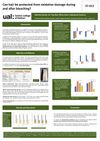
 September 2018 in “University of the Arts London Research Online (University of the Arts London)”
 This study assessed three materials—L-arginine, hydrolysed keratin, and cystine-silanol copolymer—ex vivo for their potential to reduce undesirable effects of hair bleaching, such as damage to hair proteins.
April 2016 in “The journal of investigative dermatology/Journal of investigative dermatology” This study reports that cannabinoid receptor type 1 may influence psoriasis development by modulating laminin-511 expression, suggesting a potential target for treatment.
January 2016 in “UNESP Institutional Repository (São Paulo State University)” This study suggests that the phenotype of melasma in women is influenced by structural and cellular changes across the epidermal-melanin unit, not just melanocyte hypertrophy, highlighting potential roles for dermal damage repair and fibroblast senescence.
 41 citations
,
October 2017 in “International Journal of Women's Dermatology”
41 citations
,
October 2017 in “International Journal of Women's Dermatology” This review provides an overview of the physiologic skin changes during pregnancy but reports no new findings, emphasizing the need for physicians to distinguish between benign and potentially pathological conditions.
April 2025 in “Journal of Advances in Medical and Pharmaceutical Sciences” This review highlights the potential of spanlastics, a new type of drug delivery system, to enhance drug administration by offering better deformability and stability compared to other nanocarriers, potentially improving targeted drug delivery across various applications.
 September 1998 in “Journal of The European Academy of Dermatology and Venereology”
 This review summarizes the clinical characteristics of Behcet's disease, noting that ocular manifestations are a major cause of morbidity due to their potential to lead to severe vision loss or blindness.
3 citations
,
August 2023 in “Biophysical Journal” In this study, researchers found that epithelial cells exhibit density-dependent metabolic heterogeneity, particularly in the pre-epithelial transition stage, where metabolic patterns correlate with cell proliferation and are influenced by actomyosin contractility.
23 citations
,
May 2019 in “Stem cell research & therapy” This study found that combining a human acellular amniotic membrane with iPSC-derived epithelial stem cells effectively repaired skin defects and promoted hair follicle formation in nude mice.
449 citations
,
December 2005 in “The Plant Cell” This study found that the BIK1 gene in Arabidopsis thaliana modulates defense responses to pathogens and is essential for normal root growth and development.
29 citations
,
September 2020 in “Polymers” This study found that electrospun poly(ε-caprolactone)/poly(3-hydroxybutyrate) blend fibers demonstrated nanometric dimensions and promising properties for drug delivery, with curcumin release linked to fiber morphology and processing parameters.
 25 citations
,
July 2019 in “Journal of drug delivery science and technology”
25 citations
,
July 2019 in “Journal of drug delivery science and technology” This study developed lipid-core nanocapsules for encapsulating menthol, improving its solubility and thermal stability, and demonstrated their safety and rapid skin absorption in ex vivo tests, highlighting potential applications for cosmeceuticals.
21 citations
,
November 2019 in “Molecular & Cellular Proteomics” This study found that citrullinated proteins, which are implicated in rheumatoid arthritis, were abundant in outer membrane vesicles from Porphyromonas gingivalis but nearly absent in mutants, validating their approach to citrullinated peptide identification.
14 citations
,
November 2021 in “Nanoscale” This study's simulations revealed the complex "onion-like" organization of a lipid nanoemulsion droplet containing vitamins A and E for skin delivery, showing distinct concentration patterns of these vitamins within different layers of the nanodroplet.
3 citations
,
April 2025 in “Advanced Healthcare Materials” In this study, researchers developed hyaluronic acid derivatives functionalized with nitric oxide photodonors for light-activated skin treatments, finding that the compounds released NO under blue light and enhanced keratinocyte proliferation and migration, suggesting potential for therapeutic use.
2 citations
,
May 2021 in “IOP Conference Series Earth and Environmental Science” This study found that treating SM-MSCs with 150 μg/mL IGF-1 led to the highest increases in growth factor proteins BMP-2, FGF-18, and TGF-β1 in their conditioned media.
 July 2026 in “Frontiers in Veterinary Science”
 This study found that combined dietary supplementation of sodium hyaluronate and eggshell membrane was associated with various improvements in skin and coat health markers in healthy Ragdoll cats.
June 2026 in “Materials Today Bio” This study reported that a decellularized porcine amniotic membrane hydrogel can alleviate inflammation and promote tissue repair in a UVB-induced skin inflammation model, suggesting its potential as a regenerative treatment for photodamage-associated skin injuries.
 September 2025 in “bioRxiv (Cold Spring Harbor Laboratory)”
 This study found that human dermal papilla cells are surrounded by a basement membrane-like extracellular matrix, which maintains their aggregated structure without strong cell‒cell contacts.
 September 2023 in “Journal of Fluid Mechanics”
 This study developed a model using homogenization-based framework to quantify solvent and solute flow across Janus membranes, aiming to better understand interface phenomena like osmosis and phoresis by examining micro- and macro-scale behaviors.
 28 citations
,
February 2014 in “PLoS ONE”
28 citations
,
February 2014 in “PLoS ONE” This study reports that transplantation of an ESCs-collagen-chitin biomimetic membrane leads to successful in situ skin regeneration, including hair follicle cell proliferation and formation of dermatoglyphs, in nude mice with full-thickness skin defects.
15 citations
,
November 2024 in “Materials” This review discusses the medical and dental applications of polyhydroxyalkanoates (PHAs), highlighting their potential for improving drug delivery and providing biocompatible solutions for medical devices, but reports no new clinical results.
 13 citations
,
November 2024 in “Frontiers in Microbiology”
13 citations
,
November 2024 in “Frontiers in Microbiology” This review assessed the potential of mesenchymal stem cell therapy to enhance burn wound healing, highlighting its capabilities in promoting angiogenesis, reducing inflammation, and regenerating damaged tissues, while identifying preclinical and clinical challenges that need addressing to optimize treatment outcomes.
8 citations
,
March 2023 in “Polymers” This study suggests that a chitosan-coated omeprazole-loaded nanoemulgel formulation may effectively treat certain skin infections due to its demonstrated antimicrobial properties and enhanced antibacterial activity.
 4 citations
,
June 2025 in “Medeniyet Medical Journal”
4 citations
,
June 2025 in “Medeniyet Medical Journal” This review explores the role of the TMPRSS2 gene in facilitating SARS-CoV-2 infection and its potential as a therapeutic target in COVID-19 and other respiratory infections, highlighting challenges in developing selective inhibitors.
 4 citations
,
January 2004 in “Biological and Pharmaceutical Bulletin”
4 citations
,
January 2004 in “Biological and Pharmaceutical Bulletin” In this study, AgK114 was found to be transiently induced in hamster epidermal keratinocytes following skin damage, suggesting its role in the recovery process after injury.
 3 citations
,
November 2022 in “Frontiers in molecular biosciences”
3 citations
,
November 2022 in “Frontiers in molecular biosciences” This study suggests that in mice, plasmalogens may enhance hair growth by activating TRPC4 channels, which increases calcium influx and subsequently stimulates AMPK in hair follicles.
 April 2026 in “Frontiers in Bioengineering and Biotechnology”
 This study found that a cellulose membrane significantly shortened the healing time and reduced the ulcer area in patients with chronic venous leg ulcers compared to a standard antimicrobial dressing.
 January 2024 in “Frontiers in Bioengineering and Biotechnology”
 In this mouse study, researchers found that nanoparticles loaded with umbilical cord-derived stem cell membranes and minoxidil enhanced hair growth by improving drug solubility and transdermal delivery, increasing VEGF, IGF-1, MKI67, and CTNNB protein levels in skin tissue compared to regular minoxidil.
 April 2016 in “Plastic and reconstructive surgery. Global open”
 This article lists online educational resources from the American Society of Plastic Surgeons but reports no new research findings.
October 2022 in “Frontiers in Bioengineering and Biotechnology” This study demonstrated that in a mouse model of androgenic alopecia, PLGA-DUT/siAR@DPCM nanoparticles effectively delivered drugs to hair follicles, suppressed androgen-related targets, promoted cell proliferation, and showed significant therapeutic effects with minimal adverse effects, suggesting their potential for clinical application.