 38 citations
,
June 2005 in “Matrix Biology”
38 citations
,
June 2005 in “Matrix Biology” Minoxidil affects collagen-related genes, potentially helping treat fibrosis.
4 citations
,
September 2013 in “Journal of biomolecular structure and dynamics/Journal of biomolecular structure & dynamics” This study suggests that caribine may enhance the interaction between CRFR and maltose binding protein, potentially offering a new approach for treating hair loss.
 February 2024 in “Journal of medicinal food”
 This study reports that the β-catenin inhibitor tegatrabetan reduced hair growth and hair follicle numbers in mice, suggesting its potential as a model for developing new hair growth materials.

In preclinical studies, topical CUR61414 reduced Hh signaling and shrank BCCs in mice, but this study found no clinical efficacy in human superficial or nodular BCCs.
29 citations
,
April 2000 in “Journal of histochemistry and cytochemistry/The journal of histochemistry and cytochemistry” This study found that ICAM-1 expression in murine skin is developmentally regulated and crucial for skin and hair follicle remodeling beyond its recognized role in immune responses.
November 2025 in “OPAL (Open@LaTrobe) (La Trobe University)” In this study, researchers developed a hierarchically engineered microreactor that effectively combats infected wounds by releasing antimicrobials at acidic sites, eradicating MRSA while avoiding resistance, and enhancing tissue repair through immune system modulation.
 15 citations
,
February 2021 in “Scientific Reports”
15 citations
,
February 2021 in “Scientific Reports” This study found that novel RNA aptamers specifically inhibited FGF5-induced cell proliferation, suggesting their potential as candidates for treating FGF5-related diseases or hair disorders.

Developing microRNA-based treatments is hard but has potential.
 7 citations
,
December 2013 in “The Journal of Dermatology”
7 citations
,
December 2013 in “The Journal of Dermatology” This article is a letter to the editor discussing hair graying and loss potentially induced by imatinib mesylate, but it does not provide new research results.
8 citations
,
October 2013 in “Chemistry Central Journal” This study found that microbial transformation of dihydrotestosterone with two types of fungi produced eight metabolites, among which metabolites 5–7 were significant inhibitors of butyrylcholinesterase, suggesting potential in Alzheimer's disease management.
January 2017 in “Seoul National University Open Repository (Seoul National University)” This study found that the N-terminal fragment of AIMP1 enhances hair growth and proliferation of hair follicle stem cells in mice, suggesting its potential as a therapeutic peptide for hair loss treatment.
February 2025 in “Journal of Receptors and Signal Transduction” In this study, computational analysis identified EGCG as the most effective GSK3β inhibitor among tested compounds, suggesting its potential for promoting hair regrowth by interacting with signaling pathways related to hair follicle cycling, although further experimental testing is needed.
 6 citations
,
October 1993 in “Endocrinology”
6 citations
,
October 1993 in “Endocrinology” In this study, researchers found that finasteride inhibits progesterone synthesis by blocking cholesterol side-chain cleavage in mouse-derived MA-10 Leydig cells, but this effect may not be evident in human or rat cells.
1 citations
,
November 2025 in “Journal of Managed Care & Specialty Pharmacy” This study concluded that while CDK4/6 inhibitors, used to treat HR+ HER2- metastatic breast cancer, generally did not worsen health-related quality of life, they were associated with increased patient-reported issues like diarrhea and hair loss upset.
 April 2016 in “Journal of Investigative Dermatology”
 This study found that a newly developed peptide, FOL-005, significantly inhibited hair growth and counteracted minoxidil's effects in organ-cultured human male scalp skin and mouse models, without apparent toxicity.
2 citations
,
January 2025 in “Journal of Nanobiotechnology” This study demonstrated that genetically engineered, ATP-responsive nanozymes effectively reduce cardiac fibrosis by targeting activated cardiac fibroblasts, resulting in decreased myofibroblast accumulation and improved cardiac function, suggesting that this approach has significant potential for therapeutic applications.
 July 2025 in “ACS Pharmacology & Translational Science”
 In this study, maslinic acid applied topically was observed to stimulate hair growth in mice comparably to minoxidil, primarily activating pathways like Wnt/β-catenin, and suggesting a link between hair growth and cilia activity.
 89 citations
,
February 1993 in “Journal of Medicinal Chemistry”
89 citations
,
February 1993 in “Journal of Medicinal Chemistry” This research article focuses on nonsteroidal inhibitors of human type I steroid 5-alpha-reductase but reports no new results.
22 citations
,
May 2011 in “Molecular Biology of the Cell” In this study, gene inactivation in mouse hair follicle stem cells lacking ILK impaired wound healing by reducing their progeny’s contribution to the regenerating epidermis, but did not affect hair follicle regeneration.
 November 2024 in “Research Square (Research Square)”
 This study reported that Moracin M, a compound from the Moraceae family, significantly promoted hair growth and vascular regeneration by enhancing cell proliferation and Wnt signaling activation in laboratory settings, suggesting it may offer a promising alternative to existing hair growth treatments like minoxidil.
 April 2023 in “Journal of Investigative Dermatology”
 This study suggests that MPZL3, a mitochondrially localized protein, may play an integral role in regulating hair follicle cycles, with potential therapeutic implications for hair growth disorders if findings translate to humans.
November 2023 in “Journal of Investigative Dermatology” Inhibiting EGFR weakens skin's defense against bacteria.
9 citations
,
March 2022 in “Journal of Chemical Information and Modeling” This study identified a series of novel β-glucuronidase inhibitors that may help mitigate adverse effects of first-line anti-cancer drugs by targeting gut bacteria, based on virtual high-throughput screening findings.
 April 2018 in “Journal of Investigative Dermatology”
 This study found that IL-9 influences the behavior of human primary keratinocytes by promoting motility while reducing invasion potential through a novel mechanism independent of matrix-metalloproteinases.
 63 citations
,
December 2013 in “PLoS ONE”
63 citations
,
December 2013 in “PLoS ONE” This study suggests that finasteride may reduce the aggressiveness and invasion of prostate tumors, with effects potentially differing based on the androgen responsiveness of the patient's prostate cells.
 June 2023 in “Current Issues in Molecular Biology”
 In this study, the alcoholic extract DN106212 from Centipeda minima was shown to be more effective in promoting hair growth in C57BL/6 mice compared to dimethyl sulfoxide and tofacitinib, suggesting its potential as a natural hair growth agent.
 1066 citations
,
March 2010 in “Nature Reviews Molecular Cell Biology”
1066 citations
,
March 2010 in “Nature Reviews Molecular Cell Biology” This review discusses the potential regulation of signal transduction pathways by microRNAs in animal cells, aiming to identify biological processes that may be influenced by miRNA-mediated regulation, but it reports no new experimental outcomes.
 1 citations
,
October 2022 in “Дерматовенерология Косметология”
1 citations
,
October 2022 in “Дерматовенерология Косметология” This article reviews skin toxicity classifications and management in patients undergoing molecularly targeted therapy, noting significant dermatotropic side effects associated with Epidermal Growth Factor Receptor Inhibitors.
 August 2016 in “Journal of Investigative Dermatology”
 This study reported improvement in hair loss lesions in C3H/HeJ mice with alopecia areata following treatment with the CCR5 inhibitor maraviroc, alongside reduced infiltration of specific T cells in the lesions.
 12 citations
,
February 2010 in “Tetrahedron Letters”
12 citations
,
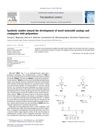
February 2010 in “Tetrahedron Letters” This article describes the synthesis of novel polyamine-modified minoxidil analogs and conjugates to potentially enhance minoxidil's biological activity, selectivity, and water solubility, but reports no new biological results.