
This study found that in men with androgenetic alopecia, elevated triglycerides were the only factor consistently associated with the condition, suggesting a potential link between AGA and lipid metabolism, although other hormonal, metabolic, and sleep factors were not significantly different after propensity score matching.
 April 2026 in “Research Square”
 This study found that dental students' manual dexterity was weakly associated with their performance in skills-based assessments, while self-perceived skill levels showed no significant correlation with assessment outcomes, suggesting a potential benefit from focusing on dexterity enhancement in dental education.
 March 2026 in “Plastic and Aesthetic Research”
 This review highlights that exosomes from adipose-derived stem cells, particularly those enriched with circ-Ash1l, can inhibit ferroptosis and reduce UVB-induced skin aging by delivering GPX4-promoting signals to damaged cells, thus offering a potential regenerative therapy for photoaged skin.
 January 2026 in “Yonsei Medical Journal”
 Finasteride and dutasteride have little effect on Type 2 Diabetes risk.
 January 2026 in “Journal of Biomedical Research”
 This review discusses the potential of small extracellular vesicles (sEVs) as next-generation therapeutics, noting their ability to overcome biological barriers and modulate cellular environments for various diseases.
 September 2025 in “Animal Bioscience”
 This study found that triglyceride and energy metabolic pathways are crucial factors influencing wool fiber diameter in fine-wool Alpine Merino sheep, providing insights for enhancing wool quality.
 April 2024 in “BMB Reports”
 This study used Cisd2 knockout mice models and found that these mice display premature aging characteristics and an increase in dysfunctional neutrophils, suggesting Cisd2's role in calcium homeostasis and neutrophil function via interactions with Calnexin and SERCA.
 September 2023 in “International journal of medicine”
 This study reviewed the current status and future scope of artificial intelligence in healthcare, highlighting its potential to revolutionize medical practices through improved affordability, efficiency, and speed, as well as its applicability in various fields such as imaging, diagnosis, and individualized care.
 January 2023 in “Åbo Akademi University Research Portal”
 This study found that vimentin is essential for proper wound healing and cell growth by influencing EMT signaling and mTOR activity in mice.

This study found that human hair follicles can be used to generate induced pluripotent stem cells, which can then efficiently differentiate back into keratinocytes.
 September 2006 in “Plastic and Reconstructive Surgery”
 This study observed a 31% decrease in antidepressant use among patients already using such medication before cosmetic surgery, suggesting a potential influence of cosmetic procedures on antidepressant needs.
 September 2006 in “Plastic and Reconstructive Surgery”
 This study observed a 31% decrease in antidepressant use among patients who were preoperatively taking such medication, suggesting cosmetic surgery may influence antidepressant needs.
 September 2006 in “Plastic and Reconstructive Surgery”
 This study found a 31% decrease in antidepressant use following cosmetic surgery, suggesting that such procedures may influence medication use by improving self-esteem.
 May 2026 in “Research Square”
 This research reports that the polyG fragment within the Hoxc13 protein alters its gene regulatory functions, which could have influenced mammalian hair evolution by affecting pathways related to hair follicle development.
 April 2026 in “Cellular and Molecular Immunology”
 In a conditional knockout mouse model, this study found that loss of the transcription elongation factor SPT6 in basal keratinocytes led to psoriasis-like skin inflammation and delayed wound healing, suggesting SPT6 plays a crucial role in maintaining epidermal immune quiescence by suppressing proinflammatory NF-κB signaling.
 March 2026 in “International Journal of Pharmaceutics and Drug Analysis”
 In this study, researchers developed a polyherbal emulgel for topical use in managing rheumatoid arthritis and found that formulation F3 provided optimal drug release and stability, indicating it may be an effective alternative with improved patient compliance.
 March 2026 in “Folia Histochemica et Cytobiologica”
 This review highlights LTBP1 as a critical integrator in disease processes, showing its dual role in cancer progression and suppression, its pathological influence in fibrosis, and its contribution to various disorders, suggesting its potential as a biomarker and therapeutic target.
 December 2025 in “Frontiers in Veterinary Science”
 In this study, researchers explored hair follicle development in Qianhua Mutton Merino sheep, identifying key genes like KRT27 and IGF-2 that impact this process, with findings suggesting significant molecular changes as sheep mature from newborn to one year old.
 October 2025 in “Animal Bioscience”
 This review summarizes the application of genome wide association studies and selection signature analyses in sheep and goat breeding in China, highlighting genomic regions that influence traits like reproductive performance and body size.
 September 2025 in “Reproductive health of woman”
 This study found that in women with polycystic ovary syndrome, taking metformin for three months significantly reduced serum levels of luteinizing hormone, follicle-stimulating hormone, and testosterone, suggesting a beneficial effect on managing hyperandrogenism.

This study found that treating male rats with human hair follicle stem cells improved memory function impaired by streptozotocin and increased both neurotrophic and inflammatory markers, suggesting potential neuroprotective effects in this model.
 May 2025 in “The Journal of Rheumatology”
 This case report highlights the rare occurrence of overlapping syndromes including SLE, RA, and AAV in a patient with discoid lupus erythematosus, noting the persistent role of prior viral infection remains unclear.
 May 2025 in “The Journal of Rheumatology”
 In this case report, researchers detailed the clinical management and positive outcome of a 62-year-old woman with catastrophic antiphospholipid syndrome associated with systemic lupus erythematosus, highlighting the potential effectiveness of Eculizumab in achieving disease remission and maintaining stability over 18 months.
 May 2025 in “The Journal of Rheumatology”
 This case report highlights the importance of trans-esophageal echocardiography in distinguishing Libman-Sacks endocarditis from infective endocarditis in systemic lupus erythematosus patients, guiding appropriate treatment for associated cerebrovascular disease.
 May 2025 in “The Journal of Rheumatology”
 This report describes two cases where female patients with chronic granulomatous disease developed manifestations of systemic lupus erythematosus, highlighting a rare association that may influence clinical evaluation and treatment planning.
 May 2025 in “The Journal of Rheumatology”
 In this case report, two patients with polyautoimmunity and difficult-to-treat lupus erythematosus experienced significant symptom improvement after adding anifrolumab to their regimen, suggesting its potential as an effective add-on therapy for refractory cutaneous symptoms in autoimmune conditions characterized by elevated interferon alpha activity.
 May 2025 in “The Journal of Rheumatology”
 This case report suggests that a proactive physical therapy model can be effective for improving physical function and meeting exercise guidelines in patients newly diagnosed with systemic lupus erythematosus.
 May 2025 in “The Journal of Rheumatology”
 This case report describes a 32-year-old Filipino female with mixed connective tissue disease who sequentially developed distinct autoimmune disorders over seven years, highlighting the complexities in diagnosis and management of overlap syndromes.
 May 2025 in “The Journal of Rheumatology”
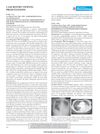
 In this case report, two patients with coexisting systemic lupus erythematous and neuromyelitis optica spectrum disorder achieved remission of SLE activity using an anti-CD19 monoclonal antibody.
 May 2025 in “The Journal of Rheumatology”
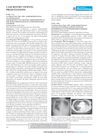
 This case report describes a young female with pediatric SLE and latent TB who was found to have gastrointestinal tuberculosis, a rarely recognized and often misdiagnosed condition, highlighting the diagnostic challenges and need for early recognition in such cases.