 163 citations
,
April 2019 in “Nature Communications”
163 citations
,
April 2019 in “Nature Communications” This study found that mechanical skin stretching can stimulate hair stem cell proliferation and hair regeneration by activating a complex pathway involving WNT, BMP-2, and M2 macrophages.
 65 citations
,
March 2018 in “Journal of Dermatological Science”
65 citations
,
March 2018 in “Journal of Dermatological Science” This review discusses the role of mechanical forces in skin homeostasis and disease development, including their impact on conditions like keloids, androgenetic alopecia, and acral melanoma, and reports no clinical results; the authors propose modifying these forces as a potential therapeutic strategy.
 45 citations
,
August 2013 in “Facial Plastic Surgery Clinics of North America”
45 citations
,
August 2013 in “Facial Plastic Surgery Clinics of North America” This article reviews factors affecting follicular unit extraction, emphasizing the need to tailor procedures to individual patient characteristics, but reports no new experimental findings.
 41 citations
,
May 2018 in “Nutrition and healthy aging”
41 citations
,
May 2018 in “Nutrition and healthy aging” This study suggests that age-related changes in skin elasticity reduce its stability against wrinkling, and anti-aging strategies should focus on addressing elastic mismatches between skin layers.
 13 citations
,
May 2016 in “International journal of biological macromolecules”
13 citations
,
May 2016 in “International journal of biological macromolecules” This study demonstrated that molecular dynamics simulations of keratin could effectively model the mechanical properties of hair, aligning well with experimental data, especially when conducted in vacuum conditions.
12 citations
,
March 2022 in “Development” This review outlines the role of mechanical forces in the development of sensory organs like eyes and ears, emphasizing insights from recent animal studies and microfabricated organoid systems; it presents no new experimental results.
 11 citations
,
February 2019 in “Frontiers in Physiology”
11 citations
,
February 2019 in “Frontiers in Physiology” This review explores the complex interrelationships among different properties of natural hair fibers and underscores the need for a holistic taxonomy to improve data interpretation across disciplines, but it reports no new experimental results.
 2 citations
,
February 2024 in “Nature cell biology”
2 citations
,
February 2024 in “Nature cell biology” In this research, the authors identify coordinated mechanical forces as crucial for hair follicle development in mammals, with contractile, proliferative, and proteolytic activities facilitating the formation and sectioning of epithelial structures crucial for forming a functional tissue.
1 citations
,
December 2025 in “Journal of Investigative Dermatology” Photocrosslinkable biomaterials can improve wound healing by controlling mechanical environments.
 1 citations
,
July 2023 in “Biomimetics”
1 citations
,
July 2023 in “Biomimetics” This study found that a hair-coating polyphenol complex significantly enhanced the mechanical strength, UV protection, and antistatic properties of damaged hair, suggesting potential benefits for hair treatment.
This study identified new geometric and mechanical parameters for curly and kinky/coily hair, which may inform more effective personal care products tailored to these hair types.

This review categorizes contractile hydrogels by their contraction mechanisms and explores their role in advanced wound management, emphasizing mechanical and biochemical signaling in healing, but also notes challenges like force transmission and clinical applicability.
 June 2026 in “Research Square”
 This study identified a group of dermal fibroblasts near hair follicle stem cells in mice that facilitate hair regeneration by creating a biomechanically compliant extracellular matrix, enhancing stem cell activation and promoting a positive feedback loop for tissue regeneration.
 April 2025 in “Scientific Reports”
 This study explores how Astragaloside A from traditional Chinese medicine may combat lung adenocarcinoma by regulating key signaling molecules like STAT3 and AKT, using techniques such as network pharmacology and molecular docking to understand its mechanisms in cellular models.
 January 2024 in “Research Square (Research Square)”
 This study identified key genes related to ischemic stroke through the ferroptosis pathway and highlighted the potential role of specific traditional Chinese medicines in regulating associated biological processes.
 January 2023 in “Theranostics”
 This study demonstrated that a mechanical-chemical cascade involving dermal cell contraction and the activation of Piezo1 in epidermal cells is crucial for initiating interactions necessary for hair follicle regeneration in skin organoids.

This study used quantitative methods to identify new geometric and mechanical parameters of curly and kinky/coily hair, aiming to improve classification and develop better personal care products for these hair types.
 January 2018 in “Stem cell biology and regenerative medicine”
 This review discusses how the nuclear lamina integrates biochemical and mechanical signals to influence gene expression and skin homeostasis, but reports no new clinical results.
 140 citations
,
August 2011 in “Biomaterials”
140 citations
,
August 2011 in “Biomaterials” This study observed that keratose, derived from human hair, integrated well in mouse tissue and remodeled with collagen, suggesting potential as a non-toxic biomaterial for regenerative applications.
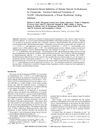 136 citations
,
March 1996 in “Journal of the American Chemical Society”
136 citations
,
March 1996 in “Journal of the American Chemical Society” This study explains finasteride's high potency and specificity as a mechanism-based inhibitor for treating benign prostatic hyperplasia by detailing its interaction with human type 2 steroid 5α-reductase.
124 citations
,
November 2019 in “International Journal of Molecular Sciences” This review discusses different processing methods for isolating human AD-SVFs/AD-MSCs using various kits and reports no new clinical results, highlighting the need for standardized preparation techniques.
111 citations
,
April 2006 in “Annals of the New York Academy of Sciences” This study found that preventing abnormal mineral ion homeostasis in vitamin D receptor knockout mice stopped bone abnormalities, while the animal's skin phenotype arose from direct receptor effects independent of vitamin D.
105 citations
,
April 2017 in “International Journal of Nanomedicine” In this study, ethosomes were found to improve the skin penetration of a model lipophilic drug more effectively than liposomes or hydroethanolic solutions, suggesting a unique mechanism involving the breakdown of vesicles in the skin.
 86 citations
,
June 2017 in “Stem cell investigation”
86 citations
,
June 2017 in “Stem cell investigation” This study reported that using human follicle stem cells isolated from hair bulge areas increased hair density by about 29% over baseline in patients with androgenetic alopecia, with significant improvements observed 23 weeks after the last treatment.
83 citations
,
November 2006 in “European Journal of Neuroscience” This study found that progesterone protects rat Purkinje cells during oxygen-glucose deprivation by activating GABA A receptors through its metabolite, allopregnanolone.
 63 citations
,
March 2016 in “International Journal of Molecular Sciences”
63 citations
,
March 2016 in “International Journal of Molecular Sciences” This review discusses the pathophysiology of sleep disturbance in children with atopic dermatitis and highlights the need for further research on management strategies, but provides no new clinical results.
54 citations
,
May 2021 in “International Journal of Molecular Sciences” This review discusses recent advances in scarless wound healing research, focusing on the roles of mechanobiology and immunology, and reports no new clinical results; the authors highlight the potential of next-generation human skin equivalents in understanding these mechanisms.
 48 citations
,
June 1988 in “PubMed”
48 citations
,
June 1988 in “PubMed” In this study, minoxidil sulfate was found to relax norepinephrine-induced contractions in rabbit mesenteric arteries, possibly by acting as a K+ channel agonist, but it did not relax K+-induced contractions.
 47 citations
,
August 2016 in “Fitoterapia”
47 citations
,
August 2016 in “Fitoterapia” This article reviews mechanisms by which herbal ingredients may stimulate or inhibit hair growth, and it reports no new clinical findings while suggesting potential for developing hair loss treatments.
 43 citations
,
December 2013 in “Stem Cells”
43 citations
,
December 2013 in “Stem Cells” Stretching skin increases a certain protein that attracts stem cells, helping skin regeneration.