 5 citations
,
May 2018 in “Statistics in Medicine”
5 citations
,
May 2018 in “Statistics in Medicine” This study found that the proposed Bayesian measurement-error-driven hidden Markov regression model effectively calibrated inflated covariate effect sizes in a community-based survey on androgenetic alopecia regardless of misclassification type.

In this study, centralised measurements provided more consistent and accurate results for assessing hair loss in mild-to-moderate alopecia areata, reducing error compared to local ratings.
 40 citations
,
April 2006 in “Journal of the European Academy of Dermatology and Venereology”
40 citations
,
April 2006 in “Journal of the European Academy of Dermatology and Venereology” This study reported that Trichoscan, a computer-assisted hair measurement system, was not supported as accurate for clinical trials due to errors in signal detection, despite its analysis speed.
3 citations
,
January 2011 in “Proceedings of SPIE, the International Society for Optical Engineering/Proceedings of SPIE” This study found that variations in mouse skin thickness, influenced by gender and hair growth cycles, significantly affect optical scattering measurements, which are important for developing biomedical optics techniques.
April 2019 in “Journal of the Endocrine Society” The researchers reported a case of falsely elevated testosterone in a teen, due to immunoassay interference, demonstrating that liquid chromatography tandem-mass spectrometry provides more accurate testosterone measurement, emphasizing the need for thorough analysis when clinical results are inconsistent.
 9 citations
,
January 2011 in “Skin Research and Technology”
9 citations
,
January 2011 in “Skin Research and Technology” This study developed a high-resolution phototrichogram system that can automatically and accurately assess hair growth metrics in cosmetic trials, achieving over 90% correlation with manual measurements.
This study developed a digital tool for quantitatively assessing hair in androgenetic alopecia, achieving an average accuracy of 79.45% for counting hairs and 68.19% for measuring hair size compared to human evaluation.
2 citations
,
August 2019 in “Electronics and Communications in Japan” This study reports a highly sensitive MEMS silicon-hair device that mimics hair follicle functions by detecting minimal forces and moments, including electrostatic attraction and surface tension of liquids.

Hair properties change under electromagnetic fields and are influenced by individual characteristics and the environment.
 19 citations
,
November 1971 in “Clinica Chimica Acta”
19 citations
,
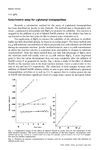
November 1971 in “Clinica Chimica Acta” In this study, the researchers found that the absence of the NFI-C transcription factor delayed the hair growth cycle in mice by affecting key gene expressions and signaling pathways.
 26 citations
,
March 1986 in “Clinical and Experimental Dermatology”
26 citations
,
March 1986 in “Clinical and Experimental Dermatology” Scalp hair grows at 0.37 mm/day, forearm hair at 0.18 mm/day, and thigh hair at 0.30 mm/day, with no significant differences found in people with certain hair conditions.
 65 citations
,
March 2016 in “Lasers in Medical Science”
65 citations
,
March 2016 in “Lasers in Medical Science” This review found that many low-level light therapy studies report beneficial effects but often fail to provide adequate measurement details, affecting the reliability and repeatability of the research.
 21 citations
,
January 2010 in “International Journal of Trichology”
21 citations
,
January 2010 in “International Journal of Trichology” This study concluded that TrichoScan is error-prone in its current form and overestimates certain hair growth parameters, with results not aligning with clinical severity of alopecia.
 May 2011 in “Value in Health”
 This study found that the oral Janus kinase inhibitor CP-690,550 has a direct effect on reducing pruritus in patients with psoriasis, independent of clinician-assessed improvements in psoriasis severity.
 45 citations
,
January 1999 in “Dermatology”
45 citations
,
January 1999 in “Dermatology” This study validated the VQ-Dermato, the first dermatology-specific quality of life instrument in French, and found it to be reliable, acceptable for routine use, and more responsive than the SF36.
 3 citations
,
April 2021 in “Journal of Cosmetic Dermatology”
3 citations
,
April 2021 in “Journal of Cosmetic Dermatology” In this study, the researchers found that a manual micrometer caliper is a reliable tool for planning hair transplant surgery and accurately measures the short axis of the hair shaft.
 March 2022 in “VNU Journal of Science Medical and Pharmaceutical Sciences”
 This study developed a sensitive method using LC-ESI-MS/MS for accurate and reliable measurement of nine steroid hormones in children's serum.
 72 citations
,
February 2011 in “American Journal of Biological Anthropology”
72 citations
,
February 2011 in “American Journal of Biological Anthropology” This study observed that eliminating positional error in hair segment analysis can improve understanding of changes in isotopic composition, aiding the identification of pathological conditions and dietary patterns.
 1 citations
,
November 2025 in “Clinical Chemistry and Laboratory Medicine (CCLM)”
1 citations
,
November 2025 in “Clinical Chemistry and Laboratory Medicine (CCLM)” This study developed a new measurement procedure using isotope dilution-liquid chromatography-tandem mass spectrometry for accurate quantification of DHEAS in human serum or plasma, demonstrating high selectivity, sensitivity, and low measurement uncertainty, making it suitable for routine standardization and clinical evaluation.
 May 2026 in “International Journal of Versatile Research and Analysis”
 This study used air wedge interferometry to measure the thickness of human scalp hair from three individuals, finding average thicknesses of 66.482 µm, 59.355 µm, and 59.927 µm respectively, within the typical range for adults.
 4 citations
,
October 2009 in “Skin research and technology”
4 citations
,
October 2009 in “Skin research and technology” This study found that tristimulus colorimetry is a sensitive and quantitative method for projecting hair growth rates in depilated mice, and it observed that 890 nm LED irradiation promotes hair regrowth.
 14 citations
,
September 2018 in “JAMA Facial Plastic Surgery”
14 citations
,
September 2018 in “JAMA Facial Plastic Surgery” This study found that hair transplant surgery significantly improves health utility scores compared to untreated androgenetic alopecia in both men and women, as perceived by laypeople.
 January 2026 in “Clinical Chemistry and Laboratory Medicine (CCLM)”
 This study reported high analytical performance of an RMP for DHT quantification, with the ability to differentiate between 5α-DHT and 5β-DHT isomers, making it suitable for routine assay standardization and clinical sample evaluation.

This review examines complex regional pain syndrome (CRPS I) mechanisms, including immune dysregulation and psychological factors, but reports no new clinical results; the authors highlight potential diagnostic refinements.
 77 citations
,
October 2007 in “International Journal of Andrology”
77 citations
,
October 2007 in “International Journal of Andrology” This study found that testosterone replacement, with or without finasteride, did not lead to significant cognitive improvements over 36 months in healthy older men without prior cognitive impairment.
 February 2024 in “medRxiv (Cold Spring Harbor Laboratory)”
 This study aims to assess how daily life factors affect sleep patterns and describe individual sleep changes across the year, with results to be published in future research.
 51 citations
,
November 2005 in “Journal of Medical Primatology”
51 citations
,
November 2005 in “Journal of Medical Primatology” This study observed that hair loss in captive rhesus macaques varies with season, sex, and housing conditions, and is significantly correlated with HPA axis activity as indicated by faecal cortisol metabolites.
 17 citations
,
July 2017 in “International Journal of Behavioral Medicine”
17 citations
,
July 2017 in “International Journal of Behavioral Medicine” This study validated the Egyptian Arabic version of the Skindex-16 and found that skin conditions significantly impacted patients' quality of life, particularly in the emotional domain.
 January 2017 in “Clinical & medical biochemistry”
 This study observed that Greek Caucasian women with PCOS had distinct serum hormone levels and a specific AKT2 gene SNP, which may play a role in the condition's characteristics.
 9 citations
,
December 1978 in “Australian Journal of Biological Sciences”
9 citations
,
December 1978 in “Australian Journal of Biological Sciences” This study found that flumethasone administration in Merino wethers led to variations in wool shedding and initial reductions in wool growth, with full recovery generally observed within 60 days post-treatment.