This study found that BCG injection in COVID-19 convalescent adults reduced long COVID symptoms like hearing and cognitive issues but also led to increased hair loss in women at six months.
4 citations
,
December 2014 in “Indian Journal of Dermatology” This case report documents a rare presentation of congenital milia en plaque on the scalp of a five-year-old boy, with blaschkoid extension to the nuchal area, highlighting its uncommon location and onset.
 October 2025 in “JOURNAL OF CLINICAL AND DIAGNOSTIC RESEARCH”
 This case report details a 77-year-old man initially suspected of having multiple myeloma but ultimately diagnosed with Waldenstrom’s Macroglobulinaemia, highlighting the importance of accurate differential diagnosis for conditions like epistaxis and high serum IgM.
April 2025 in “European Journal of Pharmaceutics and Biopharmaceutics” This study developed and tested Bicalutamide-loaded lipid vesicles in dissolving microarray patches for topical application, finding that they effectively deliver Bicalutamide through murine skin while maintaining a favorable safety profile, suggesting potential to improve treatments for androgenetic alopecia.
 4 citations
,
January 2018 in “International Journal of Trichology”
4 citations
,
January 2018 in “International Journal of Trichology” This case report describes a 4-year-old girl with hypotrichosis and juvenile macular dystrophy, linked to mutations in the cadherin 3 gene affecting P-cadherin expression.
8 citations
,
October 2021 in “Experimental cell research” This study found that macrophage-engineered extracellular vesicle mimetics may promote hair regrowth, presenting a potential alternative to extracellular vesicles for overcoming clinical production challenges.
 11 citations
,
October 2019 in “Journal of Cancer Immunology”
11 citations
,
October 2019 in “Journal of Cancer Immunology” This article discusses the role of external beam radiotherapy as a primary treatment method for cancer and reports no new clinical findings.
26 citations
,
July 2007 in “Wound Repair and Regeneration” This study found that MRL/MpJ mice heal burn wounds with scar formation, experiencing delayed wound closure and impaired myofibroblast development, which contrasts with quicker contraction in BALB/c mice.
 December 2023 in “bioRxiv (Cold Spring Harbor Laboratory)”
 This research examined the transcriptional landscape of quiescent melanocyte stem cells (qMcSCs) in adult female mice, revealing significant heterogeneity within this cell population and identifying novel subpopulations that vary in immune privilege regulation, melanocyte differentiation potential, and neural crest potential.
 March 2024 in “Journal of Experimental & Biomedical Sciences/Biomedical Science Letters”
 In this study, BCC therapy reduced oxidative stress and cell damage in cardiomyocyte cells, suggesting it may serve as a new treatment alternative for heart disease.
 4 citations
,
September 2011 in “American Journal of Clinical Dermatology”
4 citations
,
September 2011 in “American Journal of Clinical Dermatology” This case series suggests that EE/CMA 0.03mg/2mg may help manage dermatological disorders related to androgen excess, as evidenced by symptomatic improvements in the four patients treated.
11 citations
,
September 2021 in “American Journal of Medical Genetics Part A” This study reports that newly diagnosed patients with Bachmann-Bupp syndrome exhibit a broader phenotype than previously documented, including late-onset seizures, and suggests a possible universal biochemical mechanism involving elevated ODC activity.
 20 citations
,
May 2013 in “International Journal of Molecular Medicine”
20 citations
,
May 2013 in “International Journal of Molecular Medicine” This study identified a novel missense MAFB variant in a family with some unaffected members, suggesting incomplete penetrance and the potential influence of modifier genes, epigenetic mechanisms, or environmental factors on MCTO phenotype.
In this case report, a 25-year-old female with Mixed Connective Tissue Disease presented unusual symptoms in a specific geographical region, prompting clinicians to approach diagnosis and management with caution due to potential severe complications such as pulmonary hypertension and renal crisis.
 133 citations
,
May 2016 in “Cell Host & Microbe”
133 citations
,
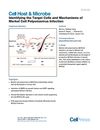
May 2016 in “Cell Host & Microbe” In this study, human dermal fibroblasts were identified as natural host cells that support productive Merkel cell polyomavirus infection, and the MEK antagonist trametinib was introduced as an effective inhibitor to control the virus.
 August 2021 in “Research Square (Research Square)”
 In this study of clinical-grade ADMSCs, researchers found that cells expanded in PowerStem MSC1 media exhibited increased negative marker expression, chromosomal abnormalities, and signs of senescence compared to those cultured in StemMACS MSC Expansion Media, suggesting that the latter is more suitable for therapeutic applications.
221 citations
,
July 2012 in “Proceedings of the National Academy of Sciences of the United States of America” This study found that the circadian clock in mouse skin regulates cell proliferation and affects sensitivity to UVB-induced DNA damage, with potential implications for understanding human skin cancer risk.
 1 citations
,
January 2020 in “British Journal of Dermatology”
1 citations
,
January 2020 in “British Journal of Dermatology” This article reviews the centenary of the British Association of Dermatologists by highlighting significant papers from its journals, with no new clinical results reported.
 28 citations
,
November 2013 in “The FASEB journal”
28 citations
,
November 2013 in “The FASEB journal” In this study, a low-methionine diet significantly improved the health and physical traits of cystathionine β-synthase-deficient mice, contrasting with negative effects on mice with partial deficiency.
 8 citations
,
January 2011 in “Experimental and Therapeutic Medicine”
8 citations
,
January 2011 in “Experimental and Therapeutic Medicine” This review summarizes the characteristics of the peri-malignant melanoma stroma, indicating its potential role in early dermal metastatic migration and increased metastasis risk.
2 citations
,
November 2025 in “Biomedicines” This review explores how platelet- and marrow-derived biologics like PRP and BMAC exhibit both regenerative and antimicrobial properties useful in musculoskeletal conditions and wound healing, though their clinical outcomes are affected by preparation inconsistencies and lack of standardized protocols.
42 citations
,
September 2012 in “PLoS ONE” In this study, bezafibrate treatment improved certain aging-like features in a mouse model with mitochondrial dysfunction, but did not enhance muscle function or lifespan.
9 citations
,
August 2002 in “British journal of ophthalmology” This case report describes a young man diagnosed with encephalocraniocutaneous lipomatosis who had unique bilateral optic disc colobomas, a previously unreported association with this syndrome.
This study found that combining Ganoderma lucidum extract with microneedle therapy promoted hair growth in a mouse model of alopecia more effectively than microneedle therapy alone.
1 citations
,
December 2018 in “IOP conference series. Materials science and engineering” This study confirms that human CD34+ melanocyte stem cells can be differentiated into melanin-producing cells, suggesting potential for cellular therapy in treating skin degenerative diseases.
June 2025 in “British Journal of Dermatology” In this report, two cases of melanocytic matricoma, a rare benign hair follicle lesion that mimics melanoma and basal cell carcinoma, were described and successfully treated with complete surgical excision. Histological analysis was crucial for differentiation from similar malignant lesions.
99 citations
,
March 2013 in “Journal of Investigative Dermatology” This study identified ABCB6 as the first gene linked to dyschromatosis universalis hereditaria (DUH) in a large Chinese family, suggesting it plays a role in skin pigmentation.
7 citations
,
September 2013 in “Familial cancer” This review discusses recent insights into Birt–Hogg–Dube syndrome, including the functions of the FLCN gene and clinical recommendations for screening and treatment, but it reports no new experimental results.
 June 2023 in “British Journal of Dermatology”
 This study reports a unique case of coinheritance of BRCA2 and CYLD pathogenic variants in a man with metastatic malignant cylindroma, suggesting that recognizing such genetic profiles in rare conditions can provide new treatment options, including the potential use of therapies targeting BRCA deficiency.
 67 citations
,
November 2019 in “Nature Communications”
67 citations
,
November 2019 in “Nature Communications” This study demonstrated that a c-Kit-CreER-driven mouse model confirms melanocyte stem cells as a genuine source of melanoma, paralleling human melanoma in heterogeneity and gene signatures.