3 citations
,
March 2023 in “bioRxiv (Cold Spring Harbor Laboratory)” This study introduced Neurospectrum, a framework that effectively identifies meaningful neural dynamics by encoding neural activity into latent trajectories, and reported that it outperformed traditional methods in tracking synchronization, reconstructing stimuli, and identifying fMRI biomarkers in various datasets.

EfficientNet improves accuracy in diagnosing hair loss stages.
 5 citations
,
May 2018 in “Statistics in Medicine”
5 citations
,
May 2018 in “Statistics in Medicine” This study found that the proposed Bayesian measurement-error-driven hidden Markov regression model effectively calibrated inflated covariate effect sizes in a community-based survey on androgenetic alopecia regardless of misclassification type.
April 2026 in “Journal of the American Academy of Dermatology” 3 citations
,
November 2022 in “Frontiers in Plant Science” This study found that microwave-assisted extraction significantly increased the yield of secondary metabolites, including phenolic and flavonoid content, from Nardostachys jatamansi, enhancing its anti-Alzheimer's potential compared to conventional extraction methods.
December 2022 in “Journal of Natural Remedies” This study found that compounds extracted from Cucurbita maxima seeds at 50 °C for 2 hours demonstrated significant binding affinities against breast cancer-related proteins, suggesting potential anticancer activity needing further in vitro and in vivo evaluation.
 18 citations
,
June 1999 in “Statistical Methods in Medical Research”
18 citations
,
June 1999 in “Statistical Methods in Medical Research” This paper reviews the role of pharmacokinetic/pharmacodynamic modeling in drug development, emphasizing its application for drug dosing guidance, safety resolution, and therapeutic monitoring improvement, without presenting new clinical results.
5 citations
,
April 2022 in “Pharmaceutics” This study reported that 5% minoxidil nanoparticles enhanced hair growth more effectively in mice than a commercial minoxidil solution, with significantly higher drug accumulation in the upper hair follicles.
April 2003 in “Journal of Clinical Dermatology” This study found that coapplication of capsaicin and minoxidil led to rapid and steady hair growth in mice, with capsaicin accelerating the start of anagen and minoxidil extending its duration.
This study examined the cardiovascular safety of oral minoxidil, used off-label for androgenetic alopecia, particularly as its usage expands in real-world settings, although specific results were not detailed in the abstract.
 12 citations
,
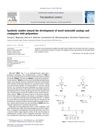
February 2010 in “Tetrahedron Letters”
12 citations
,
February 2010 in “Tetrahedron Letters” This article describes the synthesis of novel polyamine-modified minoxidil analogs and conjugates to potentially enhance minoxidil's biological activity, selectivity, and water solubility, but reports no new biological results.
 April 2024 in “AAPS PharmSciTech”
 New microneedle method improves hair regrowth treatment delivery.
 August 2022 in “Yakugaku zasshi”
 In this study, pre-treatment with steam towel, l-menthol, and CA-carpronium enhanced the absorption of minoxidil nanoparticles in mice, potentially increasing therapeutic efficiency without side effects.
 January 2019 in “Analytical Science and Technology”
 This study developed a rapid method using advanced chromatography and mass spectrometry to detect hair-growth enhancing compounds, discovering synthetic drugs in about 21% of tested supplements.
 December 2024 in “http://isrctn.com/”
 MpowerTM may improve hair growth and satisfaction more than plain minoxidil, with mild side effects.
 4 citations
,
April 2024 in “Complex & Intelligent Systems”
4 citations
,
April 2024 in “Complex & Intelligent Systems” This study introduced a single-stage network using large kernel attention that effectively restores high-resolution images by capturing both global and local details, reducing parameters and improving processing speed.
 13 citations
,
October 2010 in “Pharmacogenomics”
13 citations
,
October 2010 in “Pharmacogenomics” This study constructed a panel of pharmacokinetic and pharmacodynamic genes, revealing that current SNP chips insufficiently capture many drug-response gene variants, highlighting the need for complementary genetic approaches.
1 citations
,
October 2013 This dissertation proposes a framework for analyzing medical images on mobile devices but presents no new research findings, focusing instead on development methodologies and their applications to hair transplant and glaucoma contexts.
 February 2024 in “Current Medicinal Chemistry”
 In this study, minoxidil nanoparticles significantly increased hair growth rate in C57BL/6 mice compared to traditional minoxidil, suggesting enhanced effectiveness and potential as a new formulation.
22 citations
,
November 2020 in “Frontiers in Physics” This review discusses the experimental strategies and technological challenges of proton minibeam radiotherapy (pMBRT) and reports no clinical results; it highlights the potential of using a 3 GHz linear accelerator for precision therapy research.
 December 2024 in “Biological and Pharmaceutical Bulletin”
 In this study, researchers found that minoxidil nanocrystals delivered using MG-MXD@NP, containing methylcellulose and gum arabic, significantly improved hair growth in mice compared to a standard minoxidil lotion, with enhanced delivery to skin tissues and increased markers of hair follicle stem cell activity.
July 2025 in “OPAL (Open@LaTrobe) (La Trobe University)” The research found that topical maslinic acid stimulates hair growth in mice, comparable to minoxidil, by inducing anagen phase acceleration and activating pathways such as Wnt/β-catenin, Notch, and MAPK; a potential link to cilia activity was also explored.
 33 citations
,
November 1994 in “Archives of Biochemistry and Biophysics” January 2026 in “SSRN Electronic Journal”
33 citations
,
November 1994 in “Archives of Biochemistry and Biophysics” January 2026 in “SSRN Electronic Journal”  September 2020 in “arXiv (Cornell University)”
 This study demonstrated that a computational screening process can identify existing drugs and natural compounds with potential anti-COVID-19 activity, highlighting some candidates for further experimental validation.
 2 citations
,
December 2019 in “Bioanalysis”
2 citations
,
December 2019 in “Bioanalysis” This article reviews analysis techniques in LC-MS/MS and discusses the potential use of a novel in-sample calibration curve method, but reports no new experimental results.
12 citations
,
January 2023 in “AAPS PharmSciTech” April 2026 in “Mendeley Data” April 2026 in “Mendeley Data”  July 2025 in “ACS Pharmacology & Translational Science”
 In this study, maslinic acid applied topically was observed to stimulate hair growth in mice comparably to minoxidil, primarily activating pathways like Wnt/β-catenin, and suggesting a link between hair growth and cilia activity.