 May 2022 in “Indian Journal of Animal Research”
 This study found that melatonin receptor genes play a key regulatory role in the development of goose skin feather follicles during embryonic development.
 7 citations
,
January 2001 in “Annales de zootechnie”
7 citations
,
January 2001 in “Annales de zootechnie” This study found that melatonin treatment significantly increased wool production and hair follicle activity in German angora rabbits, with larger effects seen in defleeced animals and those treated in July.
 12 citations
,
November 2020 in “Molecules”
12 citations
,
November 2020 in “Molecules” This study found that carvone, a plant-derived compound, decreases melanin content and inhibits melanoma cell proliferation through the cAMP pathway, suggesting potential benefits for treating melanomas and other hyperpigmentation disorders.
January 2011 in “Journal of the American Academy of Dermatology” This book critiques Dr. Conroy's theory on Morgellon's disease, highlighting a lack of scientific evidence and detailing his unverified claims about fungal organisms attracted to cocaine.
20 citations
,
November 2004 in “Archives of Pathology & Laboratory Medicine” This case report describes a rare instance of melanocytic matricoma, a benign pigmented papule found in sun-damaged skin of an elderly individual, highlighting its distinct clinical and pathological features.
May 2019 in “CINECA IRIS Institutial Research Information System (University of Genoa)” This study found that patients with the MITF p.E318K variant are more likely to develop multiple primary melanomas and dysplastic nevi with uncommon dermoscopic patterns compared to non-carriers.
 14 citations
,
July 2012 in “Journal of the American Academy of Dermatology”
14 citations
,
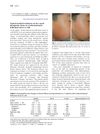
July 2012 in “Journal of the American Academy of Dermatology” This study found that topical tacalcitol improved roughness and scaling in erythromelanosis follicularis faciei et colli, although it was less effective for facial erythema.
69 citations
,
January 1995 in “PubMed” This study suggests that the structure and function of mouse melanocytes in the epidermis and hair bulb are influenced by genetic factors and local tissue environment, including hormones and growth factors.
November 2024 in “Tạp chí Y học Cộng đồng” In this study, oral and topical tranexamic acid significantly improved melasma symptoms in 28 female patients, with all showing over 25% improvement and 50% achieving good improvement, while 92.86% experienced no side effects, suggesting it is an effective and safe treatment.
9 citations
,
December 2018 in “Cutaneous and Ocular Toxicology” This meta-analysis found that combined BRAF and MEK inhibitor treatment in melanoma patients is linked to increased all-grade rash but reduced risks of several other dermatological toxicities compared to BRAF inhibition alone.

This study in adult mice found that somatosensory axons innervating Merkel cells in the skin are highly plastic, with significant remodeling in response to epithelial turnover, and that Merkel cells play a role in limiting axonal branching and promoting their maturation.
64 citations
,
January 1995 in “Cells Tissues Organs” This study found that the development and differentiation of Merkel cells in C57BL mouse embryos' dorsolateral skin are linked to tylotrich follicle formation rather than to neural influences.
 35 citations
,
July 2007 in “Dermatologic clinics”
35 citations
,
July 2007 in “Dermatologic clinics” This review discusses the causes and diagnostic process for facial hypermelanosis, emphasizing the need to rule out systemic disorders like Addison's disease; it reports no new clinical findings.
1 citations
,
January 1981 in “Elsevier eBooks” Melatonin stops melanin production after tyrosinase action, with cyclic GMP mimicking this effect.
1 citations
,
January 2011 in “Journal of Animal Science and Veterinary Medicine” This study found that injecting melatonin in female goats did not significantly affect follicle characteristics but did improve cashmere yield, potentially by enhancing secondary follicle growth and extending the cashmere growth period.
September 2017 in “PubMed” In this case report, a Danish family with monilethrix showed varying symptoms, diagnosed via dermatoscopy, microscopy, and gene sequencing. The study highlights that while no cure exists, oral minoxidil shows promise in a single case, and reducing hair trauma remains key for management.
 January 2025 in “HemaSphere”
 This review discusses the implications of renaming myelodysplastic syndromes as "myelodysplastic neoplasms" and argues that the "low-risk" label may misrepresent patient experiences and hinder research.
 210 citations
,
July 1993 in “The journal of investigative dermatology/Journal of investigative dermatology”
210 citations
,
July 1993 in “The journal of investigative dermatology/Journal of investigative dermatology” This review discusses the role of intrinsic skin signals, rather than serum signals, in regulating melanin synthesis and hair pigmentation, but reports no new experimental data.
 1 citations
,
July 2023 in “Nature communications”
1 citations
,
July 2023 in “Nature communications” This study found that deleting the Mof gene in mouse skin leads to severe defects in skin cell self-renewal, differentiation, and hair follicle growth, indicating that MOF is crucial for mitochondrial and ciliary gene expression and essential for skin development.
 10 citations
,
July 2013 in “British Journal of Dermatology”
10 citations
,
July 2013 in “British Journal of Dermatology” High MUC-18/MCAM levels in blood indicate a worse outlook for melanoma patients.
 12 citations
,
September 2018 in “Naturwissenschaften”
12 citations
,
September 2018 in “Naturwissenschaften” This study found that melatonin at 0.2 g/L for 72 hours most effectively enhances cashmere growth in Liaoning cashmere goats by upregulating the lncRNA MTC, which activates NF-kB signaling.
January 1999 in “Universitas Philosophica” This study found that cornifin-alpha/SPRR1 expression in mouse skin increases significantly in response to phorbol ester treatment and in papillomas and squamous cell carcinomas, particularly in differentiated areas.
 7 citations
,
May 2020 in “Trends in molecular medicine”
7 citations
,
May 2020 in “Trends in molecular medicine” This study explored the immune environment of the hair follicle's bulge region and suggested that its unique signaling may prevent melanoma formation by lacking necessary proinflammatory signals for full oncogenic transformation, indicating potential strategies for melanoma prevention by replicating this immune-privileged environment.
 1 citations
,
October 2025 in “Scientific Reports”
1 citations
,
October 2025 in “Scientific Reports” This study investigated the Mandarin duck as a model for understanding lifelong developmental changes, finding that male sail feather morphogenesis involves a combination of local morphogenetic programs, epigenetic regulation, and hormonal cues, with increased female estrogen levels observed before the mating season.
3 citations
,
May 1979 in “PubMed”  November 2022 in “bioRxiv (Cold Spring Harbor Laboratory)”
 This study found that conditional deletion of Mof in mice resulted in severe defects in skin development, including compromised epidermal differentiation and hair growth, leading to perinatal lethality.
6 citations
,
June 2016 in “The anatomical record” This study found that Merkel cells in dogs are most numerous in sensory receptive areas like oral mucosa and facial skin, indicating a potential role in tactile sensation.
21 citations
,
November 2023 in “International Journal of Molecular Sciences” This ex vivo study reported that melatonin significantly improved certain aging biomarkers in aged human skin, including reduced mTORC1 activity, increased fibrillin-1, and enhanced collagen and elastic fiber organization, though other key biomarkers remained unchanged.