 136 citations
,
March 1996 in “Journal of the American Chemical Society”
136 citations
,
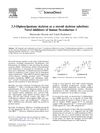
March 1996 in “Journal of the American Chemical Society” This study explains finasteride's high potency and specificity as a mechanism-based inhibitor for treating benign prostatic hyperplasia by detailing its interaction with human type 2 steroid 5α-reductase.
 4 citations
,
November 2017 in “Hair transplant forum international”
4 citations
,
November 2017 in “Hair transplant forum international” In this study, the researchers noted that approximately 15% of hair transplant procedures are performed on women, with candidacy being determined by specific anatomical conditions and hair loss types, such as medium-stage androgenetic alopecia or a high frontal hairline.
This study reports that hair fibers degrade most in acidic sandy clay, while silicone oil treatment is effective for conserving various hair types and artifacts.
 33 citations
,
August 2005 in “The American Journal of Dermatopathology”
33 citations
,
August 2005 in “The American Journal of Dermatopathology” This article provides departmental contact information for Dr. Dirk M. Elston at the Geisinger Medical Center and reports no research findings.
May 2025 in “Acta Biomaterialia” This study developed microneedles combining insulin-like growth factor-1 and type XVII collagen, showing more effective hair regeneration and reduced inflammation compared to minoxidil in a mouse model of androgenetic alopecia.
24 citations
,
February 2007 in “Hormone and metabolic research” This study suggests that inhibiting 5α-reductase activity alone, particularly with the type 1 inhibitor MK386, may not effectively reduce sebocyte activity or improve acne.
2 citations
,
December 2022 in “Archives of Dermatological Research” In this study, researchers developed a new classification system for anterior hairline types among Asian males without androgenetic alopecia, finding MM, RM, and ML to be the most common types.
1 citations
,
January 2012 in “Indian Journal of Small Ruminants (The)” This study detailed the skin structure of Chegu goats, highlighting the presence of two types of hair follicles, with primary follicles associated with sweat glands and other structures.
 8 citations
,
March 2002 in “Archiv Der Pharmazie”
8 citations
,
March 2002 in “Archiv Der Pharmazie” In this study, 4-(4-(phenylaminocarbonyl)benzoyl) benzoic acid exhibited the strongest inhibitory activity against the human type 2 steroid 5α-reductase isozyme among the compounds tested.
5 citations
,
November 2014 This review discusses various potential pharmacological activities and traditional uses of Musa paradisiaca and M. sapientum but reports no new clinical results, highlighting the need for further scientific justification of their effects.
 1 citations
,
January 2008 in “Springer eBooks”
1 citations
,
January 2008 in “Springer eBooks” This study found that hair follicle stem cells are multipotent and can enhance nerve regeneration and function in mice, showing potential as an accessible source for treating peripheral nerve injuries.
 May 2026 in “Frontiers in Medicine”
 This study found that several demographic, familial, lifestyle, and metabolic factors were independently associated with androgenic alopecia, differing by severity across various subtype classifications.
 August 2020 in “Journal of The American Academy of Dermatology”
 This study found that oral minoxidil improved background hair thickness in patients with lichen planopilaris.
37 citations
,
December 2020 in “Molecules” This study reported that a newly formulated Curcumin-loaded proniosome, named F5, exhibited enhanced antiviral efficacy, stability, and safety when compared to Curcumin alone, and improved the therapeutic performance of Acyclovir by reducing its effective dose against Herpes simplex virus.
 13 citations
,
August 2007 in “Bioorganic & medicinal chemistry letters”
13 citations
,
August 2007 in “Bioorganic & medicinal chemistry letters” This study developed a new competitive 5alpha-reductase inhibitor with an IC(50) of 0.84 microM using a novel chemical structure.
1 citations
,
October 2023 in “Pharmaceuticals” In this study, researchers investigated GAGs from the marine invertebrate Microcosmus exasperatus, finding that its polysaccharides possess antitumoral properties without affecting anticoagulant activity. The unique composition shows potential for cancer treatment when combined with existing therapies in future studies.
 July 2000 in “Dermatologic Surgery”
 Dr. Yarborough denied endorsing Derma Genesis and was mistakenly represented due to his office manager's error; also, over 30% of tested skin products were contaminated with bacteria.
 4 citations
,
January 2005 in “Elsevier eBooks”
4 citations
,
January 2005 in “Elsevier eBooks” This article discusses the key considerations and techniques necessary for successful Follicular Unit Transplantation in hair restoration surgery and reports no new clinical results.
 May 2012 in “The journal of nervous and mental disease”
 This review discusses various aspects of Impulse Control Disorders, but reports no new clinical findings; the authors highlight existing knowledge gaps and the need for proven treatments.
 1 citations
,
January 1998 in “Seminars in Plastic Surgery”
1 citations
,
January 1998 in “Seminars in Plastic Surgery” Hair transplantation using micro- and minigraft megasessions is safe, effective, and provides natural results with high patient satisfaction.
June 2020 in “Journal of Investigative Dermatology” This study found that spatial transcriptomics can reveal hidden inflammation patterns in atopic dermatitis by correlating epidermal and dermal gene expression levels, improving understanding of skin pathology.
13 citations
,
January 2002 in “Biological chemistry” This study found that hair follicle-specific keratins can form different structural assemblies depending on ionic conditions, with hair cortex keratins requiring physiological salt conditions to form intermediate filaments.
 1 citations
,
March 1994 in “Proceedings of the British Society of Animal Production”
1 citations
,
March 1994 in “Proceedings of the British Society of Animal Production” This study investigated the impact of prolactin and melatonin on secondary hair follicle growth patterns in Angora and Cashmere goats using in vitro methods, without reporting new definitive results.
 125 citations
,
May 2007 in “Journal of The American Academy of Dermatology”
125 citations
,
May 2007 in “Journal of The American Academy of Dermatology” This study describes the development of the BASP classification system, providing a universal and systematic approach for classifying pattern hair loss in both men and women.
April 2022 in “Microbiology and Immunology” This study suggests that a specific short sequence repeat in Malassezia restricta may be linked to increased colonization and the development or exacerbation of androgenetic alopecia.
 29 citations
,
February 2007 in “Hormone and metabolic research”
29 citations
,
February 2007 in “Hormone and metabolic research” This study found that antisense oligonucleotides can significantly reduce androgen receptor expression in cultured human sebocytes and may offer new therapeutic possibilities for androgen-associated skin diseases.
 22 citations
,
December 2017 in “Dermatologic Surgery”
22 citations
,
December 2017 in “Dermatologic Surgery” This study found that both intralesional PRP and topical tretinoin were effective and safe for treating striae distensae, with PRP being more effective and yielding higher patient satisfaction.
 3 citations
,
October 2017 in “Journal of Cosmetic Dermatology”
3 citations
,
October 2017 in “Journal of Cosmetic Dermatology” This study presents a new classification of adult human scalp hair patterns based on high-resolution photographs, which may assist hair restoration surgeons and dermatologists in determining appropriate punch size for follicular unit extraction.
 February 2024 in “Dermatology Reports”
 In this randomized controlled trial, combining 4-weekly microneedling with 5% minoxidil significantly increased hair density and diameter in men with androgenetic alopecia compared to minoxidil alone, while side effects were minor and tolerable.
February 2024 in “Indian Journal of Chemistry” In this study, researchers synthesized nine new nicotinamide derivative compounds and found that one, identified as N4, exhibited significant cytotoxic effects on MCF-7 breast cancer cells, while other derivatives demonstrated notable antibacterial, antifungal, and antibiofilm activities.