 November 2021 in “Open Forum Infectious Diseases”
 This study found that dermatological manifestations in COVID-19 patients with severe pneumonia were relatively rare, with the most frequent being the morbilliform viral exanthema and some cases of reversible androgenetic alopecia linked to disease severity.
48 citations
,
April 2021 in “Journal of the American Academy of Dermatology” This study found that topical corticosteroids are the most supported first-line treatment for pediatric alopecia areata, with contact immunotherapy as the next best option.
 February 2016 in “The journal of allergy and clinical immunology/Journal of allergy and clinical immunology/The journal of allergy and clinical immunology”
 This study reports a novel mutation in the TP63 gene associated with T and B cell lymphopenia in an EEC patient, suggesting that EEC diagnosis should include TREC assay and evaluation for immunodeficiency.
116 citations
,
October 1982 in “The Journal of Pathology” This study found that high-dose Cyclosporin A in rats led to significant functional and structural changes, including liver, kidney, and immune system alterations, along with behavioral and hematological effects.
June 2026 in “Journal of Advances in Biology & Biotechnology” In this study conducted at the Veterinary Clinical Complex in Bikaner, Rajasthan, researchers found that among 240 canine dermatitis cases, 25 dogs had demodicosis, characterized by various hematological and serum biochemical changes, and distinctive histopathological alterations in skin samples.
January 2018 in “INTAS POLIVET” In this clinical case report, a Labrador dog with multiple skin issues was successfully treated for Demodex mites and Pemphigus foliaceus using Prednisolone, Cephalexin, Amitraz, Ivermectin, and Ketoconazole, resulting in an uneventful recovery.
May 2018 in “The journal of immunology/The Journal of immunology” This study identified that patients with compound heterozygous mutations in FOXN1 exhibited severe T-cell lymphopenia but retained normal hair and nail development, indicating a distinct clinical phenotype from classic FOXN1 cases.
May 2017 in “The journal of immunology/The Journal of immunology” This study reported that patients with specific Foxn1 mutations exhibited severe T-cell lymphopenia without the hair and nail abnormalities usually associated with these mutations.
52 citations
,
September 2021 in “Kidney International” In this report, a 23-year-old woman developed nephrotic syndrome and was diagnosed with lupus nephritis after receiving the first dose of the AstraZeneca COVID-19 vaccine, but causation is not established.
 4 citations
,
May 2018 in “Journal of Neuro-Ophthalmology”
4 citations
,
May 2018 in “Journal of Neuro-Ophthalmology” This review describes the evolution of treatments for relapsing multiple sclerosis, highlighting that while newer potent monoclonal agents can potentially achieve disease remission, they also pose moderate to severe adverse event risks that healthcare providers must understand.
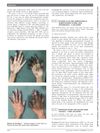
In this case report, a 19-year-old woman with systemic lupus erythematosus experienced significant improvement in neuropsychiatric symptoms, including psychosis and seizures, following treatment with high-dose corticosteroids, immunosuppressants, and antidepressants.
 April 2021 in “BMJ Case Reports”
 This case report discusses a rare instance of pseudolymphomatous folliculitis in a 19-year-old man, highlighting the challenge in diagnosing PLF due to its low clinical suspicion index and variable initial clinical diagnoses.
 1 citations
,
September 2013 in “The Journal of Dermatology”
1 citations
,
September 2013 in “The Journal of Dermatology” An 8-year-old girl developed a rare skin condition in a linear pattern on one side of her body after a lung infection, which improved with treatment.
10 citations
,
January 1994 in “Annals of Internal Medicine” This case report presents a young woman with systemic lupus erythematosus who was found to have CD4+ lymphocytopenia.
 6 citations
,
February 2010 in “Journal of The American Academy of Dermatology”
6 citations
,
February 2010 in “Journal of The American Academy of Dermatology” This case report details a 31-year-old woman with a subcutaneous nodule on her hand characterized by necrosis and lymphocytic infiltrate.
 September 1997 in “Journal of The European Academy of Dermatology and Venereology”
 Skin lymphoproliferative disorders are hard to diagnose and often linked to systemic diseases, but most have a good prognosis with accurate diagnosis.

In this case study, a 70-year-old male with lymphoid variant hypereosinophilic syndrome presented with rare isolated pulmonary involvement, which improved with prednisone treatment.
June 2023 in “Zenodo (CERN European Organization for Nuclear Research)” This study observed that patients with isolated neutropenia exhibit significant differences in certain lymphocyte and monocyte subtypes compared to healthy controls, including higher neutrophil/lymphocyte MFI ratios and lower percentages of natural killer cells.
November 2023 in “Faculty of 1000 Research Ltd” This case report describes a rare instance of tuberculous lymphadenitis in a patient with systemic lupus erythematosus, highlighting the potential link between immune suppression and tuberculosis risk.
 4 citations
,
August 2017 in “Journal of cutaneous pathology”
4 citations
,
August 2017 in “Journal of cutaneous pathology” This case report documents only the second known instance of congenital lymphadenoma, expanding the diagnostic possibilities for cutaneous lymphoepithelial tumors in children.
January 2023 in “Faculty of 1000 Research Ltd” This report details a case of tuberculous lymphadenitis in a 21-year-old female with SLE, suggesting that immune suppression may increase susceptibility to this extra-pulmonary TB.
16 citations
,
August 2000 in “British Journal of Dermatology” In this case report, lichen myxedematosus associated with hepatocellular carcinoma showed progressive improvement in skin lesions without further treatment following tumor resection.
 24 citations
,
November 1992 in “Journal of the American Academy of Dermatology”
24 citations
,
November 1992 in “Journal of the American Academy of Dermatology” This report on a case of cutaneous lymphomatoid granulomatosis underscores the pivotal role dermatologists have in its early diagnosis, which could potentially improve the otherwise poor prognosis.
 37 citations
,
September 2008 in “The American journal of surgical pathology”
37 citations
,
September 2008 in “The American journal of surgical pathology” This study concluded that hair follicle hyperplasia found in pseudolymphomatous folliculitis can also occur in genuine cutaneous lymphomas, potentially as a coincidental result of underlying pathological processes.
220 citations
,
June 2013 in “The Journal of Pathology” This study found that immune privilege collapse in the hair follicle bulge and associated immune responses may contribute significantly to the pathogenesis of lichen planopilaris, suggesting a potential autoimmune basis for the disease.
January 2023 in “Faculty of 1000 Research Ltd” This case report describes a 21-year-old female with systemic lupus erythematosus who developed tuberculous lymphadenitis, highlighting the risk of TB in patients with weakened immune systems on long-term immunosuppressive therapy.
October 2023 in “F1000Research” This case report describes a 21-year-old woman with systemic lupus erythematosus who developed tuberculous lymphadenitis, highlighting the increased risk of TB in patients on long-term immunosuppressive therapy.
January 2023 in “Faculty of 1000 Research Ltd” This case report details a 21-year-old female with systemic lupus erythematosus who developed tuberculous lymphadenitis, illustrating how immunosuppressive therapy in SLE patients can lead to such infections.
June 2023 in “F1000Research” This case report describes a 21-year-old female with systemic lupus erythematosus who developed tuberculous lymphadenitis, which was attributed to her compromised immune system from long-term immunosuppressive therapy.
16 citations
,
April 2016 in “Medicine” This study described a case where lupus erythematosus panniculitis preceded the diagnosis of systemic lupus erythematosus, highlighting the need for regular follow-ups in LEP patients for potential SLE development.