April 2019 in “Journal of Investigative Dermatology” This study developed an Asian human sebocyte cell line from breast skin tissue that can be used for sebaceous gland biology investigations, showing that Y27632 may promote cell growth through EGFR-CRAF-MEK-ERK and AKT pathways.
6 citations
,
July 2025 in “Cancer Medicine” This study reported that ZSYY001, a nanoparticle formulation of polymeric micellar paclitaxel, showed promising antitumor activity and was safe and well-tolerated in preclinical models and a phase I trial, without acute hypersensitivity reactions at doses up to 390 mg/m².
 April 2023 in “Journal of Investigative Dermatology”
 In this study, Nd:YAG picosecond lasers using fractional micro-lens array were found to have a comparable effect to ablative fractional Er:YAG lasers in treating atrophic acne scars, with better safety profiles but slightly less patient satisfaction.
11 citations
,
February 2023 in “Journal of Investigative Dermatology” Low m6Ascores in melanoma predict better survival and response to immunotherapy.
January 2011 in “Zhongguo nongye Kexue” This study successfully established a transgenic sheep fibroblast cell line expressing the spider dragline silk protein gene, laying groundwork for developing transgenic sheep with this capability in hair follicles.
11 citations
,
April 2012 in “Journal of Investigative Dermatology” A specific mutation in PA-PLA1α causes abnormal hair growth.
 July 2023 in “British journal of dermatology/British journal of dermatology, Supplement”
 This study found that the E6 gene, but not E7, was responsible for HPV8-induced expansion of keratinocyte stem cells in hair follicle junctional zones in mice.
 1 citations
,
March 1997 in “Journal of Chromatography B: Biomedical Sciences and Applications”
1 citations
,
March 1997 in “Journal of Chromatography B: Biomedical Sciences and Applications” This study discovered that the disposition of LY191704 enantiomers in rats and dogs is both stereoselective and species specific.
 38 citations
,
January 2002 in “Biological & Pharmaceutical Bulletin”
38 citations
,
January 2002 in “Biological & Pharmaceutical Bulletin” This study reported that the aqueous ethanol extract of Lygodii Spora demonstrated in vitro testosterone 5alpha-reductase inhibition and in vivo anti-androgenic activity, potentially due to oleic, linoleic, and palmitic acids.
11 citations
,
May 2011 in “The Journal of Dermatology” This case report describes a possible association between Vogt-Koyanagi-Harada disease and linear IgA/IgG bullous dermatosis in a 35-year-old Japanese male, though coincidence cannot be ruled out.
 157 citations
,
October 2003 in “Development”
157 citations
,
October 2003 in “Development” This study found that different stabilizing mutations in Aux/IAA proteins affect root hair development in Arabidopsis by disrupting the auxin response and suggest a model where the relative abundance of these proteins determines root hair initiation.
 13 citations
,
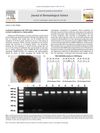
November 2009 in “Journal of Dermatological Science”
13 citations
,
November 2009 in “Journal of Dermatological Science” This article discusses various dermatological studies cited by previous authors and reports no new clinical results.
 March 2024 in “Journal of Pharmaceutical and Sciences”
 This study investigated the phytochemical composition and antibacterial and antioxidant activities of Zaleya pentandra extracts, finding high total polyphenol and flavonoid content and significant antibacterial effects, particularly in acetone extract, which may be suitable for developing antibacterial agents.
32 citations
,
January 2000 in “Human Heredity” This study found that the mutation Glu402Lys in keratin hHb6 may be associated with monilethrix, and homozygous patients in a consanguineous family exhibited more severe symptoms.
76 citations
,
February 1993 in “Journal of Biological Chemistry” This research observed that sheep and rabbit KAP6 genes, expressed in hair follicle cells, have high sequence similarity and indicate conservation due to evolutionary selection pressures.
20 citations
,
October 1995 in “Biochimica et Biophysica Acta (BBA) - Gene Structure and Expression” hHb1, hHb3, and hHb6 mRNAs start expressing at the same time in hair follicles.
15 citations
,
November 2020 in “Physiological reports” This review discusses emerging research on the transcription factor Sox6 and its roles in cardiovascular and kidney function, highlighting its involvement in diseases such as cardiomyopathy and diabetes; it reports no new experimental findings.
16 citations
,
August 2000 in “British Journal of Dermatology” In this case report, lichen myxedematosus associated with hepatocellular carcinoma showed progressive improvement in skin lesions without further treatment following tumor resection.
 February 2024 in “Advanced Materials”
 In this study, researchers discovered that a newly identified oligosaccharide, OG6, promotes hair growth by activating hair follicles, achieved by revealing its hidden activity from a larger molecule structure.
7 citations
,
March 2025 in “Cytotechnology”  April 2026 in “Amino Acids”
 This study reviews prior research using transgenic K6/ODC mice and demonstrates that elevated polyamines in epithelial cells contribute significantly to skin tumor development and progression by stimulating proliferation, altering cell signaling and chromatin remodeling, and affecting immune functionality, amongst other mechanisms.
 August 2019 in “Research Square (Research Square)”
 This study explored how long non-coding RNA mediates the effects of FGF5 on the hair follicle development and villus growth of Liaoning cashmere goats.
 August 2023 in “The journal of investigative dermatology/Journal of investigative dermatology”
 This study reports that a patient with rare linear lichen planopilaris experienced complete hair regrowth after 12 weeks of treatment with the antibody ixekizumab, suggesting it as a potential targeted therapy.
100 citations
,
November 1997 in “Human Genetics” In this study, researchers found that the prevalent Glu 410 Lys mutation in hHb6 and a new Glu 403 Lys mutation in hHb1 are linked to monilethrix, suggesting a mutational hotspot in type II hair keratins.
July 2024 in “Journal of Investigative Dermatology” PP405 may help hair growth by activating hair follicle stem cells.
 44 citations
,
November 2009 in “Archives of Dermatology”
44 citations
,
November 2009 in “Archives of Dermatology” This study observed that patients with CYLD mutations frequently experienced severe, painful tumors beyond the head and neck, impacting their quality of life, with hormonal factors possibly contributing to tumor development.
 123 citations
,
September 1987 in “JAMA”
123 citations
,
September 1987 in “JAMA” This study observed that patients receiving IL-2 immunotherapy developed a skin eruption characterized by burning and pruritus, which resolved shortly after stopping the infusion, suggesting that IL-2 mediated these effects.
15 citations
,
February 2014 in “PloS one” This study identified two prevalent and one newly proposed founder LIPH mutations in Japanese patients with autosomal recessive woolly hair/hypotrichosis and associated these mutations with different severities of hair loss.
3 citations
,
December 2023 in “Aging” In liver cancer cells, this study found that upregulating hsa_circ_0002980 inhibits cell proliferation, metastasis, and EMT by modulating the miR-1303/CADM2 axis, suggesting it as a potential therapeutic target.