 62 citations
,
August 2014 in “BMC Endocrine Disorders”
62 citations
,
August 2014 in “BMC Endocrine Disorders” This review summarizes the recent advances in molecular mechanisms influencing tissue sensitivity to glucocorticoids, emphasizing novel mutations and new information on the glucocorticoid receptor's circadian rhythm and ligand-induced repression, but reports no new results.
1 citations
,
January 2013 in “Digital Scholarship - UNLV (University of Nevada Reno)” This study hypothesized that finasteride administration may increase stress-induced amphetamine locomotor sensitization due to its impact on brain reward systems involving the neurosteroid allopregnanolone.
43 citations
,
April 2011 in “AJP Endocrinology and Metabolism” This study found that androgens increase Odc1 expression in skeletal muscle myoblasts, promoting proliferation and delaying differentiation.
 7 citations
,
March 2021 in “Journal of animal science/Journal of animal science ... and ASAS reference compendium”
7 citations
,
March 2021 in “Journal of animal science/Journal of animal science ... and ASAS reference compendium” In this study, bromocriptine's inhibition of prolactin promoted secondary follicle development during anagen in cashmere goats, likely via changes in specific gene expressions, despite not affecting fiber characteristics or primary follicle activity.
1 citations
,
January 2018 This study found that sphingosine 1-phosphate and its receptor S1PR3 are essential in regulating the acute mechanical pain response, highlighting their role in mechanonociception without affecting responses to innocuous touch or thermal stimuli.

The document's conclusion cannot be provided because the document is not available or cannot be read.
 15 citations
,
June 2019 in “Journal of Neuroendocrinology”
15 citations
,
June 2019 in “Journal of Neuroendocrinology” This study found that isoallopregnanolone reduced stress-induced tic-like behaviors and sensorimotor gating deficits in a mouse model of Tourette syndrome, suggesting potential therapeutic properties comparable to existing treatments like haloperidol and finasteride.
41 citations
,
April 2009 in “Journal of comparative neurology” In this study, researchers observed that P2X3-immunoreactive fibers extensively innervate the epidermis of rats, suggesting a primary role in detecting noxious stimuli in cutaneous tissue.
2 citations
,
May 2020 in “JAAD case reports” This review discusses the potential role of JAK inhibitors, like ruxolitinib, as emerging therapeutic agents in dermatology, but reports no new clinical results.
 105 citations
,
December 2009 in “Archives of dermatology”
105 citations
,
December 2009 in “Archives of dermatology” This overview discusses primary cicatricial alopecias, focusing on lichen planopilaris, and highlights the challenges in treatment and the progressive nature of hair loss despite symptom management, without providing new clinical results.
 April 2021 in “Journal of Investigative Dermatology”
 This study found that CD1a-restricted CD4+ T cells responsive to lysyl-phosphatidylglycerol were more frequent in the blood of atopic dermatitis patients, suggesting a potential role in the disease's Th2-mediated pathology.
 15 citations
,
September 2018 in “Dermatologic therapy”
15 citations
,
September 2018 in “Dermatologic therapy” In this study, the use of two emollients significantly reduced itching severity in individuals with xerotic eczema, starting 30 minutes post-application, and improved skin moisture and lipid content over 14 days, while demonstrating good tolerance with few adverse events.
 72 citations
,
January 2003 in “American Journal of Pathology”
72 citations
,
January 2003 in “American Journal of Pathology” This study found that the co-activator CBP enhances the agonistic action of hydroxyflutamide on androgen receptors, suggesting a mechanism for therapy resistance in prostate cancer.
 20 citations
,
February 2009 in “Chemistry & Biodiversity”
20 citations
,
February 2009 in “Chemistry & Biodiversity” This study found that Ganoderma lucidum extracts showed weak 5alpha-reductase inhibition but significantly inhibited prostate cell proliferation and testosterone-driven prostate growth in rats, suggesting potential as an ingredient for treating androgen-induced diseases.
 October 2023 in “Journal of Cosmetic Dermatology”
 This study found that an octapeptide binding to Lgr5 can enhance the proliferation and differentiation of human primary hair cells by activating the Wnt/β-catenin signaling pathway, suggesting its potential as a treatment for hair loss in androgenetic alopecia.
58 citations
,
March 2019 in “Frontiers in Pharmacology” This study found that wedelolactone from Eclipta prostrata L. significantly reduced lung inflammation and fibrosis in mice with bleomycin-induced pulmonary fibrosis, suggesting potential therapeutic benefits through AMPK activation.
 November 2023 in “ACS Omega”
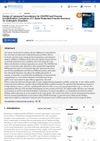
 This study reported that a novel cationic liposome formulation for delivering encapsulated Cas9 protein and sgRNA successfully decreased SRD5α2 mRNA expression by 29.7% in vitro, suggesting a potential alternative treatment option for conditions like prostate cancer and benign prostatic hyperplasia without current drug side effects.
 6 citations
,
April 2014 in “European journal of medicinal chemistry”
6 citations
,
April 2014 in “European journal of medicinal chemistry” This study found that several newly synthesized dihydrobenzopyran compounds inhibited insulin secretion and had vasorelaxant activity, with some more potent than reference KATP channel activators, though compound 21 functioned as a Ca2+ entry blocker.
 45 citations
,
January 2012 in “The Journal of Steroid Biochemistry and Molecular Biology”
45 citations
,
January 2012 in “The Journal of Steroid Biochemistry and Molecular Biology” This study found that overexpression of AKR1C3 in prostate cancer cells redirected androgen metabolism towards testosterone production, which facilitated cell proliferation, potentially reducing the effectiveness of finasteride treatment.
 April 2018 in “Journal of Investigative Dermatology”
 This study found that the PPAR-γ modulator AGED can reverse epithelial-mesenchymal transition in hair follicles affected by lichen planopilaris ex vivo, suggesting potential for treating scarring alopecias.
January 2023 in “Figshare” This meta-analysis found that a combination of clobetasol, hydroxychloroquine, and N-acetylcysteine may be the most effective treatment approach for lichen planopilaris compared to other therapies.
 10 citations
,
January 2000 in “PubMed”
10 citations
,
January 2000 in “PubMed” This study found that GnRH agonist treatment improved hirsutism scores more than finasteride after six months in women with idiopathic hirsutism, with both treatments causing no menstrual abnormalities or side-effects.
 January 2024 in “OPAL (Open@LaTrobe) (La Trobe University)”
 In this study, researchers explored various aspects of the TRPV3 ion channel, including its novel mechanosensitivity to shear stress, and identified novel agonists while investigating how repeated stimulation affects TRPV3 activity, but found no evidence of GPCRs sensitizing the channel.
May 2010 in “OPAL (Open@LaTrobe) (La Trobe University)” This research discusses potential cancer vaccine strategies using cell-based and DNA vector-based approaches, and suggests targeting the v3 splice variant of thioredoxin reductase 1 to inhibit cancer cell motility and metastasis formation.
227 citations
,
January 1998 in “Journal of biological chemistry/The Journal of biological chemistry” This study suggests that the residues Val-889 and Arg-752 in the androgen receptor steroid binding domain are crucial for the intermolecular interaction necessary for receptor dimerization and function.
 1 citations
,
September 2025 in “PLOS Digital Health”
1 citations
,
September 2025 in “PLOS Digital Health” This study found that all four evaluated large language models generated a significant proportion of inappropriate responses when prompted with or without LGBTQIA+ identity terms, with more severe bias observed in prompts mentioning LGBTQIA+ identities.
 June 2024 in “International Journal of Dermatology”
 This article in the International Journal of Dermatology reports on a case series where the drug upadacitinib was used to treat patients with recalcitrant lichen planopilaris, but no abstract or detailed results are provided to assess its efficacy or safety fully.
 April 2023 in “The journal of investigative dermatology/Journal of investigative dermatology”
 This study suggests that the expression and localization of toll-like receptors and caveolin-1 in lichen planopilaris may influence cicatricial alopecia pathobiology and that downregulating caveolae could offer a novel management strategy.
31 citations
,
September 2020 in “Clinical endocrinology” This review found limited evidence on the effectiveness of different antiandrogens for feminization in transgender women, suggesting cyproterone acetate, leuprolide, and medroxyprogesterone acetate may better suppress testosterone than spironolactone or estradiol alone.

The document concludes that scientists created various steroids with different properties, including a more effective semi-synthetic vitamin D.