
This study observed that low-level laser therapy (LLLT) increased cell viability in SARS-CoV-2-uninfected HEK293/ACE2 cells but did not improve viability in infected cells, suggesting mixed effects.
 39 citations
,
October 2018 in “Lupus Science & Medicine”
39 citations
,
October 2018 in “Lupus Science & Medicine” This article discusses various patterns of hair loss associated with lupus erythematosus, emphasizing the importance of identifying the specific type to aid in classifying systemic lupus erythematosus.
January 2016 in “Zurich Open Repository and Archive (University of Zurich)” This study concludes that dietary L-serine supplementation shows promise as a long-term therapy for hereditary sensory and autonomic neuropathy type 1, reducing neurotoxic 1-deoxysphingolipid levels and improving symptoms in severe cases.
 107 citations
,
November 2008 in “The Journal of Rheumatology”
107 citations
,
November 2008 in “The Journal of Rheumatology” This study found that fibromyalgia prevalence is slightly higher in patients with systemic lupus erythematosus compared to those with arthritis, but fibromyalgia-ness does not bias the SLE Activity Questionnaire.
This study found that super-enhancers in squamous cell carcinoma stem cells are distinctly different from those in normal skin stem cells, with ETS2 playing a crucial role in promoting tumor growth.
 3 citations
,
January 2013 in “Journal of the European Academy of Dermatology and Venereology”
3 citations
,
January 2013 in “Journal of the European Academy of Dermatology and Venereology” This letter to the editor discusses a previous clinical and histopathological analysis of four cases of severe diffuse non-scarring hair loss in systemic lupus erythematosus, reporting no new study results.

This study found that patients with lupus nephritis experience a greater overall burden than those with systemic lupus erythematosus without nephritis, particularly impacting areas such as family planning, professional life, disease features, medication usage, and quality of life.
 April 2023 in “Journal of Investigative Dermatology”
 This study found variation in erythema induction across skin types, suggesting different SSR dose responses and highlighting a potential model for tailoring anti-inflammatory treatments.
3 citations
,
July 2024 in “Frontiers in Medicine” This study reports that analyzing the clinical manifestations of different genetic variants in EBS families helps predict disease progression and severity, guide complication risk assessment, and plan necessary medical care.
This chapter reviews when to perform linear-strip excision vs. follicular unit excision for hair loss surgery, noting their respective advantages and disadvantages, without presenting new clinical findings.
 6 citations
,
April 2023 in “Frontiers in plant science”
6 citations
,
April 2023 in “Frontiers in plant science” In this study, NREs from lentil root nodules, specifically Serratia plymuthica 33GS and Serratia sp. R6, significantly enhanced lentil growth, altered root exudation, and modulated rhizospheric microbial communities in a greenhouse setting.

This study suggests that the EULAR/ACR classification criteria for SLE may help predict organ damage, particularly in renal, cardiovascular, dermatological, and gonadal domains.
July 2026 in “Journal of Investigative Dermatology”  73 citations
,
April 2013 in “Stem cells”
73 citations
,
April 2013 in “Stem cells” This study found that LGR5 is uniquely expressed in human corneal endothelial cells and maintains endothelial cell phenotypes while inhibiting mesenchymal transformation through the Wnt pathway.
116 citations
,
December 2003 in “Acta Dermato Venereologica” This study reports that Iressa, an anti-cancer agent, commonly causes acneiform eruptions and xerosis as cutaneous side effects, similar to other agents targeting epidermal growth factor receptors.
1 citations
,
July 2021 in “Health & Medical Journal” This case report describes a 29-year-old man with systemic lupus erythematosus who responded well to pulse-dose methylprednisolone treatment.
13 citations
,
May 2014 in “PubMed” This study observed that class IV diffuse proliferative glomerulonephritis was the most common form of lupus nephritis among the children studied, with remission achieved in a significant portion after treatment.
1 citations
,
September 2025 in “Archivio Italiano di Urologia e Andrologia” In this study, the combination of Serenoa repens extract with Phenolmicin P3 and Bosexil suppositories significantly improved lower urinary tract symptoms and decreased PSA levels in patients with benign prostatic obstruction-related symptoms.
 8 citations
,
November 1990 in “Archives of Dermatology”
8 citations
,
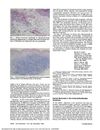
November 1990 in “Archives of Dermatology” This case report details a woman with eosinophilia-myalgia syndrome associated with L-tryptophan ingestion, highlighting skin lesions with abundant dermal mucin.
1 citations
,
January 1999 in “Dermatology”  August 2020 in “Egyptian Veterinary Medical Society of Parasitology Journal (EVMSPJ)”
 In this study, 10.5% of sheep examined in Ismailia, Egypt, were infested with Sarcoptes scabiei, showing specific molecular and skin alterations.
 January 2024 in “Genetics in Medicine Open”
 This case study of a patient with a variant in the extracellular region of IL6ST suggests a potential expansion of the phenotypic spectrum for autosomal dominant hyper-IgE syndrome, warranting further investigation.
2 citations
,
May 2016 in “Oxford University Press eBooks” This article provides guidance on managing systemic lupus erythematosus without presenting new research findings, emphasizing the role of clinical nurse specialists and the importance of lifestyle modifications and appropriate medication regimens.
April 2025 in “Dermatología Argentina” This study found that simultaneous presence of specific and nonspecific skin lesions, or having three or more types of skin lesions, was associated with increased systemic activity of systemic lupus erythematosus.
2 citations
,
December 2019 in “The Open Dermatology Journal” This article describes the first reported case of isolated linear discoid lupus erythematosus on the scalp, suggesting it should be considered in the differential diagnosis of linear scarring alopecia.
1 citations
,
November 2022 in “International Journal of Cosmetic Science” In this study, a topical application of Lotus corniculatus seed extract significantly reduced sebum production and skin oiliness in humans through inhibition of lipid synthesis pathways.
 September 2019 in “Journal of Investigative Dermatology”
 This study found that using human induced pluripotent stem cells (iPSC) carrying the causal mutation of Epidermolysis Bullosa simplex provides a robust model for understanding its molecular mechanisms and testing potential therapeutic targets.
September 2023 in “Journal of the American Academy of Dermatology” In this study, a cleanser gel with salicylic acid, vitamin C, and Lens esculenta seed extract reduced facial oiliness by 44.9% after 2 hours and by 19.1% after 4 hours in subjects with oily skin, using a novel facial oiliness mapping method.
March 2022 in “Journal of Investigative Dermatology” In this study, Wang et al. (2022) found that in patients with cutaneous lupus erythematosus, chronic lesions contained more senescent progenitor cells, marked by p16 and p21, than subacute lesions, suggesting a link between disease chronicity and cellular senescence.
 4 citations
,
July 1994 in “Clinics in Dermatology”
4 citations
,
July 1994 in “Clinics in Dermatology” This review discusses the emergence and impact of eosinophilia-myalgia syndrome related to L-tryptophan and offers insights into environmental factors affecting sclerodermatous conditions, with no new research findings presented.