 June 2023 in “British journal of dermatology/British journal of dermatology, Supplement”
 This case report describes a rare instance of lichen planus preceding vitiligo in a 13-year-old boy, suggesting a non-coincidental association between the two conditions.
 4 citations
,
May 2020 in “Journal of The American Academy of Dermatology”
4 citations
,
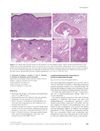
May 2020 in “Journal of The American Academy of Dermatology” This letter argues that cicatricial pattern hair loss likely represents end-stage androgenetic alopecia and not a variant of lichen planopilaris, as previously suggested.
 1 citations
,
February 2009 in “Clinical and Experimental Dermatology”
1 citations
,
February 2009 in “Clinical and Experimental Dermatology” This study reports an improvement in lymphomatoid papulosis type A in a 52-year-old patient who concurrently used hormone-replacement therapy.
September 2023 in “Journal of the American Academy of Dermatology” Recognizing IPPP is crucial to prevent misdiagnosis and unnecessary treatments.
 June 2022 in “Journal of the Liaquat University of Medical and Health Sciences”
 This study investigated the relationship between lichen planus and dyslipidemia but did not report any clinical findings.
13 citations
,
June 2011 in “International Journal of Dermatology” This study found that a new lecithinized coal tar formulation did not stain different types of mammalian hair, suggesting it may be promising for treating scalp psoriasis without the drawback of staining.
January 2018 in “JAMA dermatology” This case report describes a woman with scalp lichen planopilaris who developed facial papules coinciding with her hair loss condition, raising the question of an associated diagnosis.

This study found that patients with lichen planopilaris exhibit a higher pro-atherogenic lipid profile and elevated atherogenic indexes, suggesting a need for increased cardiovascular and lipid monitoring in these individuals.
14 citations
,
January 2018 in “Skin Appendage Disorders” This case report suggests that identifying hyperpigmentation on the upper eyelid with specific dermoscopy patterns could help diagnose facial lichen planus pigmentosus without needing a facial biopsy.
January 2016 in “프로그램북(구 초록집)” This study found that the revised BASP classification for pattern hair loss, which addresses certain limitations of the original, could serve as an alternative option despite a decrease in clinical accuracy and ease of use.
July 2013 in “Indian Journal of Dentistry” This report describes a rare case of Graham-Little–Piccardi–Lassueur syndrome in a 46-year-old male, highlighting its typical features such as scarring alopecia and lichenoid follicular eruptions.
 May 2026 in “AAPS PharmSciTech”
 This study found that PEGylated LUT-Aspasomes significantly improved neuroprotective effects in stressed rats, enhancing spatial memory, reducing depressive-like behavior, and preserving hippocampal architecture better than free luteolin. Additionally, it increased brain delivery and stability, suggesting potential for treating stress-related neurobehavioral disorders.
 1 citations
,
July 2022 in “PLOS ONE”
1 citations
,
July 2022 in “PLOS ONE” This study found that in Lichen Planopilaris, the Microbacteriaceae family was negatively correlated with IL-23 expression, suggesting a role in the disease's inflammation and microbiota composition.
35 citations
,
November 2019 in “Journal of the American Academy of Dermatology” This study reviewed 40 patients with scalp symptoms and identified a new variant of diffuse lichen planopilaris in 20 individuals, suggesting these conditions should be considered in similar cases.
 December 2020 in “Skin appendage disorders”
 This discussion highlights the evolving clinical spectrum of lichen planopilaris, noting atypical features and presentations in younger males that suggest potential different pathomechanisms from previously recognized variants.
24 citations
,
November 2023 in “International Journal of Molecular Sciences” This review highlights that platelet-rich plasma and adipose-derived stem cell therapy may offer safe and promising improvements for managing symptoms of genital lichen sclerosus, with a potential synergistic benefit when combined.
 June 2017 in “Journal of The American Academy of Dermatology”
 Women in Australia report different signs of facial aging compared to women in the US, UK, and Canada; men with Lichen planopilaris often have hormonal abnormalities and thyroid disease.
January 2023 in “Figshare” This meta-analysis found that a combination of clobetasol, hydroxychloroquine, and N-acetylcysteine may be the most effective treatment approach for lichen planopilaris compared to other therapies.
 April 2023 in “The journal of investigative dermatology/Journal of investigative dermatology”
 This study suggests that the expression and localization of toll-like receptors and caveolin-1 in lichen planopilaris may influence cicatricial alopecia pathobiology and that downregulating caveolae could offer a novel management strategy.
 16 citations
,
January 2017 in “Anais brasileiros de dermatologia/Anais Brasileiros de Dermatologia”
16 citations
,
January 2017 in “Anais brasileiros de dermatologia/Anais Brasileiros de Dermatologia” This case study discusses a postmenopausal woman's frontal fibrosing alopecia and lichen planus pigmentosus, controlled with corticosteroids and finasteride, highlighting diagnostic and therapeutic challenges in scarring alopecia.
433 citations
,
April 2015 in “Photomedicine and laser surgery” This editorial discusses the terminology and distinctions between Low-Level Light/Laser Therapy and Photobiomodulation Therapy but reports no new clinical findings.
 1 citations
,
April 2022 in “Dermatologic Surgery”
1 citations
,
April 2022 in “Dermatologic Surgery” This article introduces the Progressive Loss (PL) Scale, aimed at helping physicians communicate the long-term cosmetic risks of hair restoration surgery to patients.
 45 citations
,
February 2011 in “Journal of the European Academy of Dermatology and Venereology”
45 citations
,
February 2011 in “Journal of the European Academy of Dermatology and Venereology” This study found that patients with lichen planus had significantly higher levels of triglycerides, total cholesterol, and LDL-C, and lower HDL-C compared to healthy controls, suggesting an association with dyslipidaemia.
 5 citations
,
April 2014 in “The American Journal of Dermatopathology”
5 citations
,
April 2014 in “The American Journal of Dermatopathology” This article reports on a typical case of lichen planopilaris with foreign-body granulomas around hair shaft material, suggesting these may be an additional criterion for diagnosing late-stage LPP/FFA.
 86 citations
,
July 2012 in “British journal of dermatology/British journal of dermatology, Supplement”
86 citations
,
July 2012 in “British journal of dermatology/British journal of dermatology, Supplement” This report suggests a causal connection between hyaluronic acid filler injections and the development of xanthelasma, possibly through an inflammatory reaction that increases vascular permeability and LDL leakage.
 April 2016 in “Journal of The American Academy of Dermatology”
 Lichen planus may be associated with a higher risk of metabolic syndrome.
2 citations
,
June 1953 in “Journal of the American Medical Association” This article explores the correlation between alopecia leprotica and Buddhist customs, presenting evidence that leprosy is contracted during infancy or childhood rather than in maturity; it reports no new clinical findings.
 August 2018 in “Journal of The American Academy of Dermatology”
 A 16-year-old girl's skin rash was likely caused by an infection and improved with topical steroids.
 April 2026 in “American Journal of Dermatopathology”
 This study identified a new dermoscopic feature, plexiform erythema, in lichen planopilaris lesions, suggesting it may indicate active disease and the potential need for more aggressive treatment.
 December 2024 in “Livers”
 This case report highlights a female patient with familial partial lipodystrophy who showed significant improvement in liver stiffness after starting leptin replacement therapy.