 14 citations
,
August 2009 in “Cancer epidemiology”
14 citations
,
August 2009 in “Cancer epidemiology” This study found that AHCC significantly reduced alopecia caused by Ara-C in neonatal rats and improved liver function affected by 6-MP and MTX in mice.
October 2025 in “Journal of Investigative Dermatology” This review highlights the critical role of iron in skin functions and suggests potential dermatologic therapies targeting the iron-skin axis.
62 citations
,
January 2015 in “Journal of Dermatological Science” This review summarizes the current genetic research on alopecia areata, including potential new therapeutic strategies, but reports no new clinical findings.
 32 citations
,
January 2022 in “International Journal of Molecular Sciences”
32 citations
,
January 2022 in “International Journal of Molecular Sciences” This review discusses the impact of melatonin and its metabolites on skin aging, summarizing how they may serve as "aging neutralizers" through their anti-oxidative and anti-inflammatory properties, but reports no new clinical results.
14 citations
,
January 2020 in “Women's health reports” This study found that iron therapy improved nonhematological symptoms and cognitive function in women with iron deficiency anemia, highlighting the need for attention to these symptoms in improving quality of life.
 10 citations
,
November 2018 in “Genetics in medicine”
10 citations
,
November 2018 in “Genetics in medicine” This study identified a genetic variant in the CTS6 gene associated with a hypotrichosis syndrome, emphasizing the significant role of cystatin M/E in hair and skin health.
 10 citations
,
March 2019 in “Human Genetics”
10 citations
,
March 2019 in “Human Genetics” This study identified a genetic variant in the SGK3 gene related to hairlessness in Scottish Deerhounds, suggesting a similar role for androgen-independent hair loss in humans.
 124 citations
,
December 2016 in “Pharmaceuticals”
124 citations
,
December 2016 in “Pharmaceuticals” This review discusses the functions and potential therapeutic targeting of TRP ion channels in the skin, noting their involvement in both physiological processes and various pathological conditions, but reports no new experimental results.
4 citations
,
October 2021 in “Journal of Clinical Medicine” This study found that individuals with heterozygous truncation-type variants in the *DSP* gene exhibit lower skin temperature and higher transepidermal water loss, with specific microscopic skin changes and pseudomonilethrix.
1 citations
,
November 2022 in “Diagnostics” This case report identifies a 32-year-old woman with undiagnosed PHPT-1a who exhibited complete pseudo-anodontia and persistent patchy alopecia areata, suggesting these may be new nonclassical features of a GNAS pathogenic variant.
 December 2024 in “PLoS ONE”
 In this study, researchers evaluated male-pattern hair loss treatments using RNA and microRNA expression profiling in 91 male participants, identifying 52 differentially expressed genes and suggesting a potential role for personalized treatment based on genetic analysis to monitor and predict treatment efficacy and compliance.
May 2020 in “Scientific periodicals of Ukraine” This review discusses the pathogenesis and treatment approaches for non-scarring alopecia and acne, highlighting the role of genetic factors, androgens, and metabolic risks but reports no new clinical results.
 July 2019 in “Journal of Investigative Dermatology”
 This article previews a Journal of Investigative Dermatology quiz on diagnosing male androgenetic alopecia and offers no new research results.
 1 citations
,
August 2018 in “bioRxiv (Cold Spring Harbor Laboratory)”
1 citations
,
August 2018 in “bioRxiv (Cold Spring Harbor Laboratory)” This study reports that a novel gain-of-function mutation in TMEM173, combined with polymorphisms in TMEM173 and IFIH1, results in a distinct clinical phenotype with features of SAVI, including alopecia and photosensitivity.
November 2024 in “Journal of Investigative Dermatology” Genetic changes in specific proteins contribute to hair loss in some women of African descent.
 305 citations
,
February 2007 in “Hormone and metabolic research”
305 citations
,
February 2007 in “Hormone and metabolic research” This review discusses the roles of androgens and estrogens in skin functions and disorders, and highlights the use of estrogen-progestin treatments and anti-androgens in managing hirsutism and acne, without reporting new results.
 89 citations
,
February 2002 in “Australasian journal of dermatology”
89 citations
,
February 2002 in “Australasian journal of dermatology” This case report describes the first known instance of fibrosing alopecia associated with cutaneous lichen planus, suggesting fibrosing alopecia may be a variant of lichen planopilaris.
 19 citations
,
November 1993 in “Mammalian Genome”
19 citations
,
November 1993 in “Mammalian Genome” This study reports that transgene insertion in homozygous transgenic mice causes irreversible hair loss and impaired immune function, linked to interruption of the hairless locus on Chromosome 14.
 3 citations
,
August 2018 in “Journal der Deutschen Dermatologischen Gesellschaft”
3 citations
,
August 2018 in “Journal der Deutschen Dermatologischen Gesellschaft” The technique effectively repairs skin after tumor removal, maintaining appearance and function without complications.
 November 2025 in “PubMed”
 This study identified nine pathogenic variants in the PADI3 gene, and variants in the S100A3 and TCHH genes, which may disrupt protein function and contribute to central centrifugal cicatricial alopecia.
 66 citations
,
May 2012 in “Scientific Reports”
66 citations
,
May 2012 in “Scientific Reports” This study demonstrated that bioengineered hair follicles reconstituted from embryonic skin cells and transplanted into hosts can restore physiological hair functions, suggesting potential applications for treating alopecia.
 43 citations
,
February 2019 in “International immunology”
43 citations
,
February 2019 in “International immunology” This review examines the role of regulatory T cells in skin immune disorders, highlighting their unique functions in conditions like scleroderma, alopecia areata, and psoriasis, without reporting new clinical results.
 1308 citations
,
March 1998 in “Journal of bone and mineral research”
1308 citations
,
March 1998 in “Journal of bone and mineral research” This review discusses the molecular role of the vitamin D receptor in regulating various biological actions such as bone mineralization and reports no new clinical results, highlighting the complexity of vitamin D's function in multiple tissues.
 76 citations
,
June 2015 in “Journal of biomedical science”
76 citations
,
June 2015 in “Journal of biomedical science” This study demonstrated that dominant mutations in mouse gasdermin A3 disrupt mitochondrial oxidative stress regulation, suggesting a gain-of-function effect on epidermal differentiation.
 23 citations
,
February 2020 in “PLOS genetics”
23 citations
,
February 2020 in “PLOS genetics” This study found that biallelic LSS mutations lead to congenital hypotrichosis and cataracts, with each tissue-specific loss of function observed in mouse models.
 12 citations
,
May 2011 in “Dermatologic Clinics”
12 citations
,
May 2011 in “Dermatologic Clinics” This review discusses the association between scarring alopecia and inflammatory processes in common acquired bullous disorders of the scalp, and reports no new clinical findings.
 14 citations
,
July 2010 in “British Journal of Dermatology”
14 citations
,
July 2010 in “British Journal of Dermatology” This report discusses the possibility that estrogens might play a greater role than androgens in female pattern hair loss, without presenting new research findings.
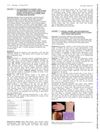
This case report details a child with a specific TNFAIP3 mutation manifesting as a severe SLE/SS phenotype, expanding the known phenotype for this genetic variant.
 January 2012 in “Yearbook of Dermatology and Dermatologic Surgery”
 No significant difference in iron deficiency between women with or without hair loss.
 156 citations
,
August 2016 in “Journal of controlled release”
156 citations
,
August 2016 in “Journal of controlled release” This review summarizes current knowledge on tight junctions in mammalian skin and their role in drug delivery and interaction with other barrier components, but reports no new experimental results.