25 citations
,
October 2007 in “Developmental biology” In this study, transgenic mice altered to express a Clim-inhibiting molecule under a keratin promoter showed corneal degradation and hair follicle failure, highlighting Clim proteins' role in maintaining these tissues.
20 citations
,
January 2015 in “Biochimica and biophysica acta. Molecular and cell biology of lipids” This review discusses lysophosphatidic acid's role in neuropathic pain and cholestatic itch, highlighting its complex signaling pathways, but reports no new clinical results.
191 citations
,
October 2012 in “International Current Pharmaceutical Journal” This review discusses the potential uses, benefits, and challenges of solid lipid nanoparticles in drug delivery systems but presents no new experimental findings.
 June 2017 in “Journal of The American Academy of Dermatology”
 Women in Australia report different signs of facial aging compared to women in the US, UK, and Canada; men with Lichen planopilaris often have hormonal abnormalities and thyroid disease.
 April 2017 in “Journal of Investigative Dermatology”
 In this pilot study, researchers observed a correlation between clinical severity and histologic severity of lichen planopilaris, suggesting that an immunohistochemical scoring system could aid in grading disease activity.
 76 citations
,
June 2008 in “Journal of the American Academy of Dermatology”
76 citations
,
June 2008 in “Journal of the American Academy of Dermatology” In this study, key histologic features such as mucinous perifollicular fibroplasia were identified to aid in the diagnosis of lichen planopilaris.
October 2024 in “Věda a perspektivy” This study found that permanent makeup, or micropigmentation, effectively masks post-surgical cleft lip scars and corrects lip asymmetry, providing aesthetic and psychological benefits such as improved self-esteem and reduced social anxiety, contributing to better social integration for patients.
21 citations
,
March 2018 in “American Journal Of Pathology” In this study, it was observed that NIPAL4 mutations linked to autosomal recessive congenital ichthyosis lead to abnormal skin barrier function due to cytotoxic effects disrupting lipid structure and organization, which topical treatments only partially ameliorated.
2 citations
,
September 2025 in “Future Journal of Pharmaceutical Sciences” This study reviewed the potential of Lupeol, a natural triterpenoid, in promoting hair growth and reducing inflammation related to alopecia, revealing promising molecular pathways and favorable pharmacokinetics while suggesting further research to validate these findings.
 14 citations
,
May 2018 in “Journal of the American Academy of Dermatology”
14 citations
,
May 2018 in “Journal of the American Academy of Dermatology” This paper reviews treatments for lichen planopilaris, including low-level laser therapy, but reports no new clinical results and highlights the need for further research.
1 citations
,
December 2024 in “Archives of Iranian Medicine” This study found that tofacitinib significantly improved disease activity in most patients with LPP, though further research is needed to refine protocols, understand response predictors, and address gender-specific adverse effects.
February 2026 in “JEADV Clinical Practice” This report describes a rare case of scarring alopecia, diagnosed as lichen planopilaris (LPP), affecting solely the limbs, highlighting the necessity for thorough evaluation of LPP beyond the scalp.
7 citations
,
February 1962 in “Experimental Biology and Medicine” This study observed that male and female epidermis differ significantly in total lipid and phospholipid levels during different stages of the hair growth cycle.
 3 citations
,
August 1998 in “Dermatologic Surgery”
3 citations
,
August 1998 in “Dermatologic Surgery” Bobby Limmer was crucial in developing a hair transplant method that uses natural hair groupings for a more realistic look.
 28 citations
,
December 2007 in “Archives of ophthalmology”
28 citations
,
December 2007 in “Archives of ophthalmology” This study found that lash ptosis was more common and severe in eyes with blepharoptosis, especially congenital, compared to normal eyes.
 November 2024 in “Cureus”
 The authors reported a case of significant scalp edema accompanying lichen planopilaris in a middle-aged woman, suggesting a potential new variant of edematous scalp conditions as a reaction to scarring alopecia.
503 citations
,
May 2009 in “Cell stem cell” This study suggests that Lrig1-positive cells form a previously unknown reservoir of interfollicular epidermal stem cells in adult mouse skin, influencing epidermal proliferation and hair follicle development.
 January 2025 in “Cellular and Molecular Biology”
 This study found that in Liaoning cashmere goats, overexpression of the PIP5K1A gene enhances skin fibroblast proliferation, while interference with this gene reverses melatonin-induced proliferation, and PIP5K1A regulates certain miRNA expressions, suggesting a role in improving cashmere yield and quality.
February 2013 in “Journal of the American Academy of Dermatology” 78 citations
,
May 2012 in “Journal of Investigative Dermatology” A specific gene mutation causes woolly hair and hair loss.
40 citations
,
December 2010 in “Human Genetics” 5 citations
,
June 2014 in “Der Hautarzt” This review discusses genetic causes and classification of rare, monogenic forms of alopecia and highlights the role of molecular genetic research in understanding hair loss mechanisms but reports no new clinical results.
 2 citations
,
August 2022 in “The journal of investigative dermatology/Journal of investigative dermatology”
2 citations
,
August 2022 in “The journal of investigative dermatology/Journal of investigative dermatology” This review discusses the genetic origins of autosomal recessive woolly hair with hypotrichosis and reports no clinical results; it highlights the link to homozygous variants in the K25 keratin gene.
4 citations
,
November 2019 in “Dermatology - Open Journal” This study reports that Lichen planus pigmentosus is present in Moroccan patients but remains challenging to treat, with only some experiencing complete resolution of lesions after therapy.
 April 2012 in “Informa Healthcare eBooks”
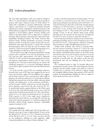
 Lichen planopilaris is a rare, chronic condition causing hair loss, mainly in middle-aged women, and early treatment is important to prevent permanent baldness.
 54 citations
,
October 2002 in “Journal of controlled release”
54 citations
,
October 2002 in “Journal of controlled release” This study found that increasing a drug's lipophilicity and adding ethanol to the donor phase can enhance its delivery to the hair follicle, although the precise transport mechanism remains unclear.
16 citations
,
August 2000 in “British Journal of Dermatology” In this case report, lichen myxedematosus associated with hepatocellular carcinoma showed progressive improvement in skin lesions without further treatment following tumor resection.

This study found a direct correlation between IL6 and insulin, glucose, and cholesterol serum levels in patients with oral lichen planus, suggesting a potential increased cardiovascular risk.

This case study reports an unusual presentation of erosive lichen planus of the scalp linked to hepatitis C in a patient, highlighting challenges in establishing a definitive correlation between the two conditions.
11 citations
,
February 2011 in “International Journal of Molecular Sciences” This article reviews sPLA2-mediated phospholipid metabolism using sPLA2 transgenic/knockout mice and lipid mass spectrometry, offering insights into the distinct roles of sPLA2 enzymes in various biological events.