1 citations
,
July 2022 in “JEADV Clinical Practice” This abstract outlines a guide reviewing both FDA-approved and off-label therapies for androgenetic alopecia and proposes treatment algorithms based on scientific research, highlighting a gap in common treatments for this prevalent condition.
1 citations
,
August 2021 in “Cosmoderma” This study reviewed literature on low-dose oral minoxidil as a treatment for hair loss, finding good compliance and tolerability, with mild adverse effects like hypertrichosis, which increase with higher doses.
March 2026 in “Annals of Medicine” This study highlights the importance of developing standardized diagnostic tools, outcome measures, and evidence-based interventions to improve care and long-term outcomes for children and adolescents affected by long COVID-19.
 October 2025 in “JEADV Clinical Practice”
 This systematic review found very weak evidence supporting the use of minoxidil as an adjunctive treatment for traction alopecia, with improvements noted from 3 months onwards, primarily based on limited case reports and retrospective case series.
August 2025 in “Skin Appendage Disorders” This review highlights that while low-dose oral minoxidil appears well-tolerated in cancer patients post-chemotherapy, its use during active chemotherapy has shown potential benefits but remains under investigation, with preclinical studies suggesting a protective effect against chemotherapy-induced alopecia.
 March 2025 in “Journal of Clinical Medicine”
 This study reviewed adverse events associated with low-dose oral minoxidil for treating alopecia, finding hypertrichosis and fluid retention as common, typically manageable side effects without needing treatment discontinuation.
 November 2024 in “Clinical Cosmetic and Investigational Dermatology”
 This review discusses various herbal alternatives, including rosemary oil and others, for managing androgenetic alopecia but reports that more research is needed to confirm the efficacy of these natural remedies.
 September 2024 in “Stem Cell Research & Therapy”
 This study found that extracellular vesicles derived from hyaluronic acid-stimulated induced pluripotent stem cells significantly improved hair growth in a model of androgenetic alopecia in mice by enhancing Wnt/β-catenin signaling and regulating androgen receptor activity, showing comparable results to the commonly used treatment finasteride.

This research review found that spironolactone can significantly improve acne severity more effectively than a placebo, with 73.3% of patients reporting satisfaction despite a 26.7% rate of adverse events among the 1,548 participants studied.
 March 2024 in “JAAD International”
 This review discusses the potential strategy of continuing topical minoxidil when starting low dose oral minoxidil to mitigate initial hair shedding in alopecia, but reports no new clinical results.
 February 2024 in “Cosmoderma”
 This review discusses the use of low-dose oral minoxidil for patterned hair loss and reports it may offer improved compliance and safety compared to topical minoxidil, but provides no new clinical findings.
 January 2023 in “Skin appendage disorders”
 This review discusses the potential of low-dose oral minoxidil as a safe and effective treatment for certain hair disorders, including alopecia, but reports no new clinical results.
 July 2021 in “Open access journal of biomedical science”
 This study evaluated the effectiveness of a lotion containing Larrea divaricata and Coffea arabica extracts in accelerating hair growth in women after chemotherapy, but it reports no results.
April 2023 in “Dermatology and therapy” This study found a high discontinuation rate of topical minoxidil among patients with androgenetic alopecia, largely influenced by short treatment duration, lack of efficacy, and adverse effects.
January 2022 in “Indian Dermatology Online Journal” This study suggests that low-dose oral minoxidil could be a safe and effective option for male and female-patterned hair loss, potentially benefiting those unable to tolerate topical treatments.
11 citations
,
October 2024 in “International Journal of Molecular Sciences” This study observed that the cutaneous microbiome in psoriasis patients differs both qualitatively and quantitatively from healthy individuals, suggesting a potential link to psoriasis pathogenesis.
4 citations
,
March 2024 in “Forensic Sciences Research” This review found that current forensic DNA phenotyping panels for biogeographical ancestry and visible traits face significant limitations due to inconsistencies in terminology, genetic understanding, and genotyping technologies, highlighting the need for harmonization and further research.
 1057 citations
,
November 2011 in “Annals of Biomedical Engineering”
1057 citations
,
November 2011 in “Annals of Biomedical Engineering” This review discusses the applications of low level laser therapy (LLLT) in wound healing, pain reduction, and treating various conditions, but reports no new clinical results; the authors highlight the need for randomized controlled trials for serious diseases.
 161 citations
,
July 2003 in “ACM Transactions on Graphics”
161 citations
,
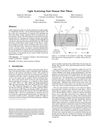
July 2003 in “ACM Transactions on Graphics” In this study, a new shading model for hair was developed that better matches real-life light scattering, thanks to detailed new measurements of hair fiber scattering not predicted by existing models.

This study introduced a new hair shading model that more accurately simulates light scattering on hair fibers, capturing effects not predicted by previous models.
85 citations
,
January 2002 in “Dermatologic Clinics” This article reviews the use of light-based technologies for hair removal, detailing different laser systems and treatment protocols, but reports no new clinical results.
 68 citations
,
January 2007 in “Journal of Cosmetic and Laser Therapy”
68 citations
,
January 2007 in “Journal of Cosmetic and Laser Therapy” This review discusses laser/light treatments for pattern hair loss and reports no clinical validation of current devices; experts recommend physician evaluation to exclude other medical conditions.
 65 citations
,
March 2016 in “Lasers in Medical Science”
65 citations
,
March 2016 in “Lasers in Medical Science” This review found that many low-level light therapy studies report beneficial effects but often fail to provide adequate measurement details, affecting the reliability and repeatability of the research.
 64 citations
,
June 2020 in “PLoS ONE”
64 citations
,
June 2020 in “PLoS ONE” This study found that red light exposure significantly enhanced the growth, phytochemical content, and therapeutic potential of Eclipta alba callus cultures compared to other multispectral light exposures.
 62 citations
,
July 2018 in “Lasers in Medical Science”
62 citations
,
July 2018 in “Lasers in Medical Science” In this review, the researchers highlight LED therapy as an emerging and safe treatment for skin inflammatory conditions, aging, and hair growth disorders, noting its integration into dermatological practice but emphasizing the need for more controlled studies to confirm its efficacy.
56 citations
,
March 2017 in “Plant and Cell Physiology” This study used light sheet fluorescence microscopy to successfully image and analyze calcium oscillations in the root hairs of Arabidopsis thaliana, finding that these oscillations correlate with the root hair growth rate and that auxin affects these properties.
 46 citations
,
September 2010 in “Southern Medical Journal”
46 citations
,
September 2010 in “Southern Medical Journal” This review discusses low-level light therapy for androgenetic alopecia and female pattern hair loss, noting minimal clinical evidence on its efficacy and the need for more controlled studies.
 40 citations
,
February 2012 in “Dermatology Online Journal”
40 citations
,
February 2012 in “Dermatology Online Journal” This review discusses cases and research on paradoxical hair growth after laser hair removal and explores laser and light therapies for treating alopecia, but reports no new results.
 28 citations
,
December 2017 in “Lasers in Medical Science”
28 citations
,
December 2017 in “Lasers in Medical Science” This review assessed evidence on laser therapies for alopecia areata, reporting that the 308-nm excimer laser showed hair regrowth in several studies, while more research is needed for other laser types.
27 citations
,
September 1988 in “PubMed” In this study, researchers used three-dimensional reconstruction to show that the shape of the hair follicle determines the hair's form, with variations observed among different racial groups.